
42 Public High Schools. One Statewide Student Delegation.
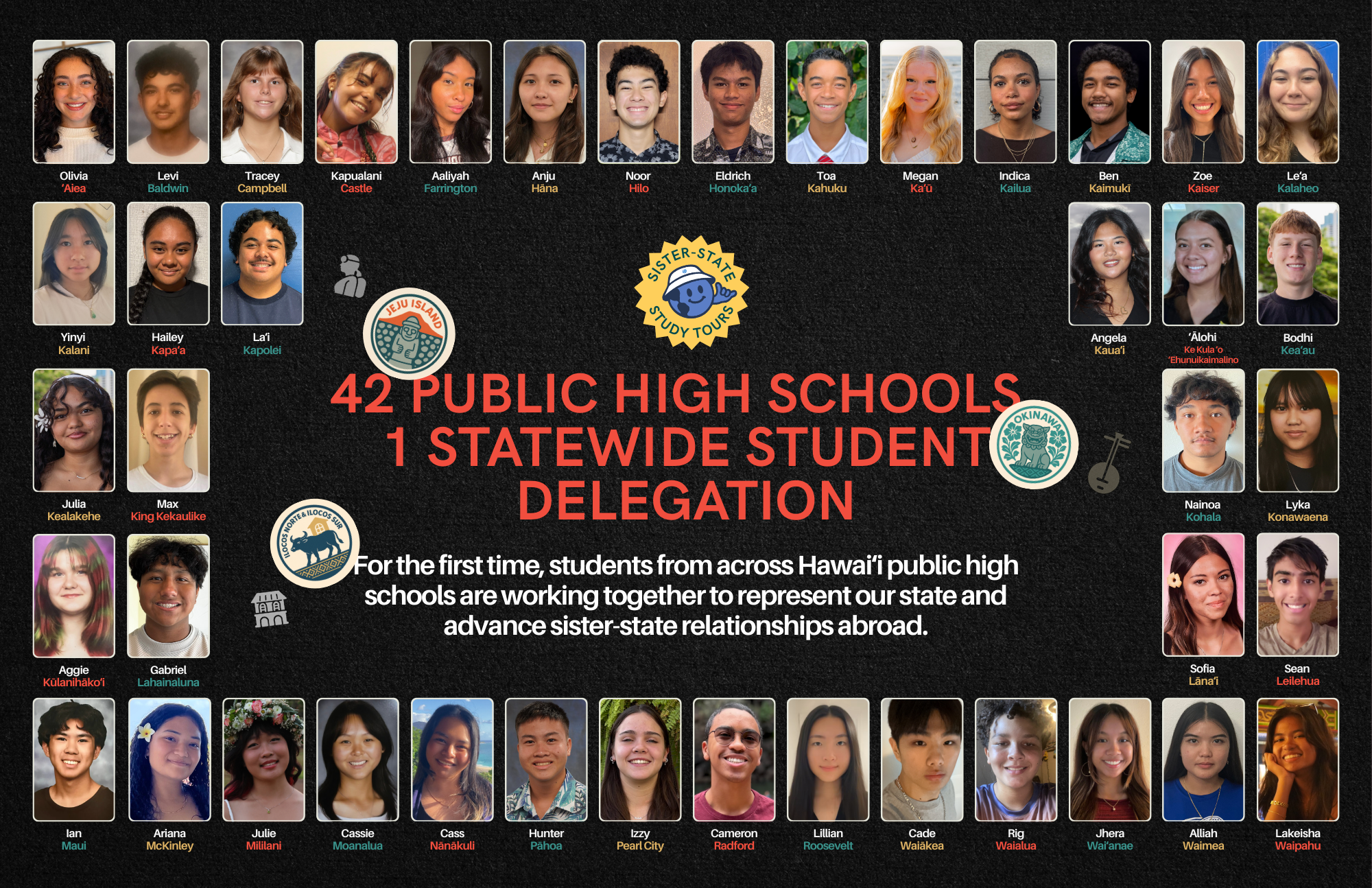
This spring break, 42 Hawaiʻi public high school students will represent our state on the global stage.
Through the 2026 Hawaiʻi Sister-State Study Tours Program, student ambassadors from across the islands will travel to Ilocos Norte and Ilocos Sur in the Philippines, Jeju Island in South Korea, or Okinawa in Japan from March 14–26, 2026.
What makes this year different?
Scale.
The program has expanded from last year’s pilot of 14 students to 42 ambassadors representing 42 public high schools statewide.
This isn’t just a study tour.
It’s a statewide delegation.

Designed for Access
Through a partnership between the Pacific & Asian Affairs Council (PAAC) and the East-West Center, each student will pay no more than $500 for the full experience.
This includes international airfare, lodging, meals, transportation, travel insurance, and immersive learning activities.
That cap changes everything.
It means students from all corners of our islands — from Molokaʻi, Lānaʻi, Waiʻanae, Kohala, and beyond — can participate.
For Sofia Pimentel of Lānaʻi High School, the opportunity represents more than travel.
“Living here in Lānaʻi, since we’re so small, it’s really hard to expand and find new and different opportunities. I’ve always wanted to explore the world and meet new people and try new things. This opportunity allows me to step beyond the limits of my home island.”
Building Global Ambassadors
The Sister-State Study Tours emphasize:
Historical and cultural understanding
Contemporary economic and social issues
Relationship-building across communities
Experiential, place-based learning
Students are not traveling as tourists.
They are traveling as ambassadors.
Cade Goya of Waiākea High School describes the impact this way:
“Gaining this global awareness will be very useful for connecting with others in the future, help me understand global issues, and find new ways to lead.”
For Nainoa Hooke of Kohala High School, the Okinawa tour is deeply personal:
“This opportunity means a lot to me, my family and my community because Okinawa has a very similar climate to Hawaiʻi and I can use the agricultural knowledge that I have gained there and easily apply it here.”
These are future policymakers, business leaders, educators, and cultural bridge-builders in the making.
A Statewide Commitment to Global Education
The 2026 delegation represents 42 public high schools across Hawaiʻi — from Hawaiʻi Island to Kauaʻi to Oʻahu and Maui County.
The program is a partnership between the Pacific & Asian Affairs Council (PAAC) and the East-West Center, combining more than 20 years of student travel expertise with decades of international diplomacy and regional cooperation.
Founded in 1954, PAAC has reached more than 100,000 students statewide through its High School Global Education Program and now serves approximately 1,500 students annually.
The East-West Center brings over 60 years of fostering understanding across the Indo-Pacific region, with a global alumni network of more than 70,000 leaders.
Together, the partnership ensures that global education in Hawaiʻi is accessible to everyone.
Why This Matters Now
In a rapidly shifting Indo-Pacific region, Hawaiʻi sits at a crossroads of culture, diplomacy, climate, and economic exchange.
Investing in student ambassadors today strengthens sister-state relationships tomorrow.
It ensures the next generation understands not only global issues — but Hawaiʻi’s role within them.
Forty-two students.
Forty-two public high schools.
One statewide delegation.
And a future that looks far more connected than the one before it.

Ilocos Norte/Ilocos Sur:
Aggie Watt, Kūlanihākoʻi High School
Angela Querubin, Kauaʻi High School
Cade Goya, Waiākea High School
Gabriel Akima, Lahainaluna High School
Hailey Hadley, Kapaʻa High School
Hunter Lee, Pāhoa High & Intermediate School
Julia Bowman, Kealakehe High School
Julie Matsumoto, Mililani High School
Kapualani Ruiz-Hyde, James B. Castle High School
Lakeisha Quitog, Waipahu High School
Olivia Barth, ʻAiea High School
Yinyi Chen, Kalani High School
Zoe Fernandez, Kaiser High School
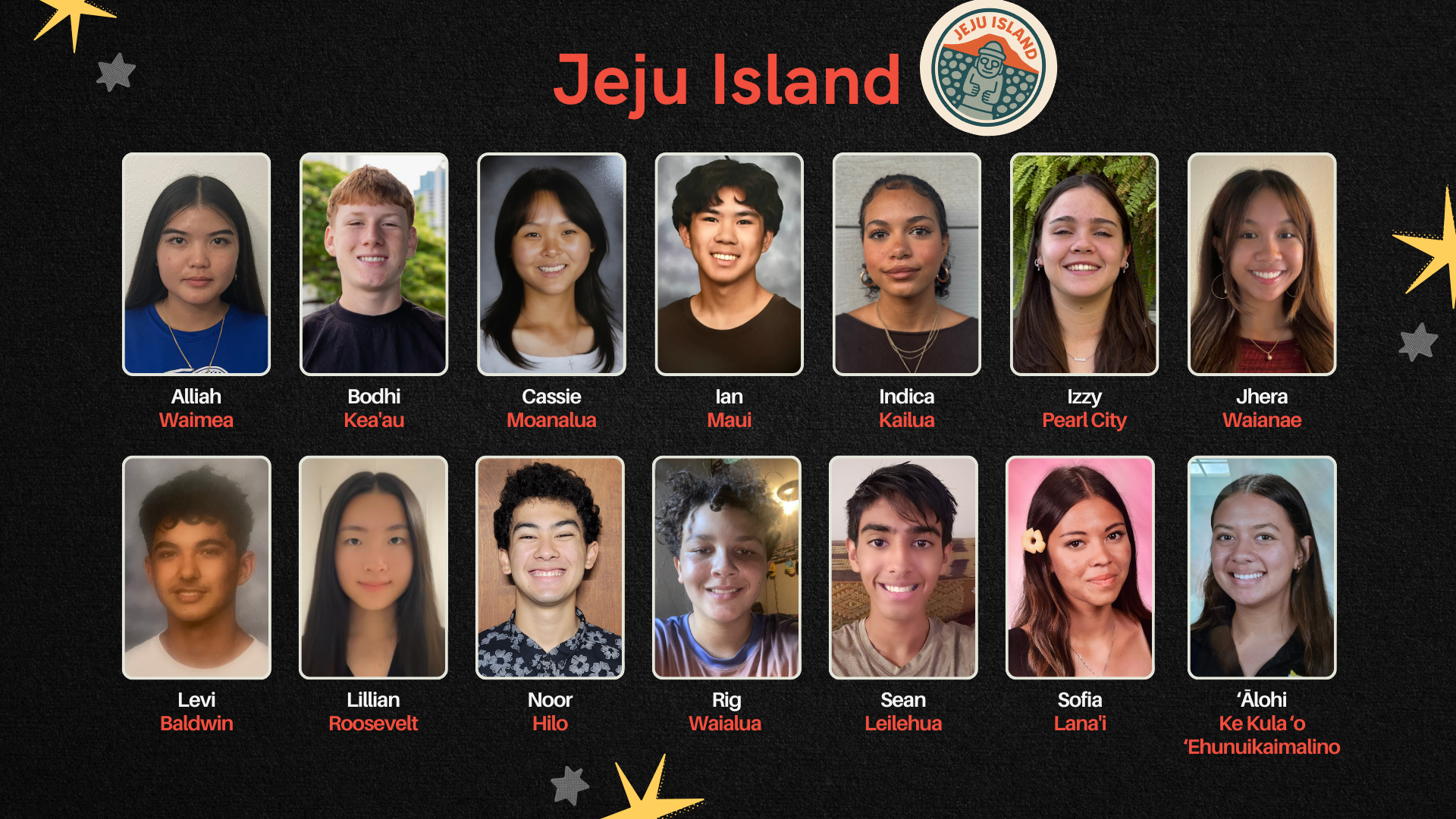
Jeju Island:
Alliah Punzalan, Waimea High School
Bodhi Parker, Keaʻau High School
Cassie Nakaoka, Moanalua High School
Ian Payba, Maui High School
Indica Brown, Kailua High School
Izzy Myers, Pearl City High School
Jhera Paulo, Waiʻanae High School
Levi Short, Baldwin High School
Lillian Yim, Roosevelt High School
Noor Shehata, Hilo High School
Rig Lindley-Molina, Waialua High & Intermediate
Sean Palamos, Leilehua High School
Sofia Pimentel, Lāna'i High & Elementary School
ʻĀlohi Medina-Oliveira, Ke Kula ʻo ʻEhunuikaimalino
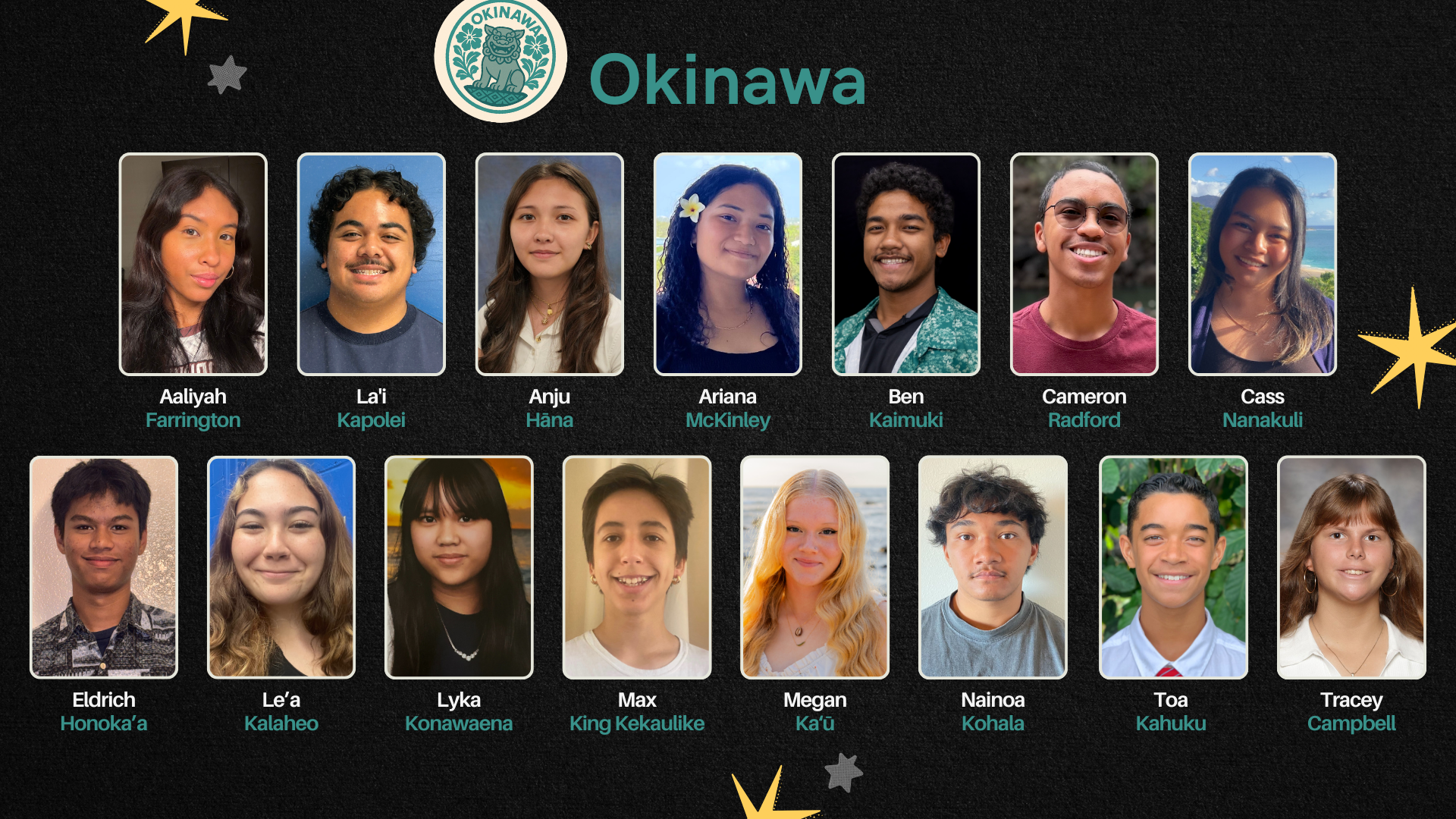
Okinawa:
Aaliyah Gabriel, W.R. Farrington High School
Laʻi Unutoa, Kapolei High School
Anju Bekkum, Hāna High & Elementary
Ariana Nath, President William McKinley High School
Ben Murdoch, Jr., Kaimukī High School
Cameron Werkman, Radford High School
Cass Cabral, Nānākuli High & Intermediate School
Eldrich Pagaran, Honoka’a High & Intermediate
Leʻa Keohohou, Kalaheo High School
Lyka Lomongo, Konawaena High School
Max Loubser, King Kekaulike High School
Megan Pierpont, Kaʻū High & Pāhala Elementary School
Nainoa Hooke, Kohala High School
Toa Aupiu, Kahuku High & Intermediate School
Tracey Beesley-Wadzinski, James Campbell High School
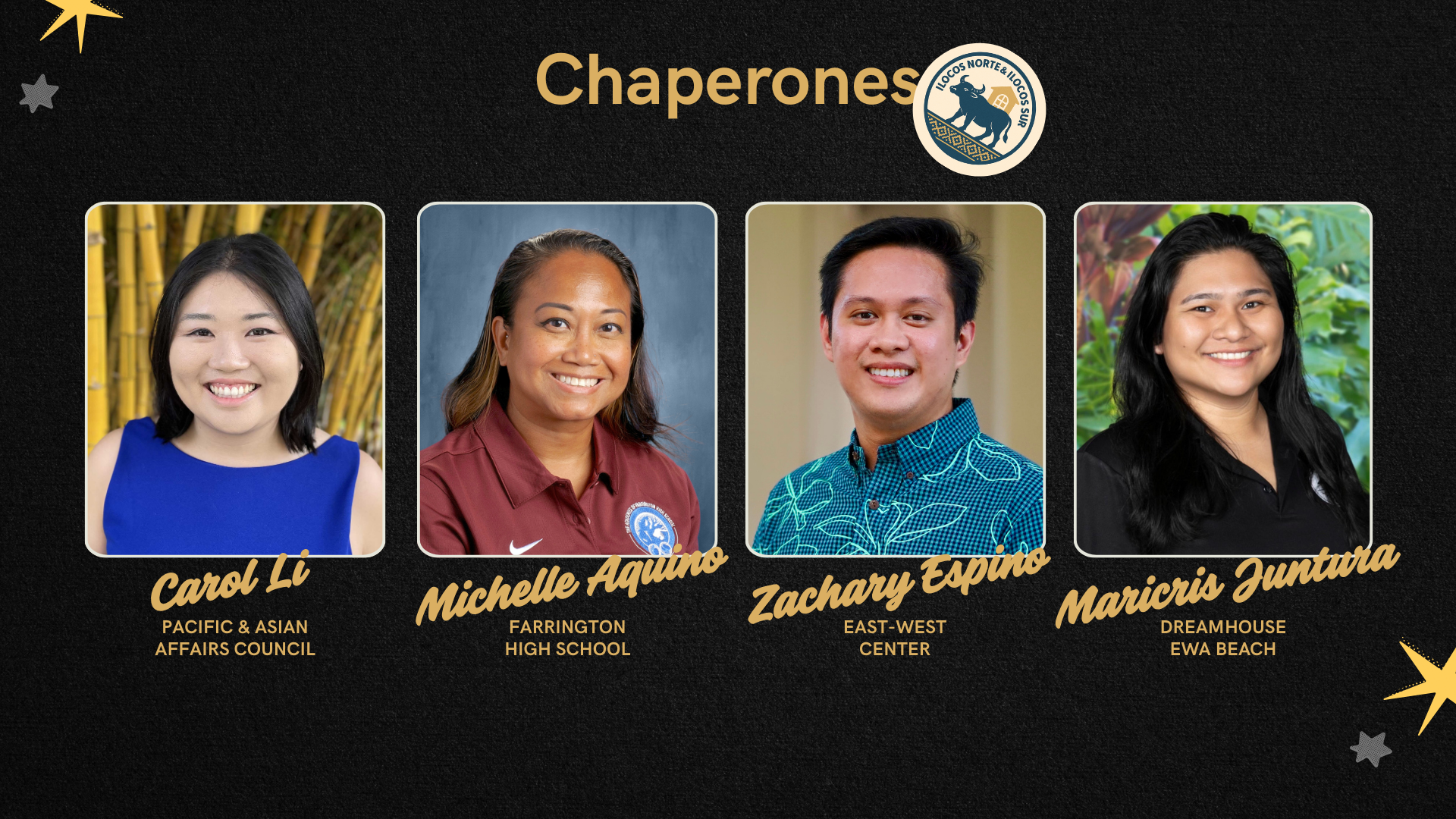
Ilocos Norte/Ilocos Sur:
Carol Li, Pacific & Asian Affairs Council
Michelle Aquino, Farrington High School
Zachary Espino, East-West Center
Maricris Juntura, DreamHouse Ewa Beach
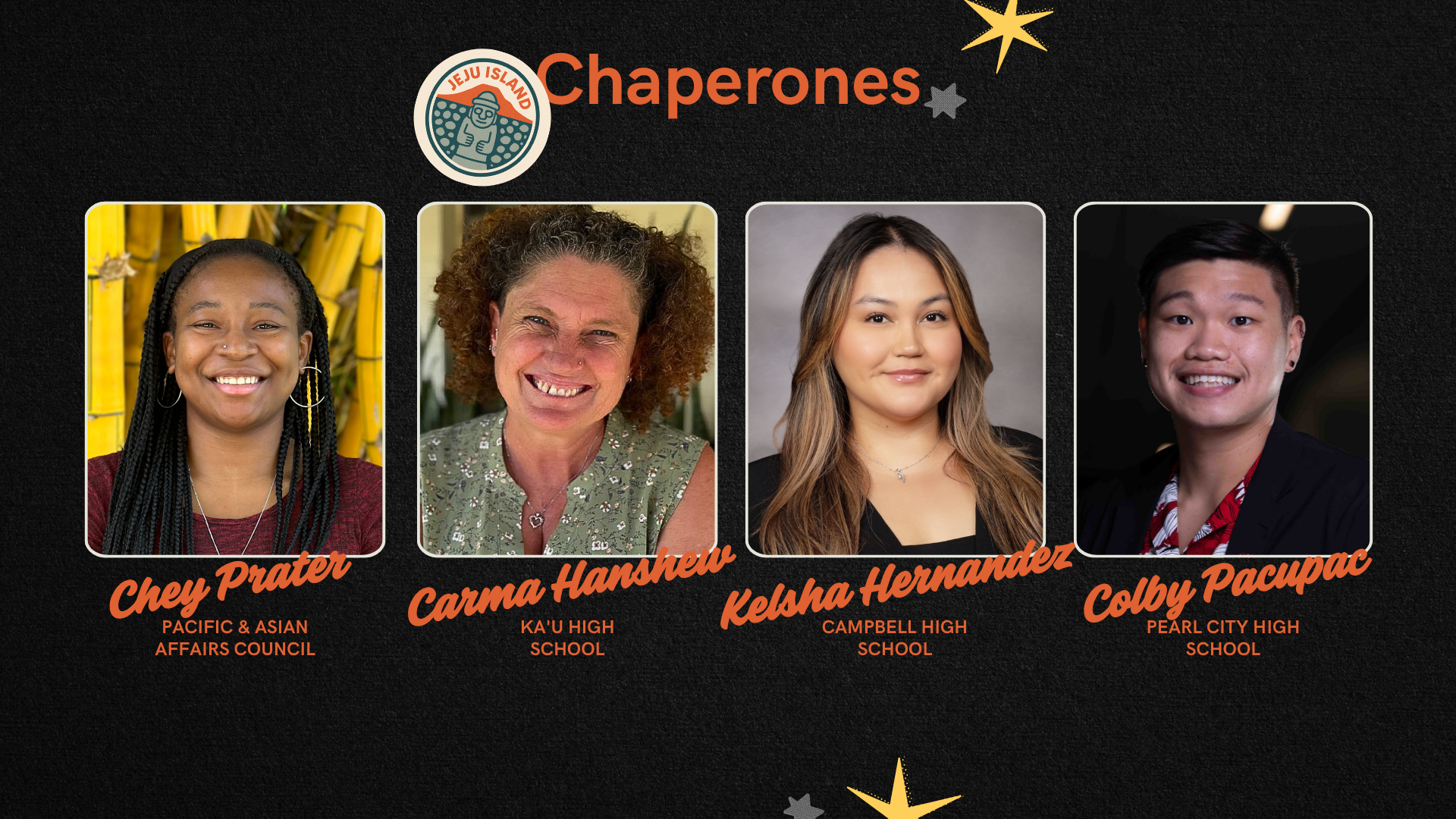
Jeju Island:
Chey Prater, Pacific & Asian Affairs Council
Carma Hanshew, Ka'u High School
Kelsha Hernandez, Campbell High School
Colby Pacupac, Pearl City High School
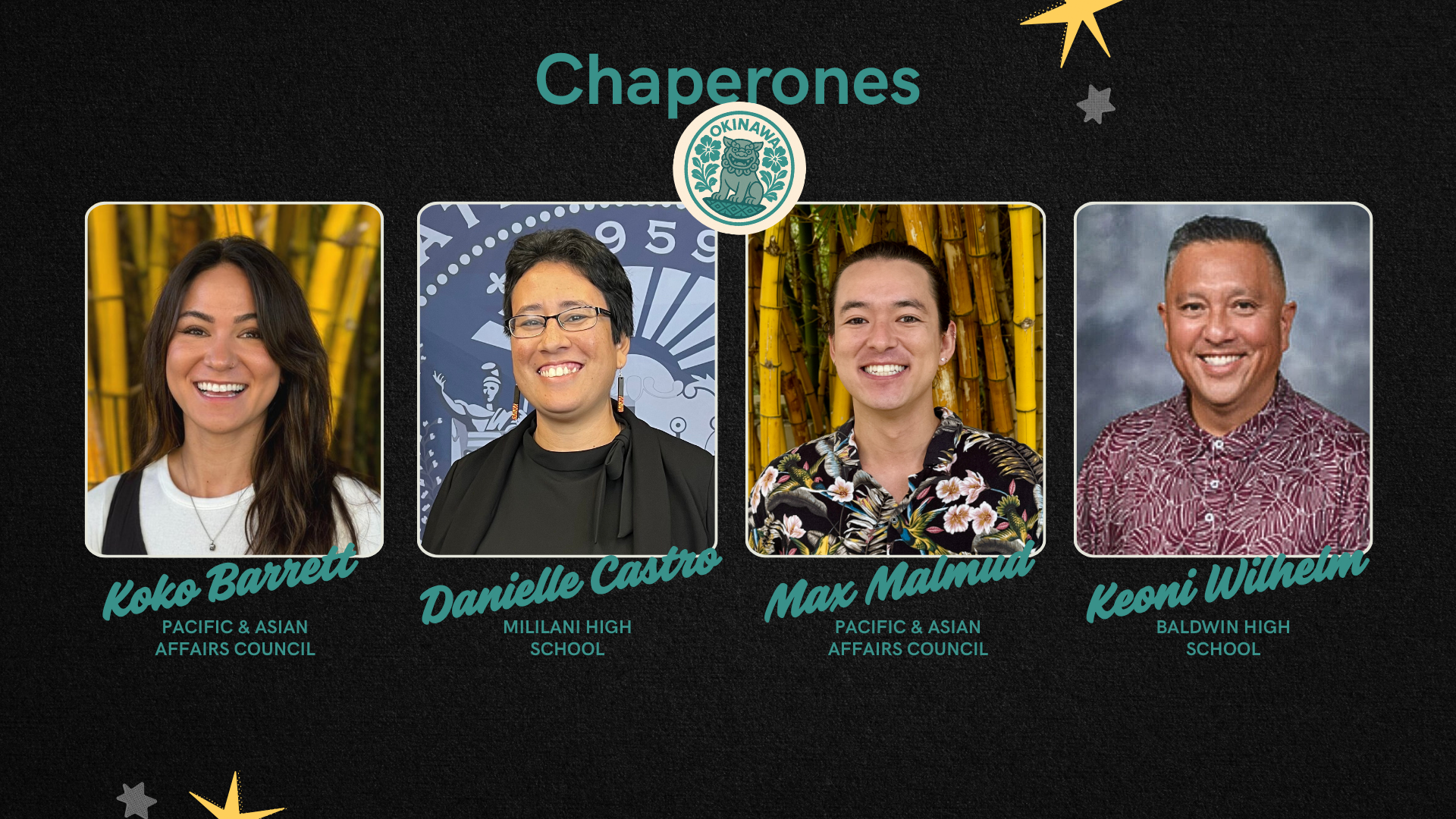
Okinawa:
Koko Barrett, Pacific & Asian Affairs Council
Danielle Castro, Mililani High School
Max Malmud, Pacific & Asian Affairs Council
Keoni Wilhelm, Baldwin High School
SEen in the news


Learn More
To learn more about the program, key deadlines, and how to support global education in Hawaiʻi, visit paachawaii.org.
