
What the Island Remembered: 2026 Okinawa Sister-State Study Tour

Fifteen public school students from Hawaiʻi traveled to Okinawa as ambassadors. They came back understanding, in their bones, that they had never really been strangers there.
Anju Bekkum had spent a long time making the lei.
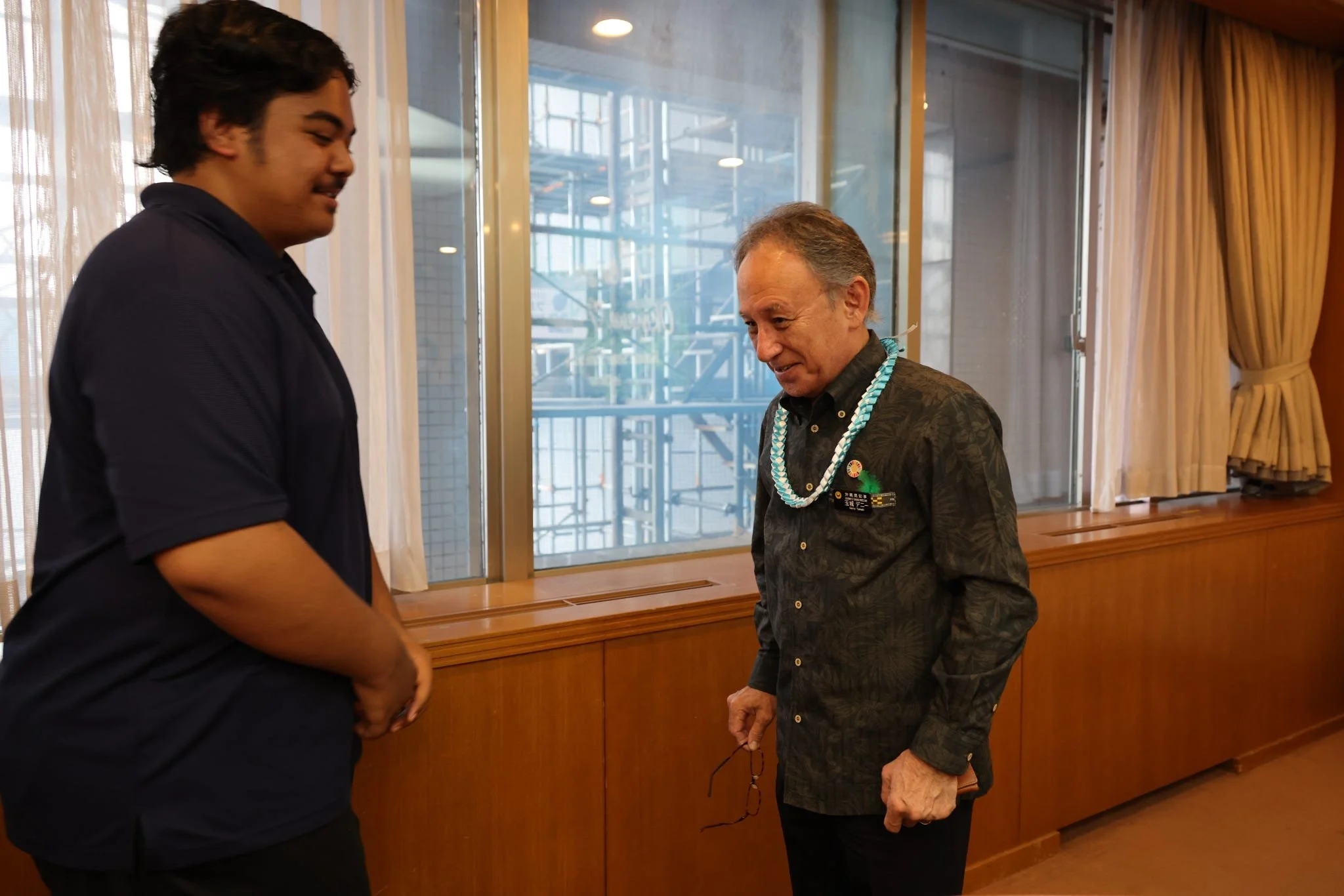
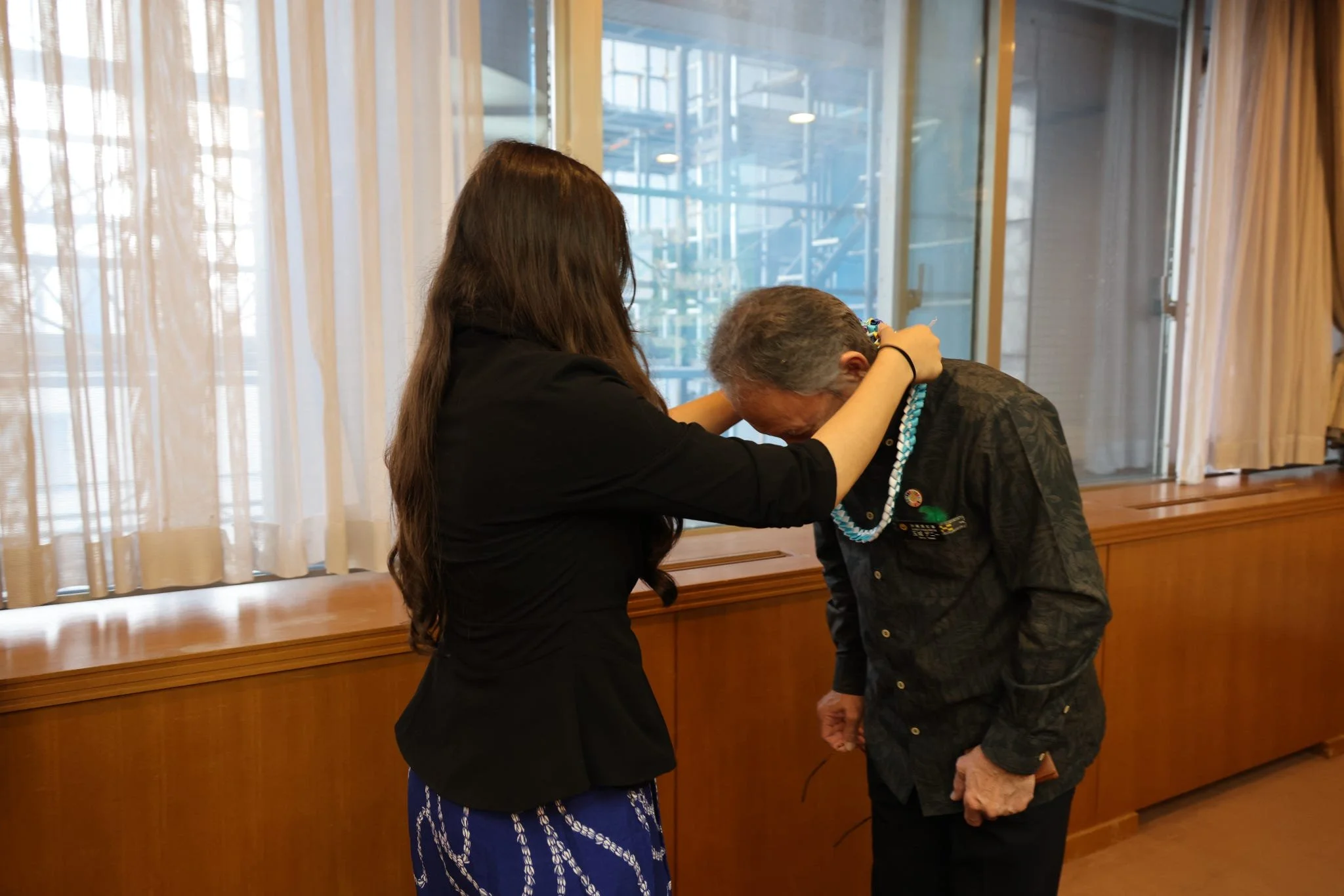
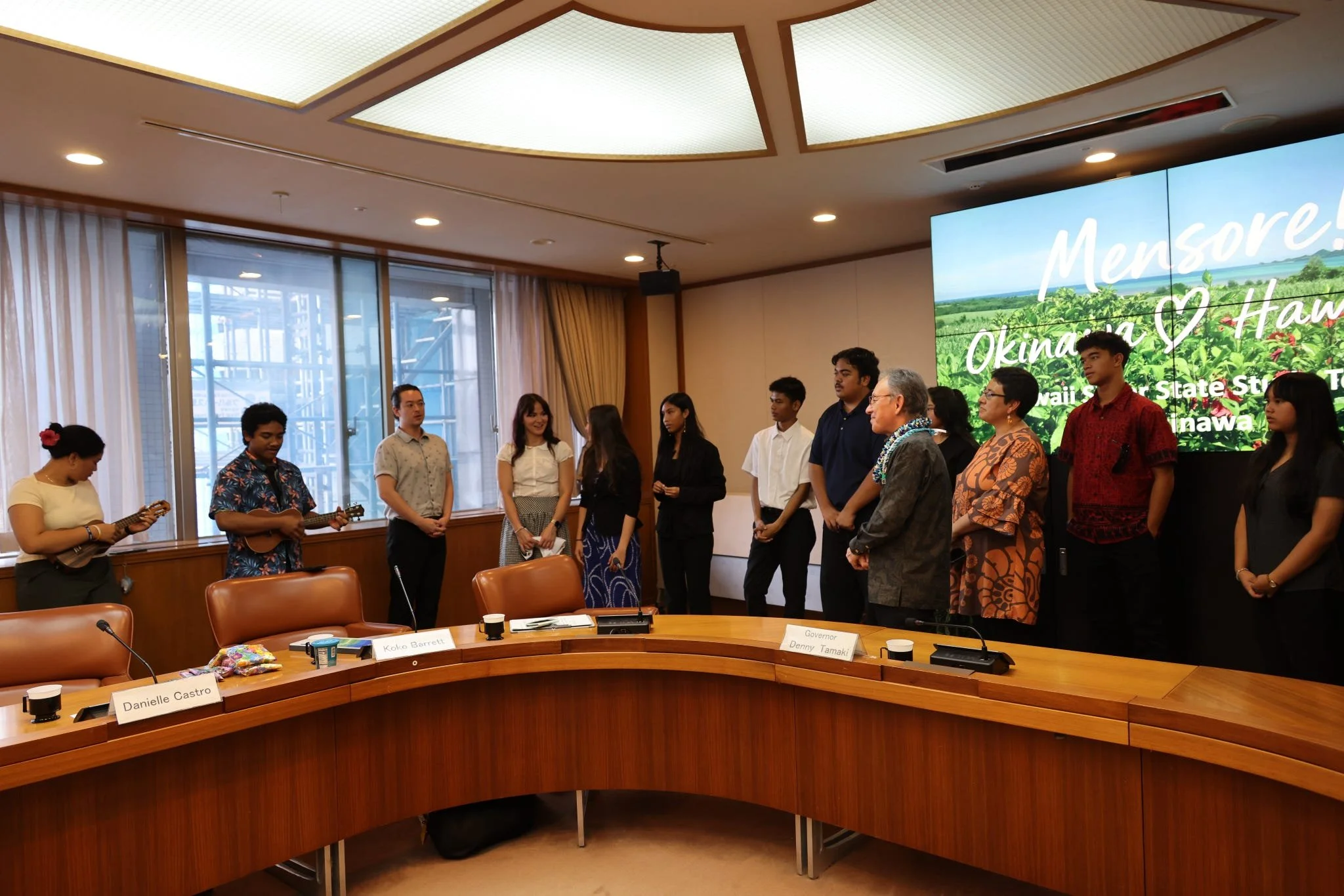
She'd started with a hunk of ribbon in her room — not the real maile or pikake she would have used at home, but the materials she had. She worked on it over several evenings, stringing and looping, thinking about what she wanted to say. When the delegation was finally ushered into the formal meeting room at the Okinawa Prefectural Government building and Governor Denny Tamaki walked in, Anju was ready.
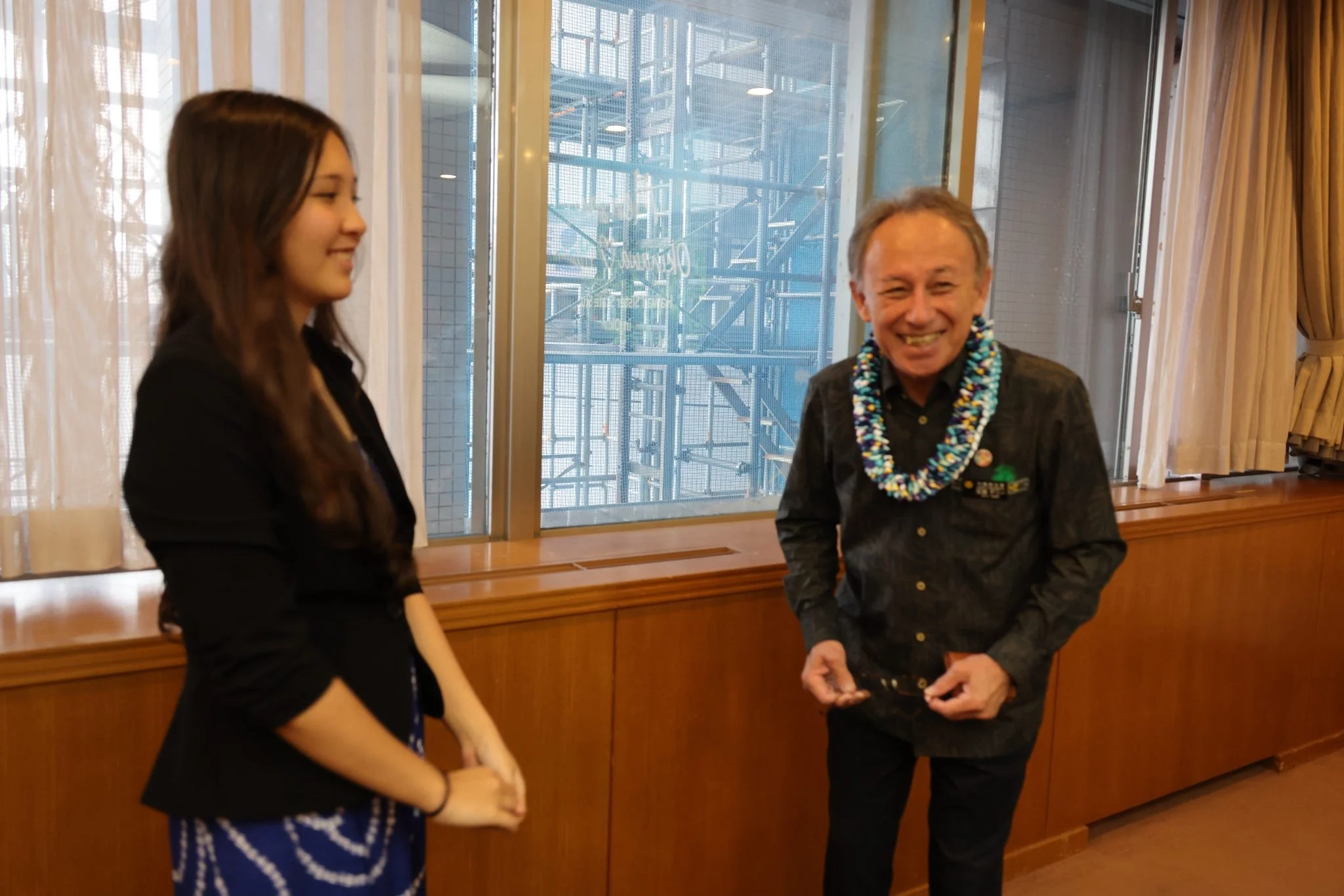
She walked up to him, placed the lei over his shoulders, and bowed.
"I remember seeing him wear it throughout the meeting and thinking — that thing was just a hunk of ribbons in my room, and now it's on the governor's shoulders," she wrote afterward. "I hope he keeps it as a representation of Hawaiʻi's love for Okinawa."
There was something clarifying about that moment — a student from Hāna High School, the first student from Hāna to ever participate in PAAC, giving a handmade lei to the governor of a Japanese prefecture, 4,000 miles from home. It was awkward and tender and exactly right. Governor Tamaki wore the lei for the rest of the meeting. He had met Governor Josh Green before, and told the students so. He asked questions. He joked. He did not act like a man receiving visitors. He acted like family.
"That makes two very down to earth and kind Governors I've now met," Anju wrote. "I love to have good impressions of my politicians."
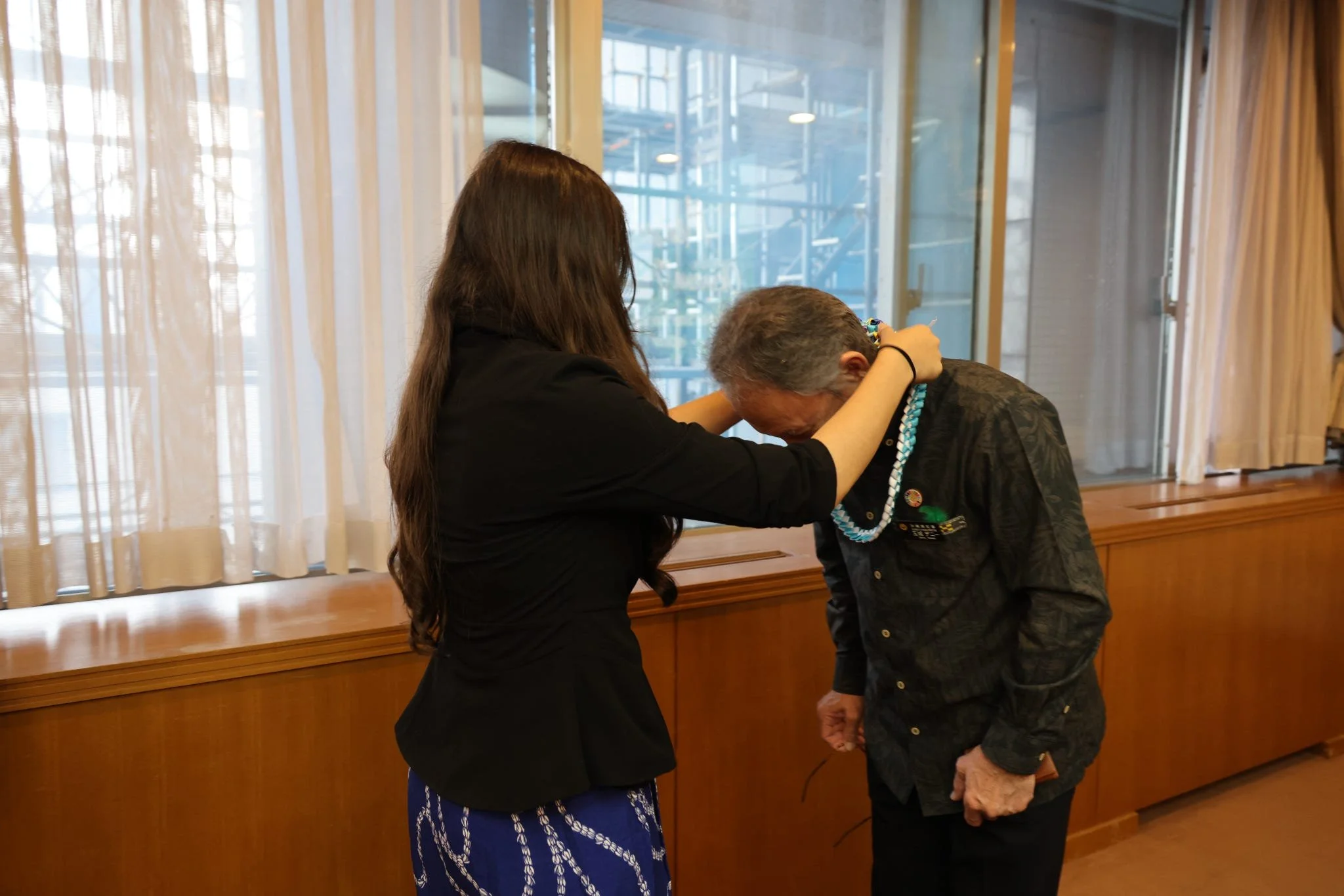
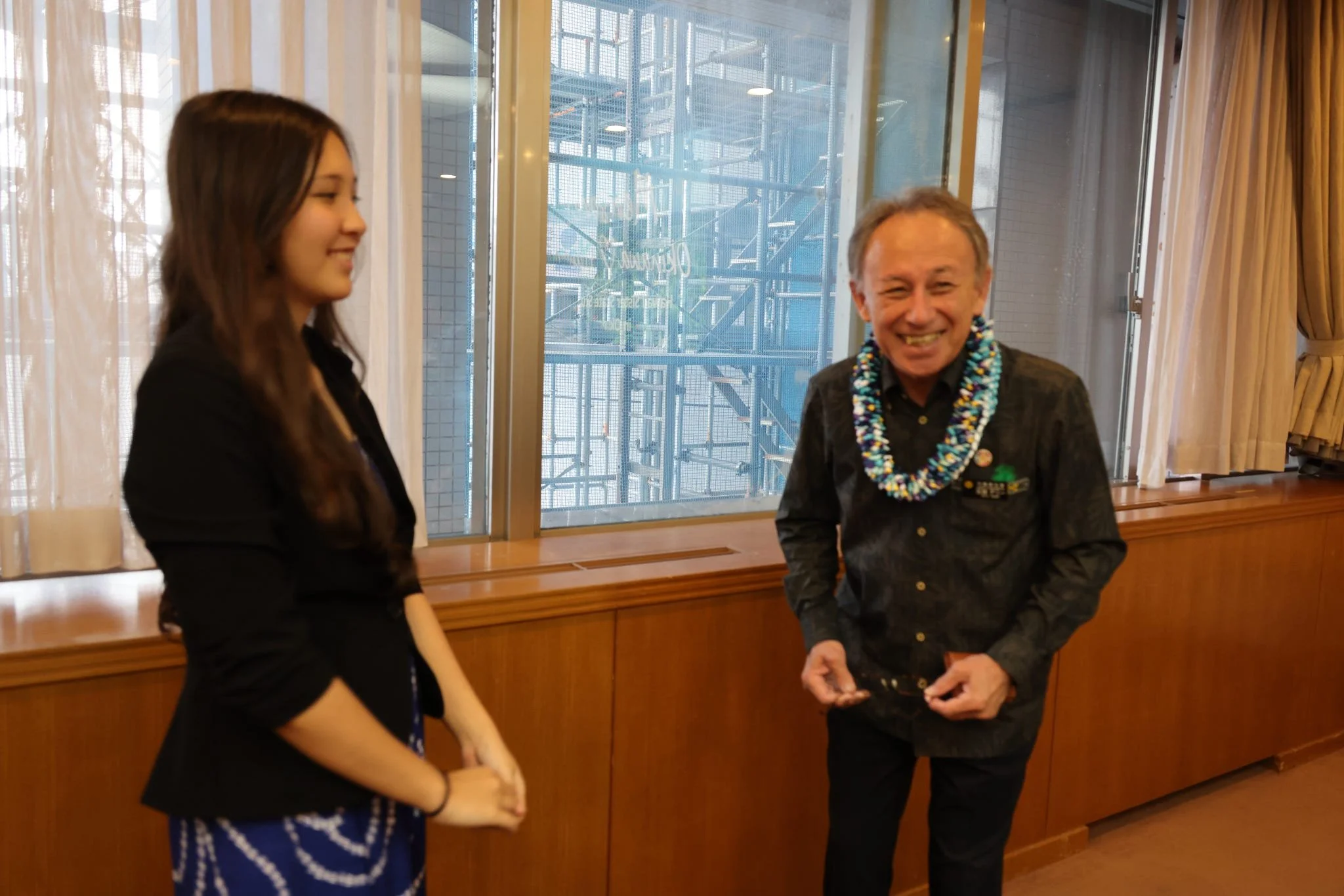
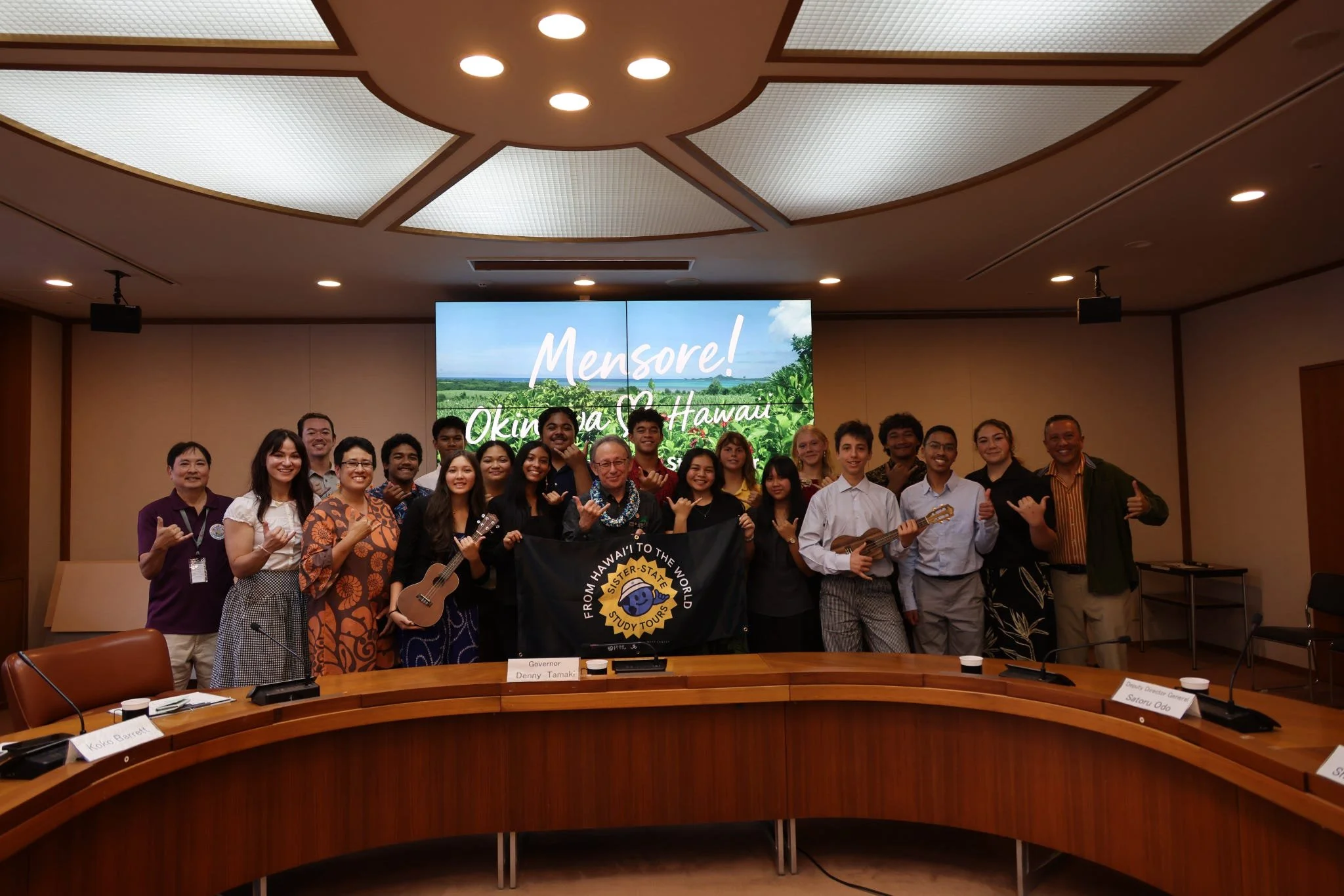
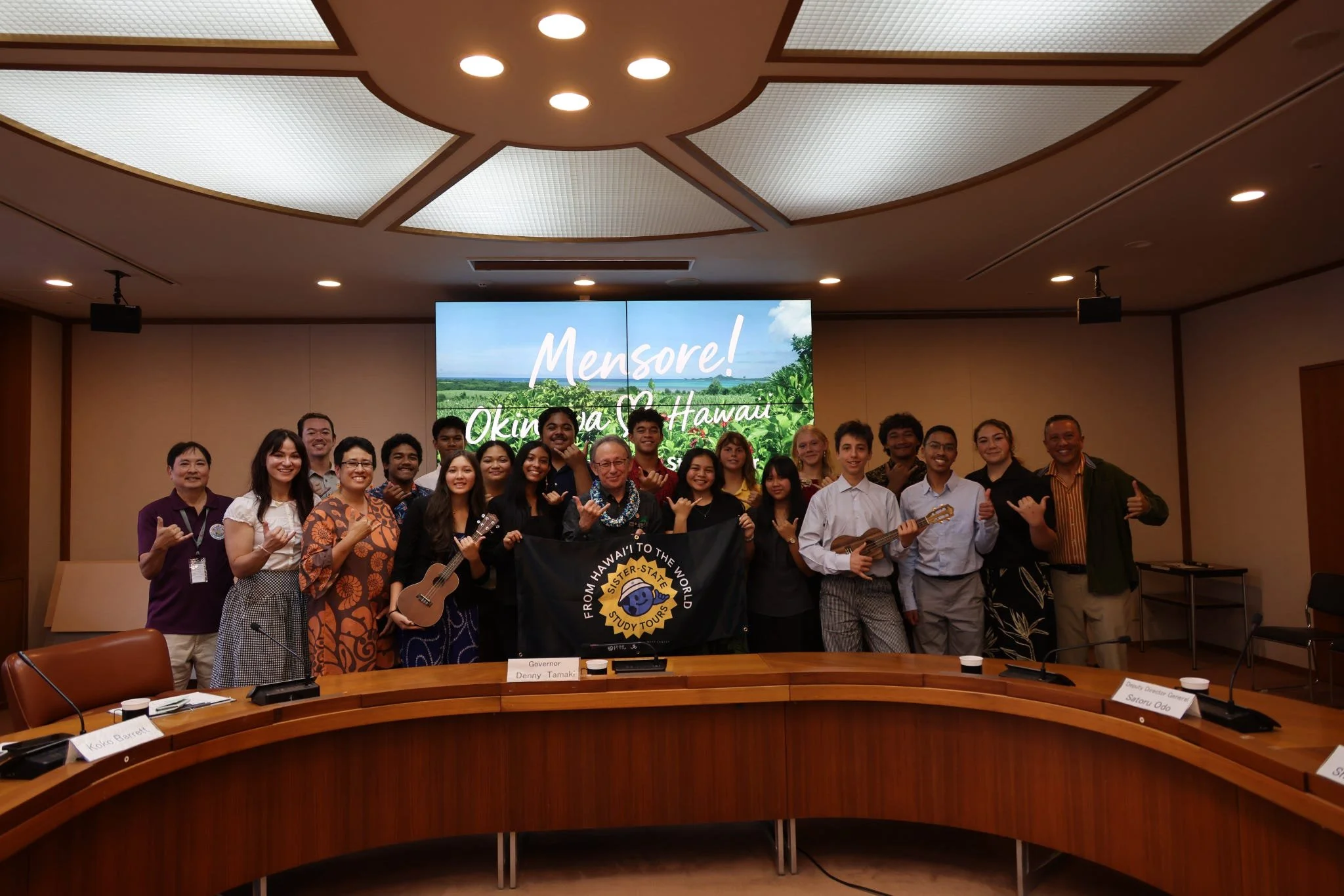
SSST Okinawa student ambassadors with Governor Denny Tamaki at the Okinawa Prefectural Government building. Anju Bekkum of Hāna High School presented Governor Tamaki with a handmade ribbon lei as a gesture of aloha, gratitude, and the enduring connection between Hawaiʻi and Okinawa.
A Program Built on Access
The 2026 Sister-State Study Tour to Okinawa did not begin in March. It began in February, at a two-day orientation at Chaminade University on Oʻahu, where forty-two public high school students from across the state — arriving from Maui, Kona, Kohala, Kaʻū, the Waiʻanae Coast, and Hāna — gathered before spring travel to three of Hawaiʻi's Sister-State destinations: Ilocos Norte and Ilocos Sur in the Philippines, Jeju Island in South Korea, and Okinawa in Japan.
This was the largest student ambassador program in PAAC's history. The 2025 pilot had sent fourteen students abroad. This year's cohort grew to forty-two, each one representing their public high school, each one paying no more than $500 for the full experience — flights, lodging, meals, insurance, and a ten-day immersion — through a partnership between PAAC and the East-West Center. That cost cap changed everything about who could say yes.
The Okinawa cohort had their own orientation programming: a visit to Jikoen Hongwanji, where they learned about the history of Okinawan immigration to Hawaiʻi and tried on a Shishimai lion costume. Their community panel featured Jodie Ching and Bee Tanji. Anju Bekkum had drawn a connection that would reverberate throughout the trip: "Okinawa is currently in the process of a cultural renaissance similar to the Hawaiian Renaissance. We are the example."
Students left orientation carrying that idea with them. They landed in Okinawa ready to test it against the real thing.
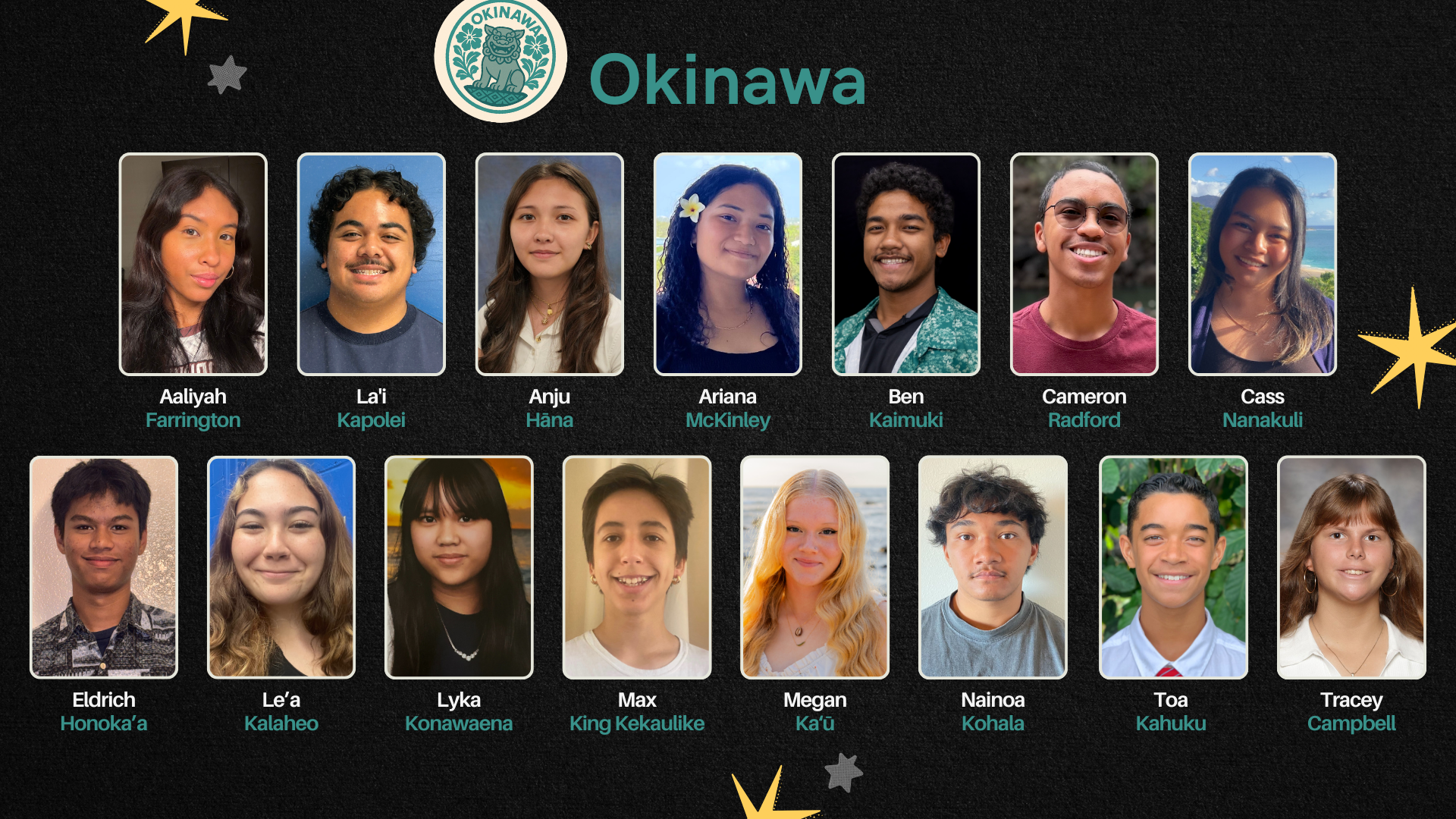
Fifteen Students. One Delegation.
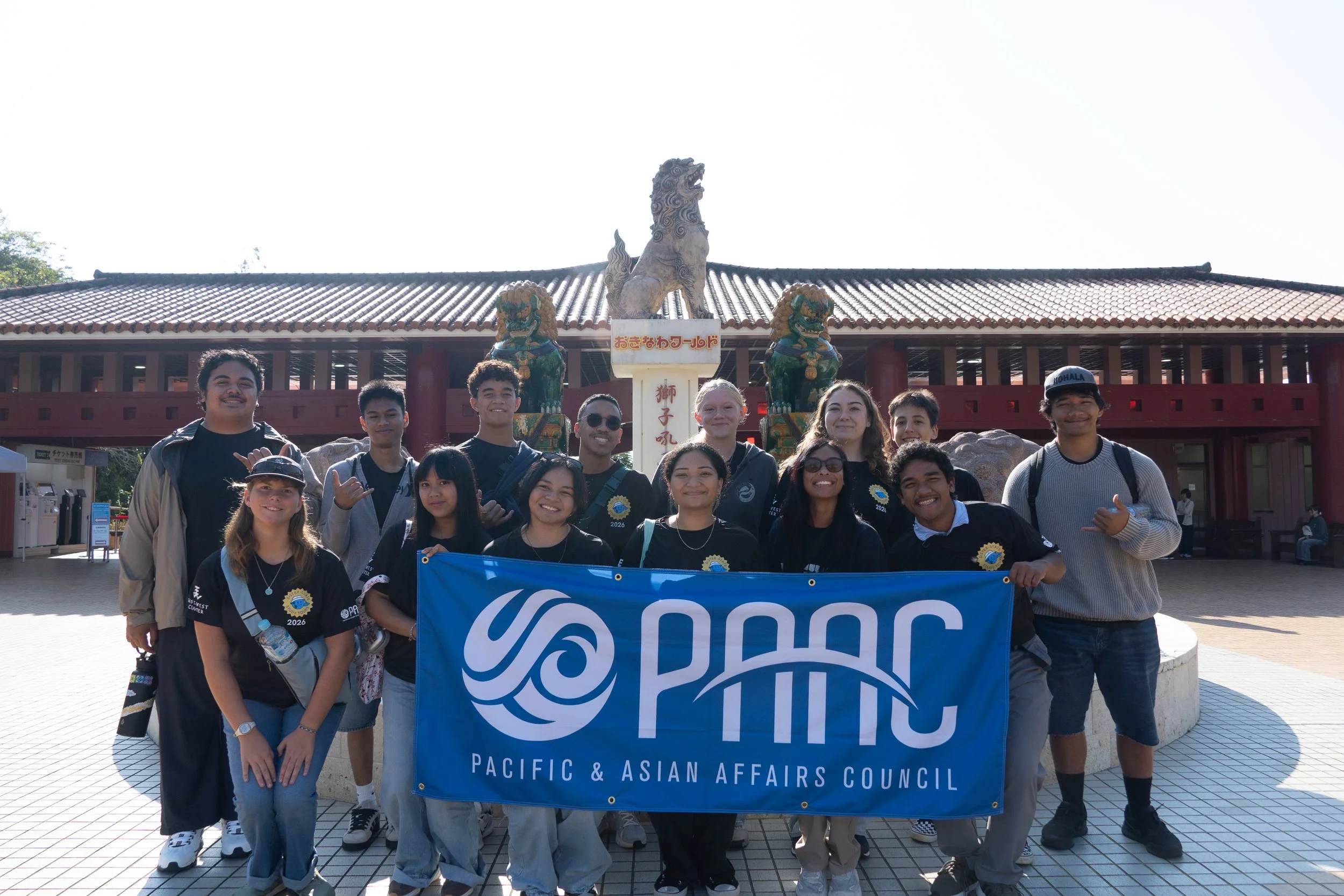
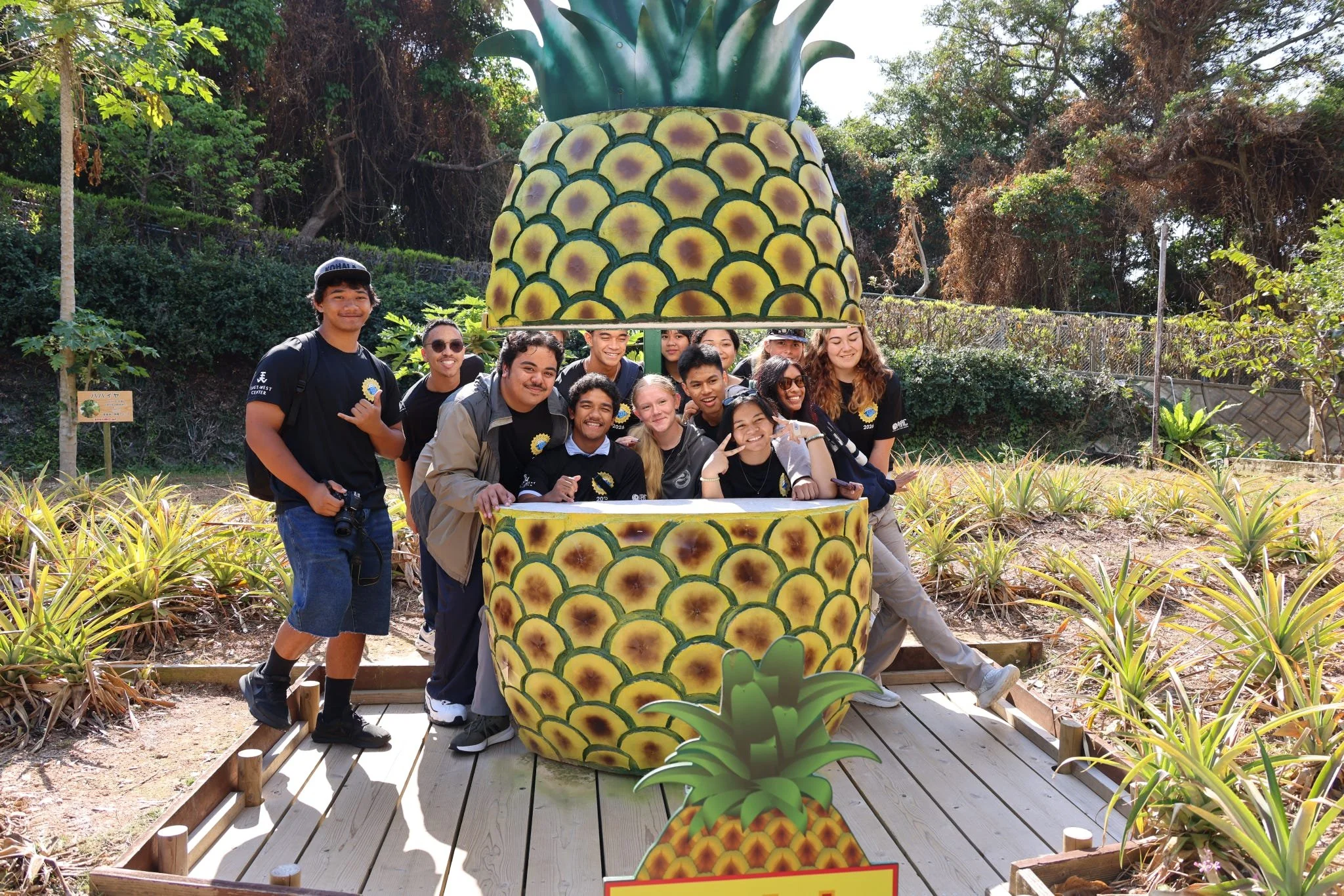
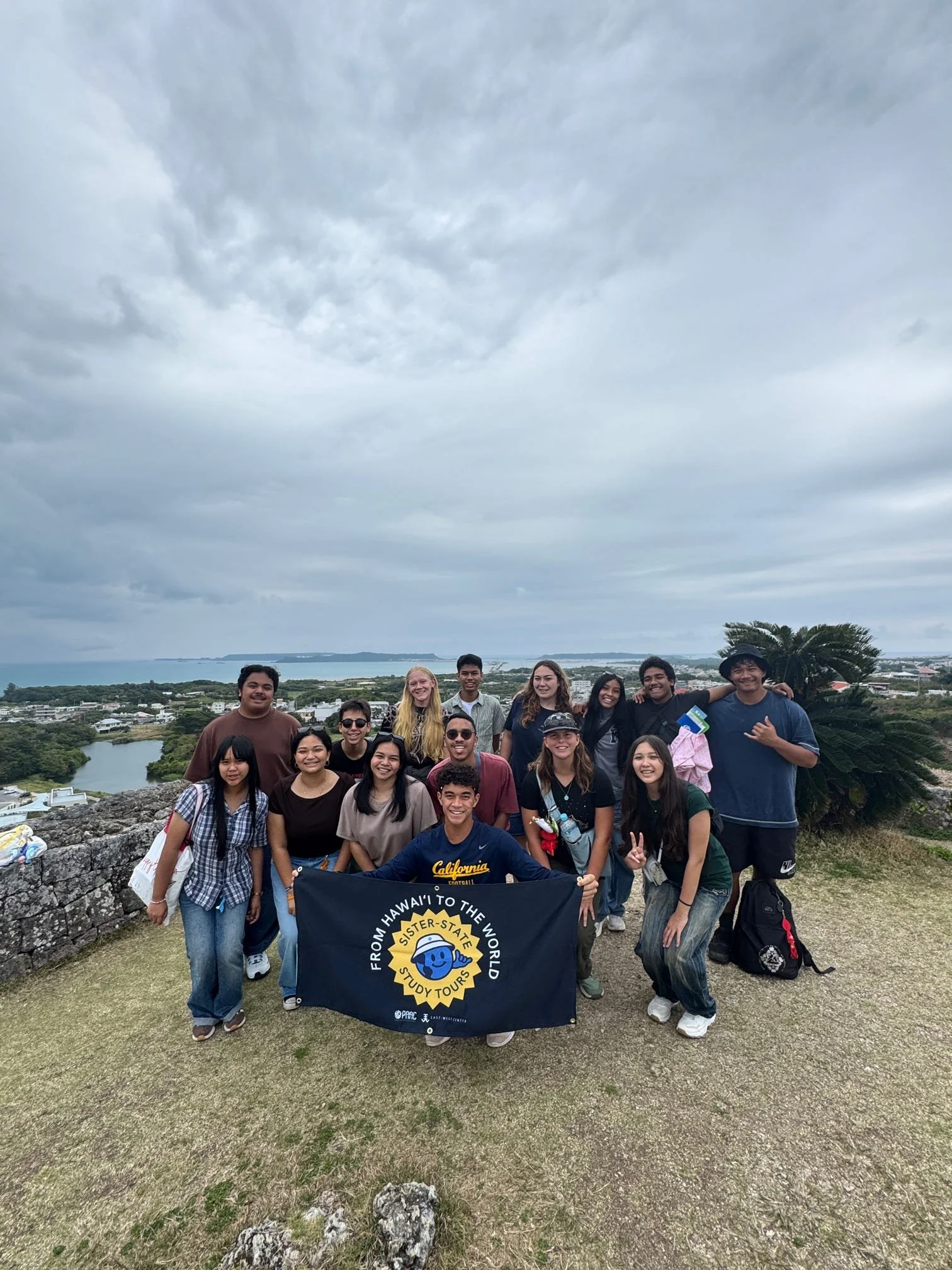
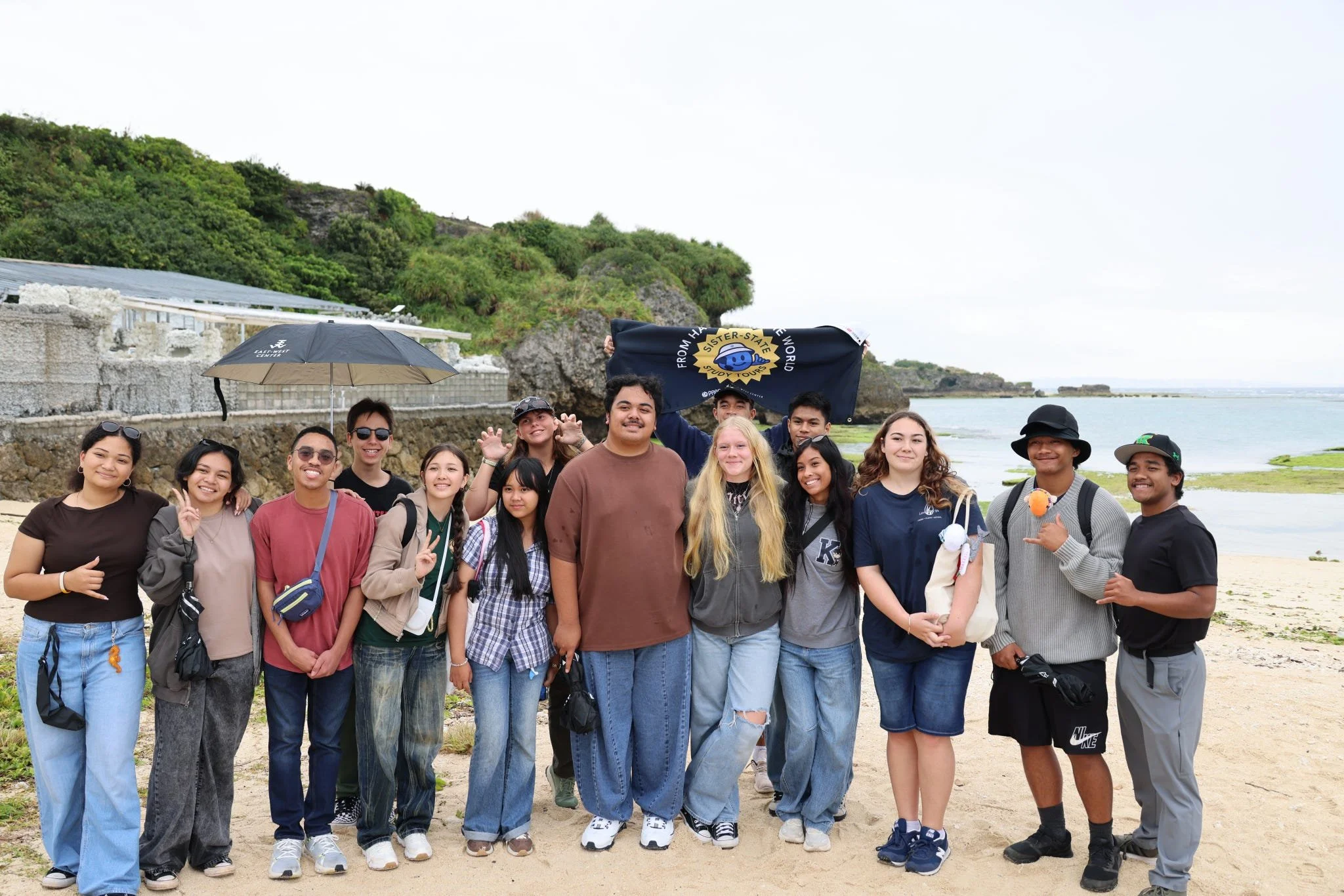
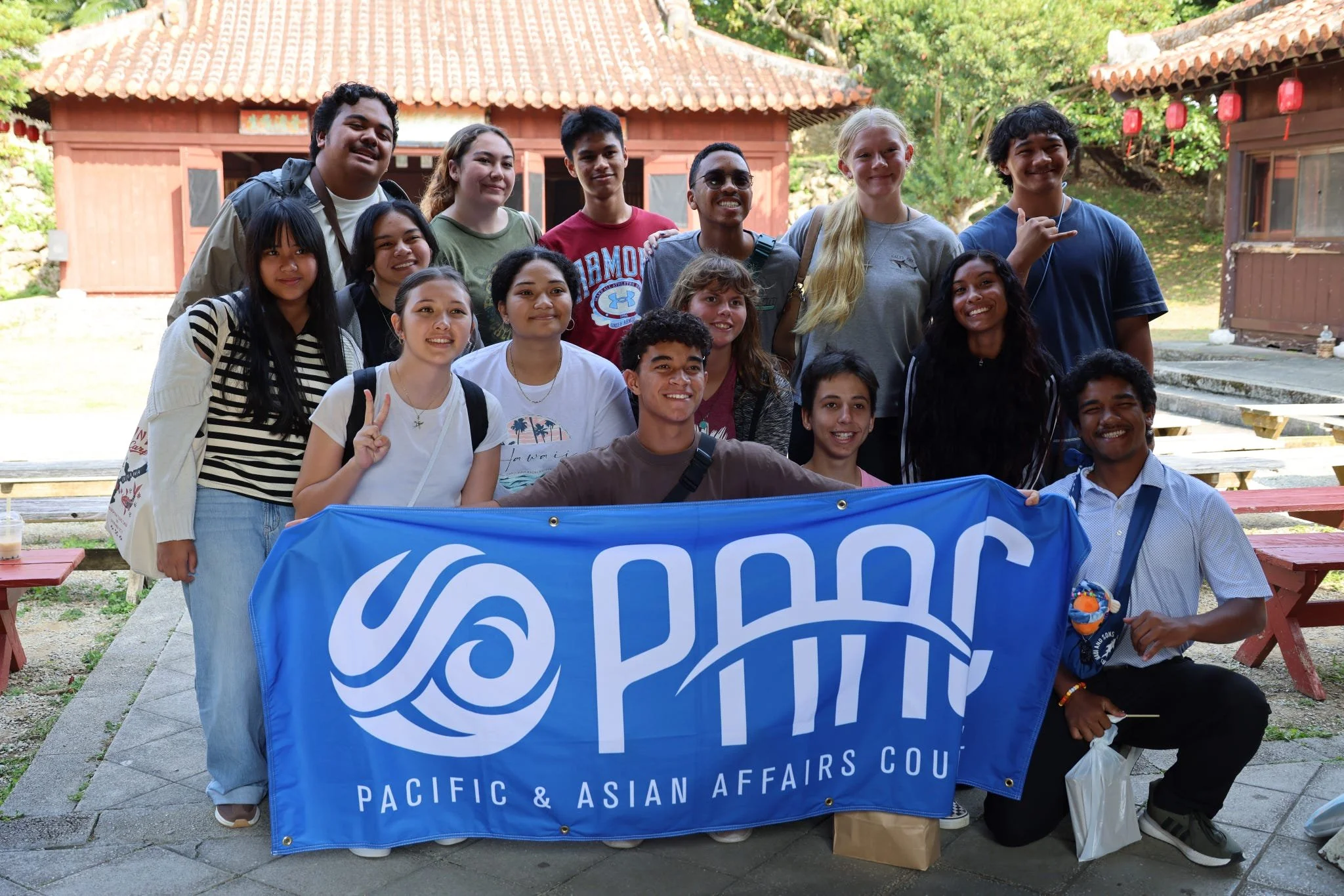
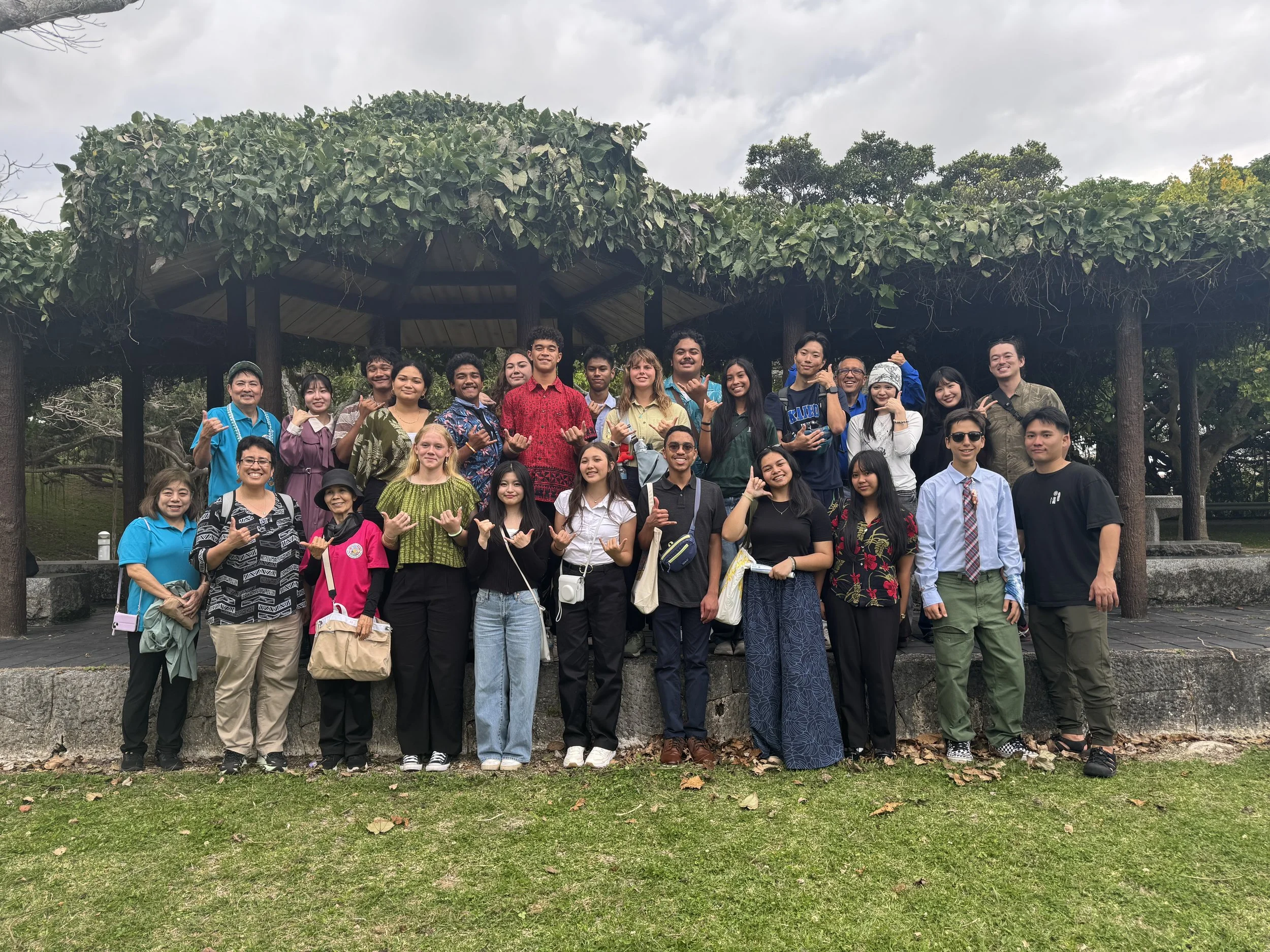
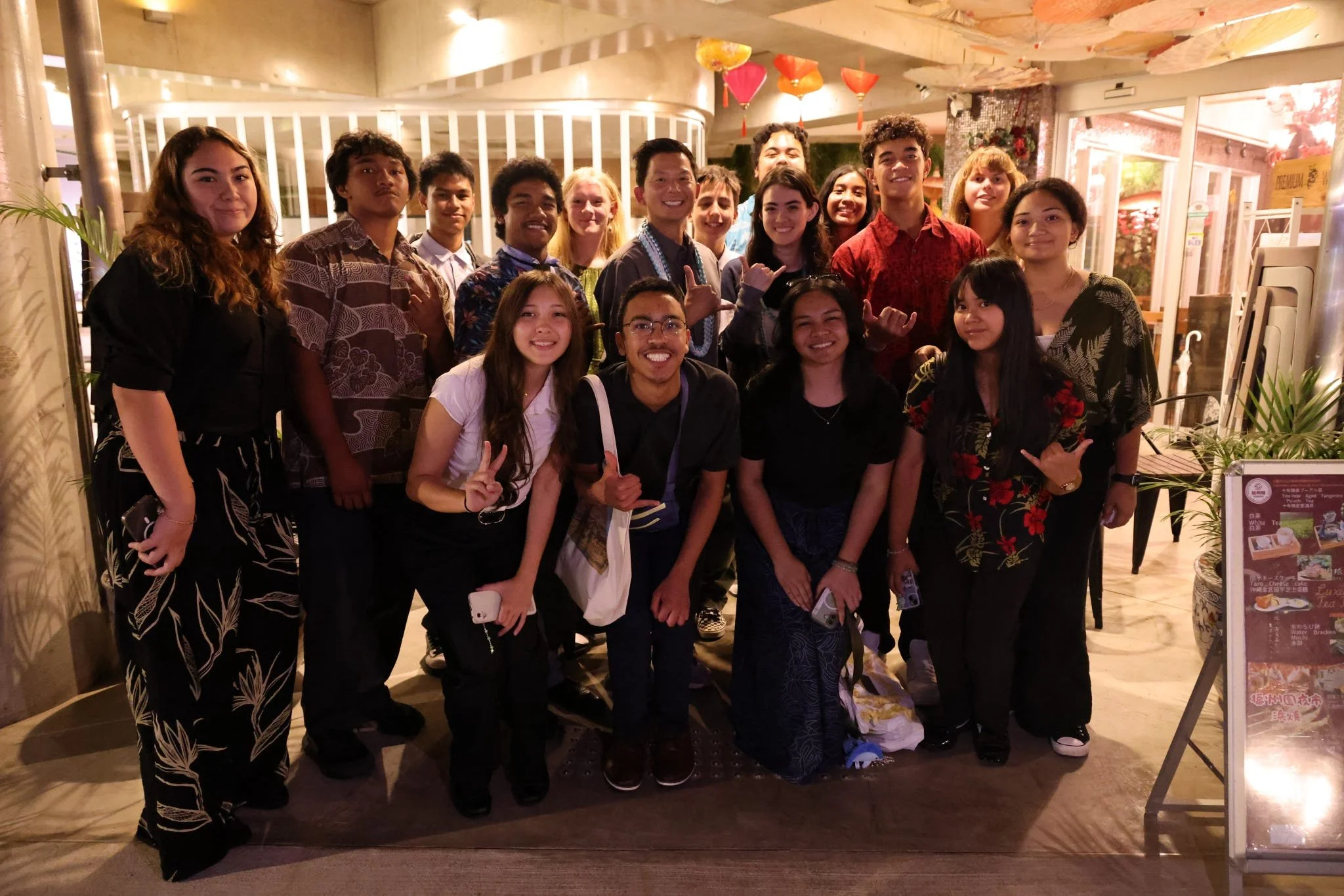
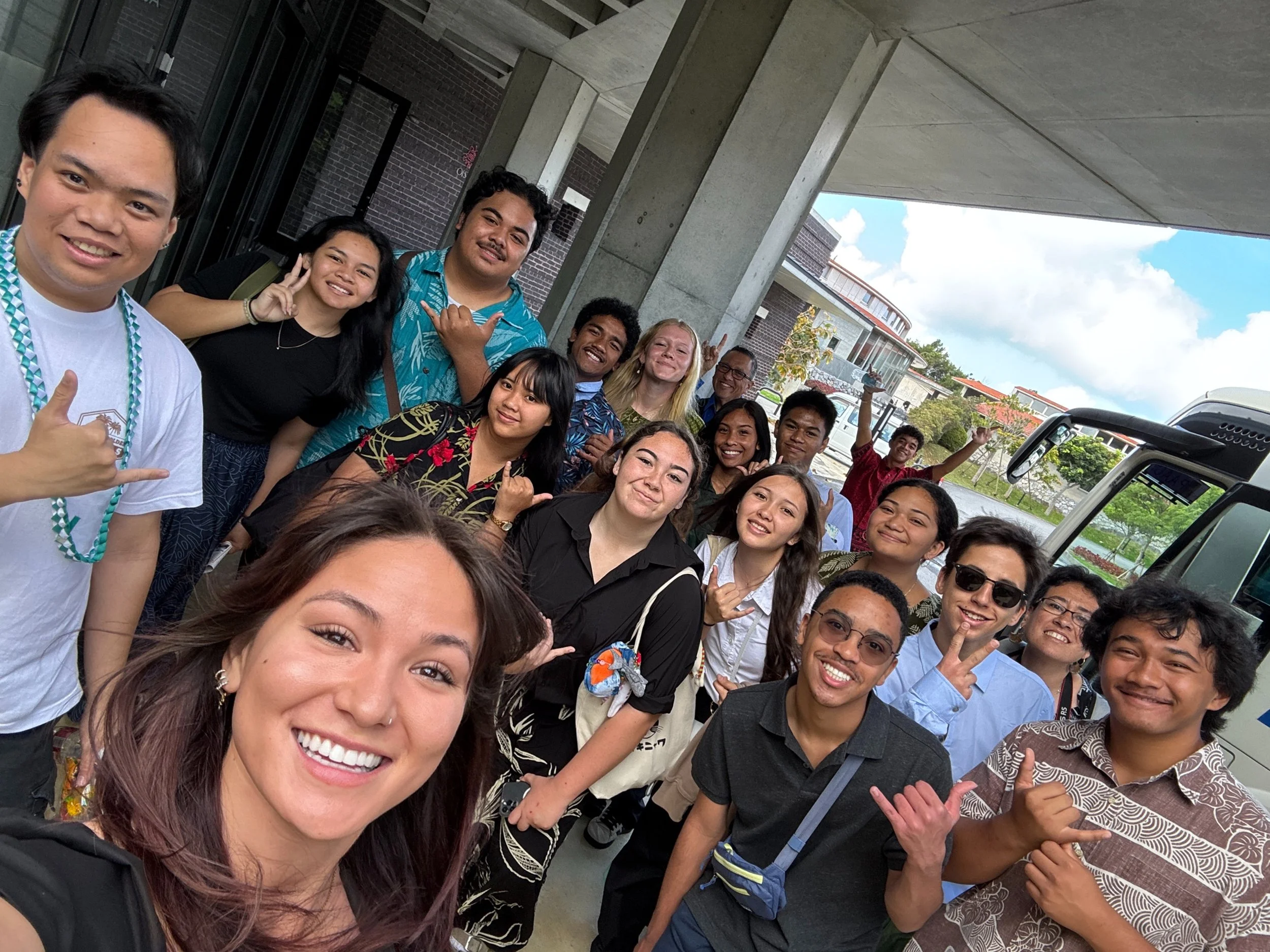
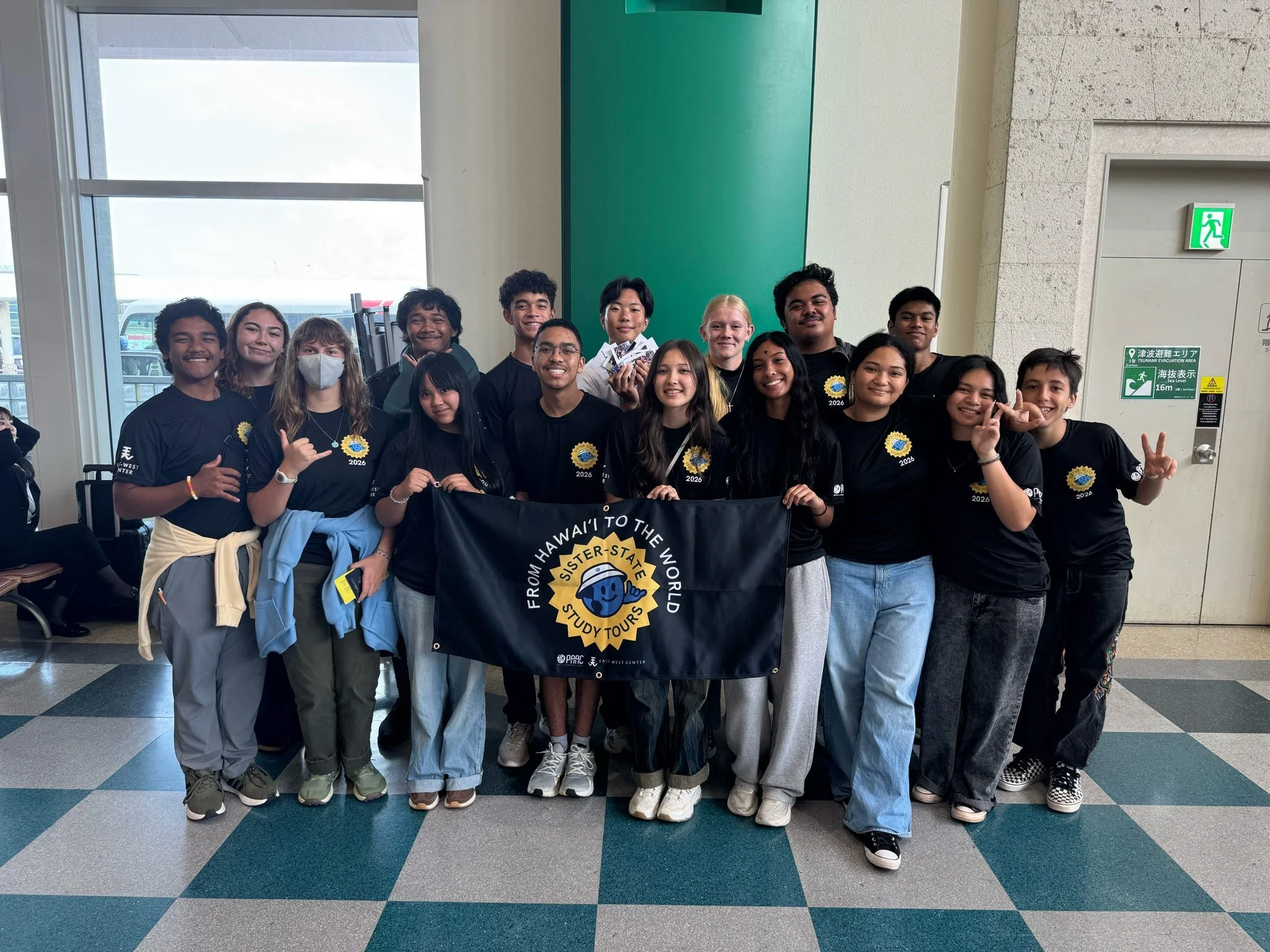
In March, fifteen students from fifteen public high schools traveled as Hawaiʻi's 2026 Okinawa ambassadors.
They were Aaliyah Gabriel of W.R. Farrington High School. Laʻi Unutoa of Kapolei High School. Anju Bekkum of Hāna High & Elementary. Ariana Nath of President William McKinley High School. Ben Murdoch Jr. of Kaimukī High School. Cameron Werkman of Radford High School. Cassadi Cabral of Nānākuli High & Intermediate School. Eldrich Pagaran of Honoka'a High & Intermediate. Leʻa Keohohou of Kalaheo High School. Lyka Lomongo of Konawaena High School. Max Loubser of King Kekaulike High School. Megan Pierpont of Kaʻū High & Pāhala Elementary School. Nainoa Hooke of Kohala High School. Toa Aupiu of Kahuku High & Intermediate School. And Tracey Beesley-Wadzinski of James Campbell High School.
They came from the north shore of Oʻahu and the southernmost tip of the Big Island. From a school serving 2,000 students in urban Honolulu and from a small school on Maui's most remote coast. What they shared was curiosity — about Okinawa, about each other, and about the mirror this island might hold up to their own.
Into the Earth
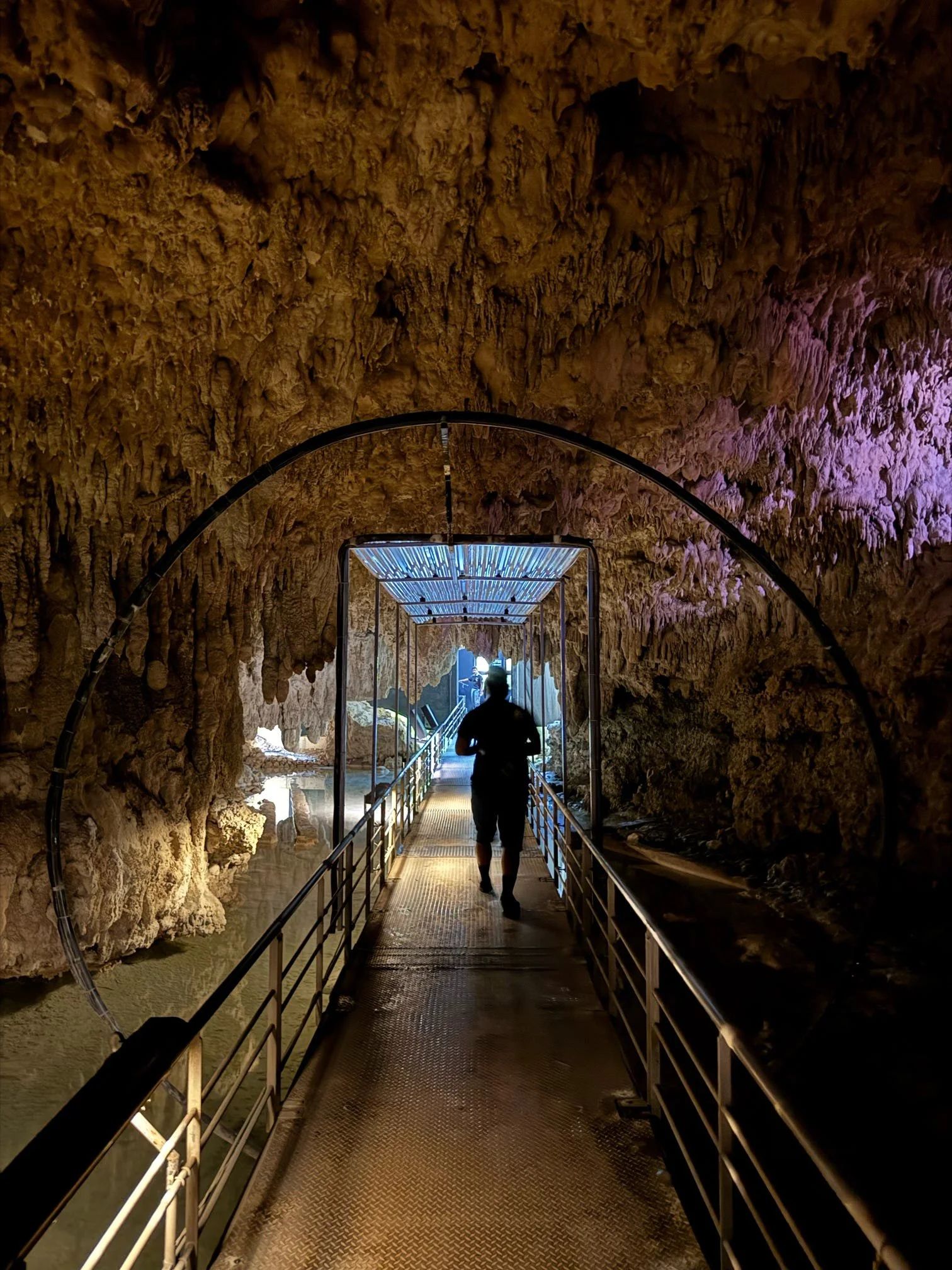
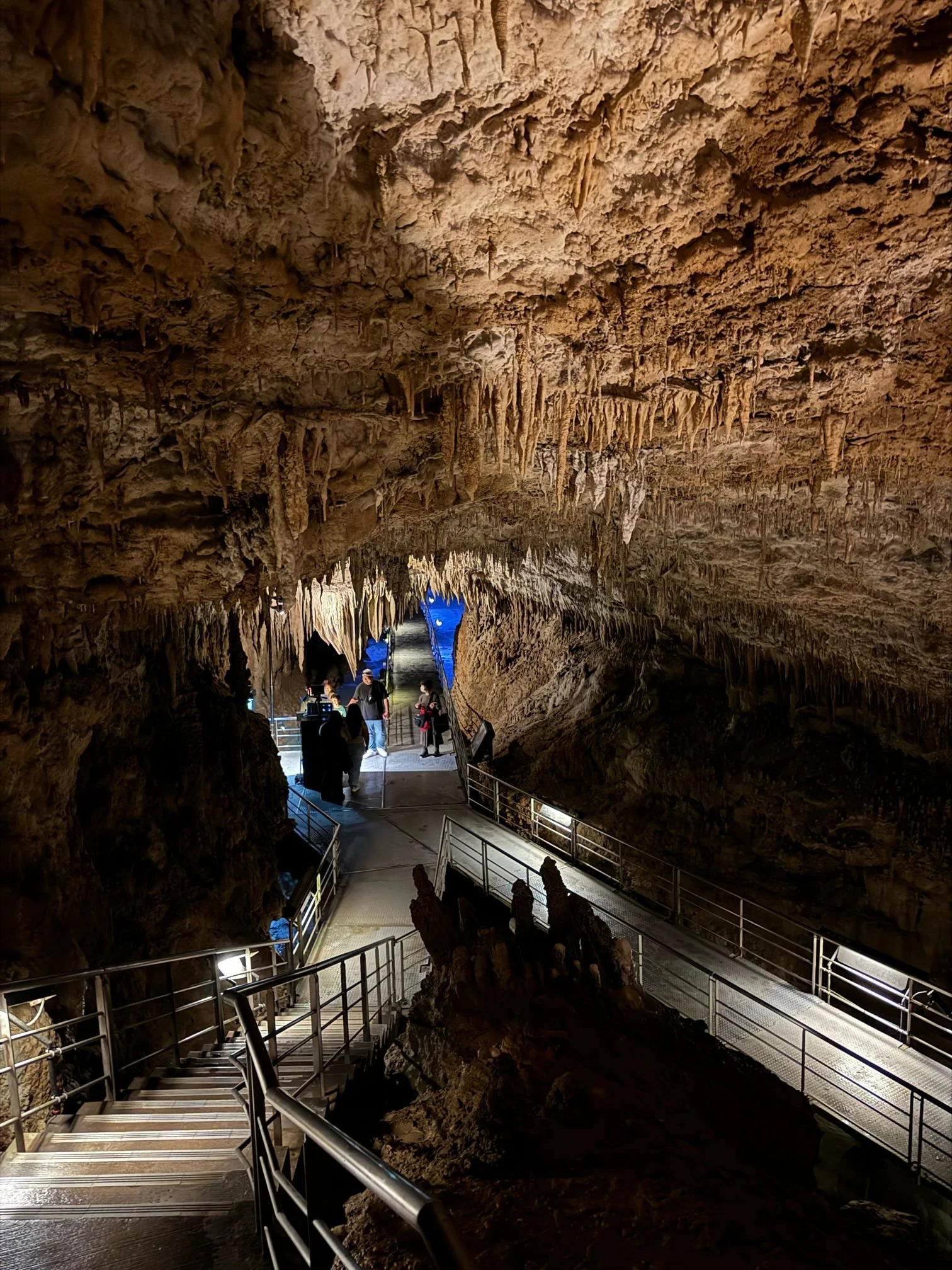
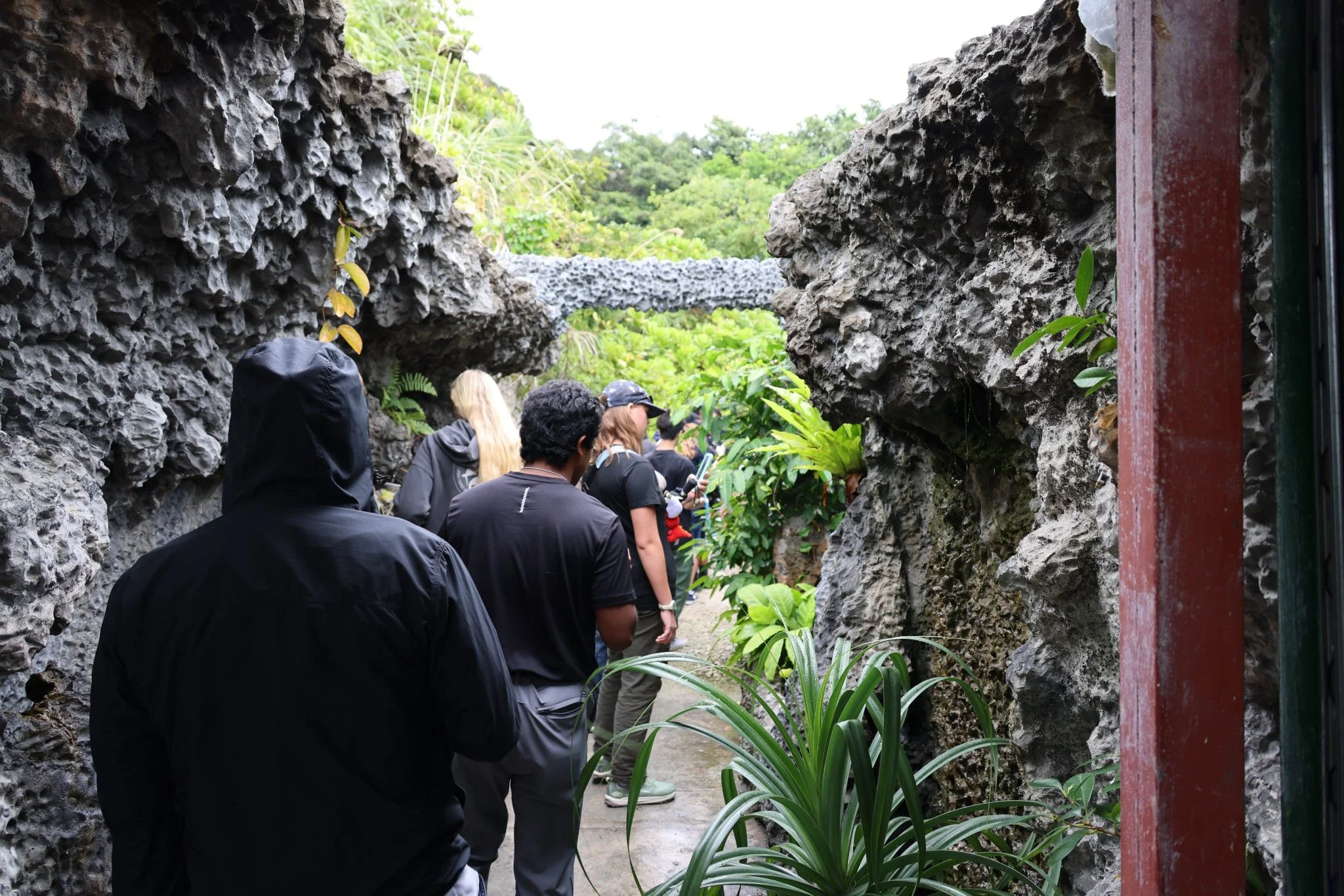
The trip opened at Okinawa World, where the group descended into Gyokusendo Cave — a vast limestone formation stretching nearly a kilometer underground, its stalactites built over tens of thousands of years. The tour guides explained that a single human lifetime would account for only nine or ten inches of rock formation. More than that, they explained what the cave had meant during the Battle of Okinawa: civilians had hidden in formations like this one for months, three months in some cases, surviving in the dark while war moved across the island above them.
The cave was lit for tourists now. There were pathways and railings and interpretive signs. Students knew they were experiencing a filtered version. That knowledge made it heavier, not lighter.
"Being in there and experiencing the humidity, the feeling of the rocks — it puts into perspective how difficult it must have been," wrote Leʻa Keohohou of Kalaheo High School. "Even though we had been in a much easier situation, where paths were marked and easily accessible, that makes me think how much more different it must have been."
Eldrich Pagaran of Honoka'a High wrote with characteristic directness: "WATER on the bottom. SPIKES on the top AND bottom. It's honestly almost unbelievable to me that the Okinawan people lived there for 3 months WHILE IT ALSO STILL BEING VERY DARK." He connected the Okinawans' forced reliance on the cave to the broader pattern of Japanese imperial pressure — people driven underground, literally, by the weight of someone else's war.
Max Loubser of King Kekaulike framed the tension of the experience precisely: "It may appear beautiful here, but has been filtered through the lights and perceptions of a tourism industry. I'm sure it would have been much harsher to actually survive down there."
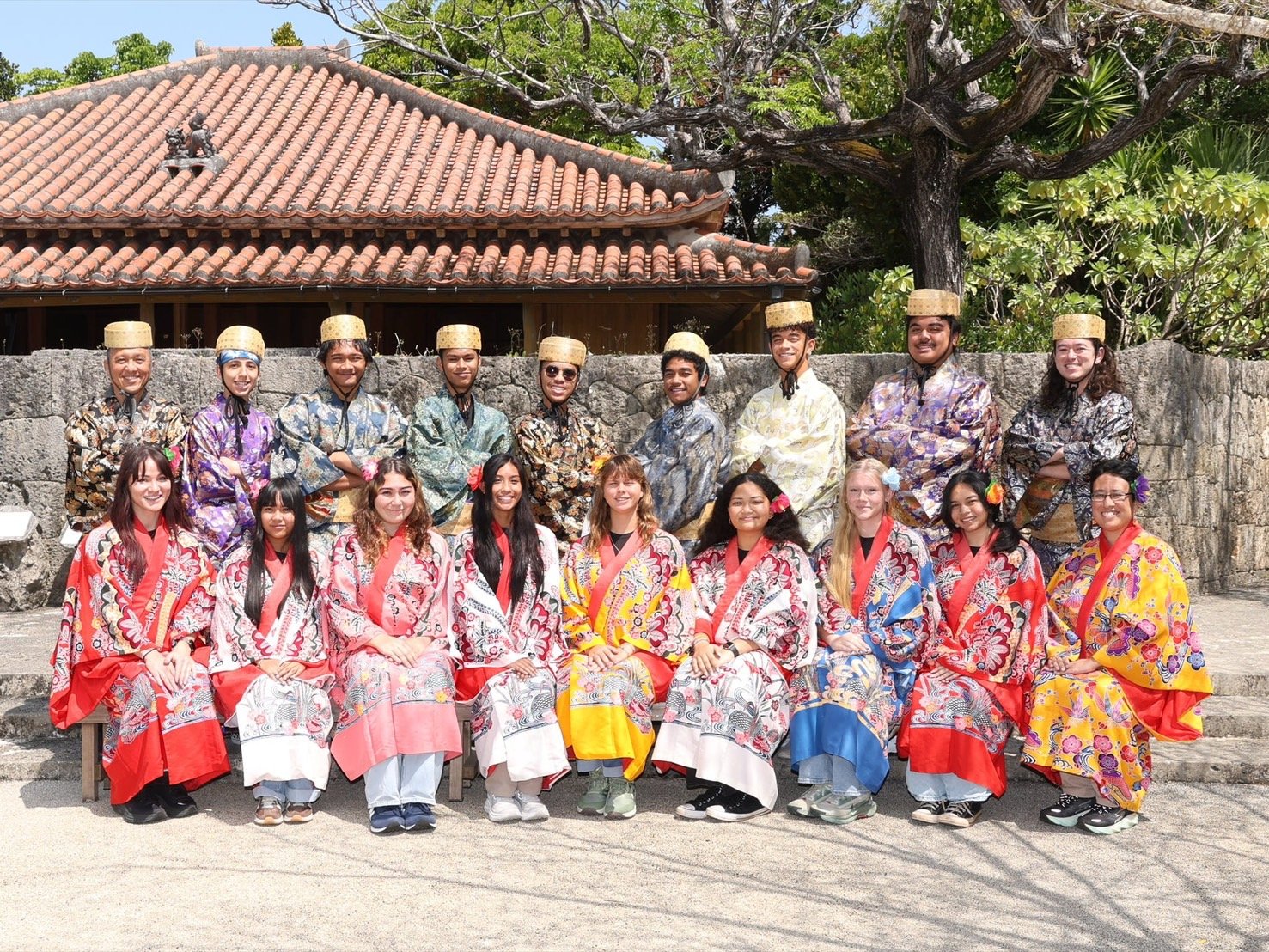
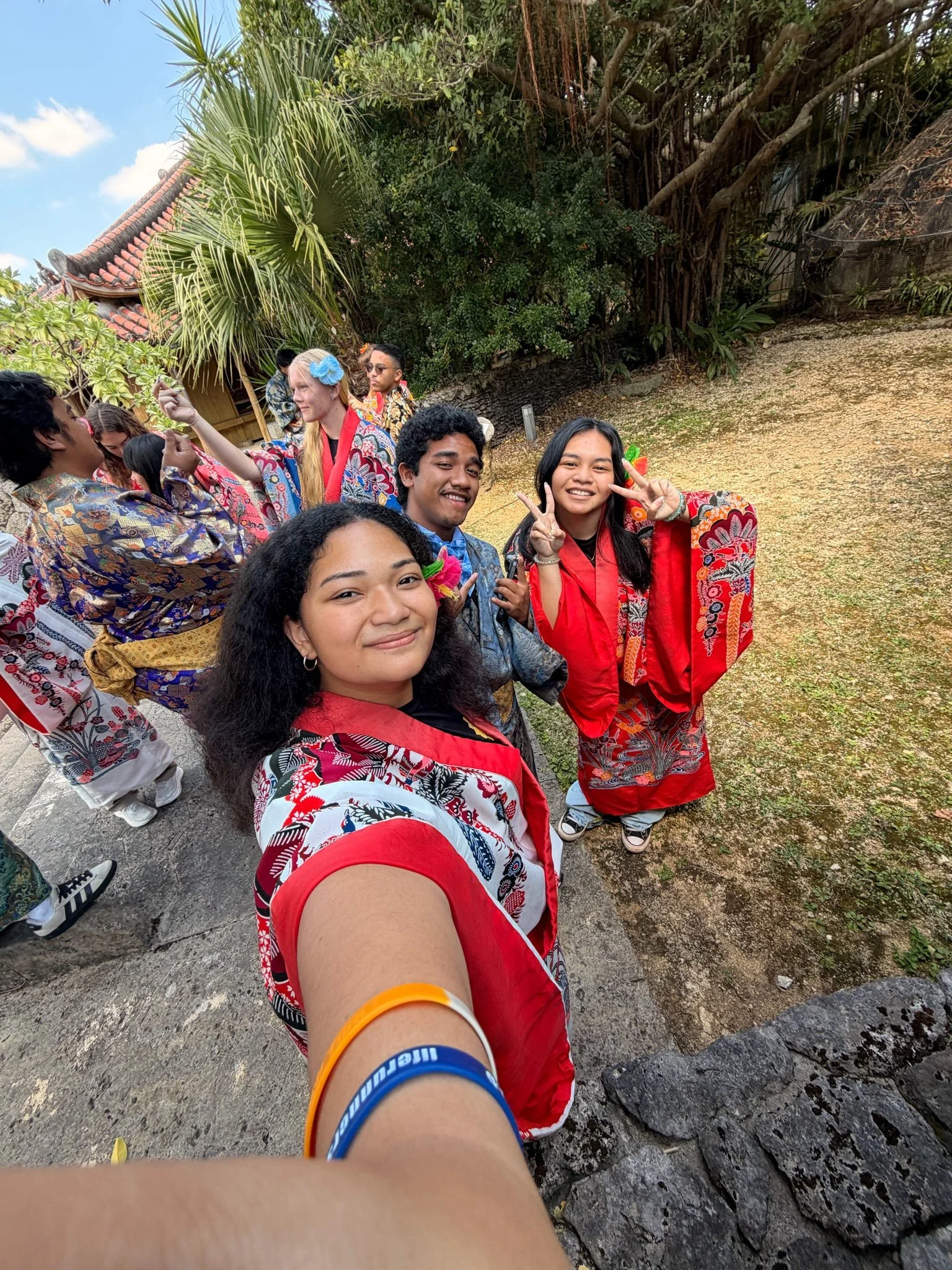
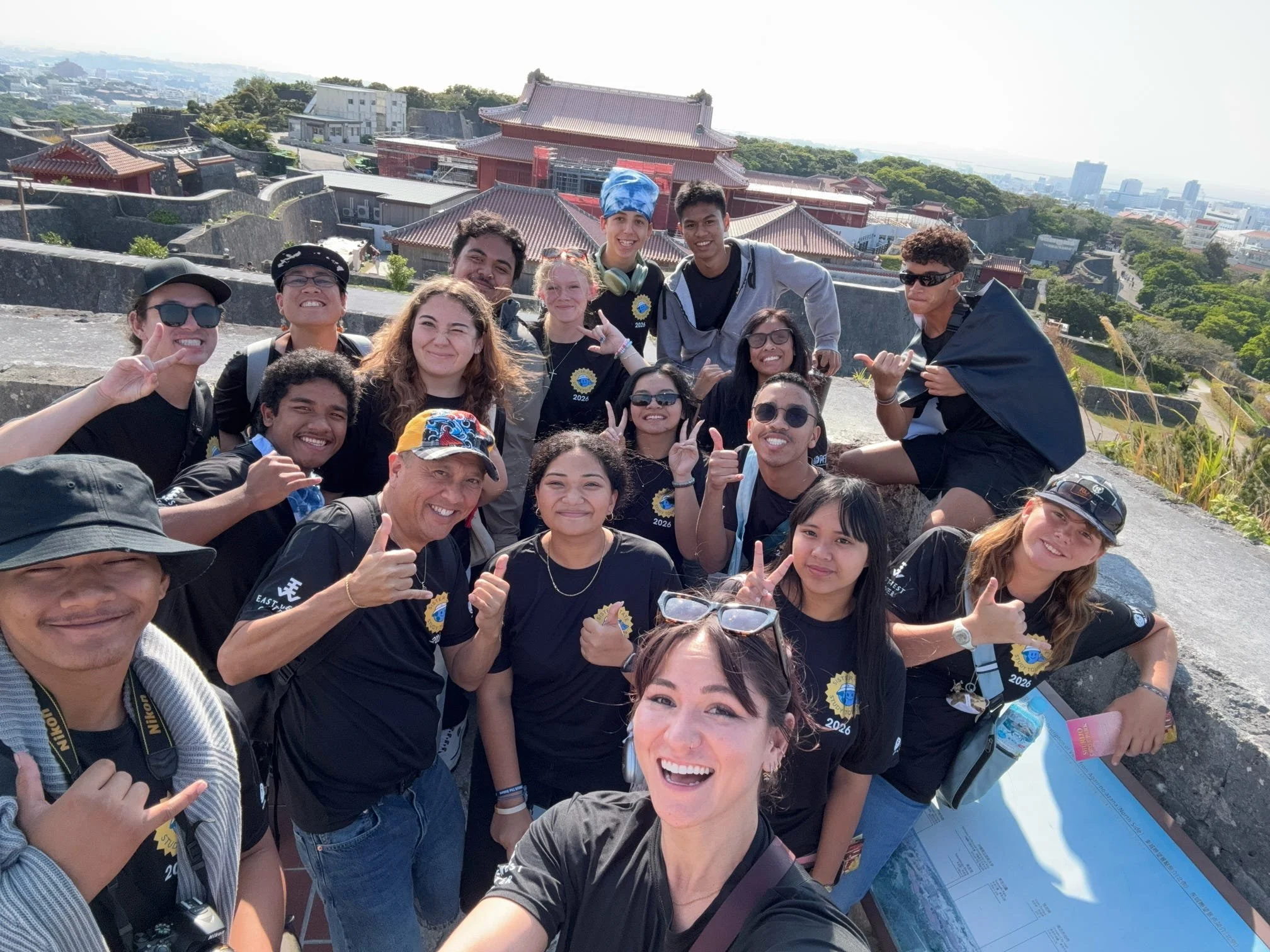
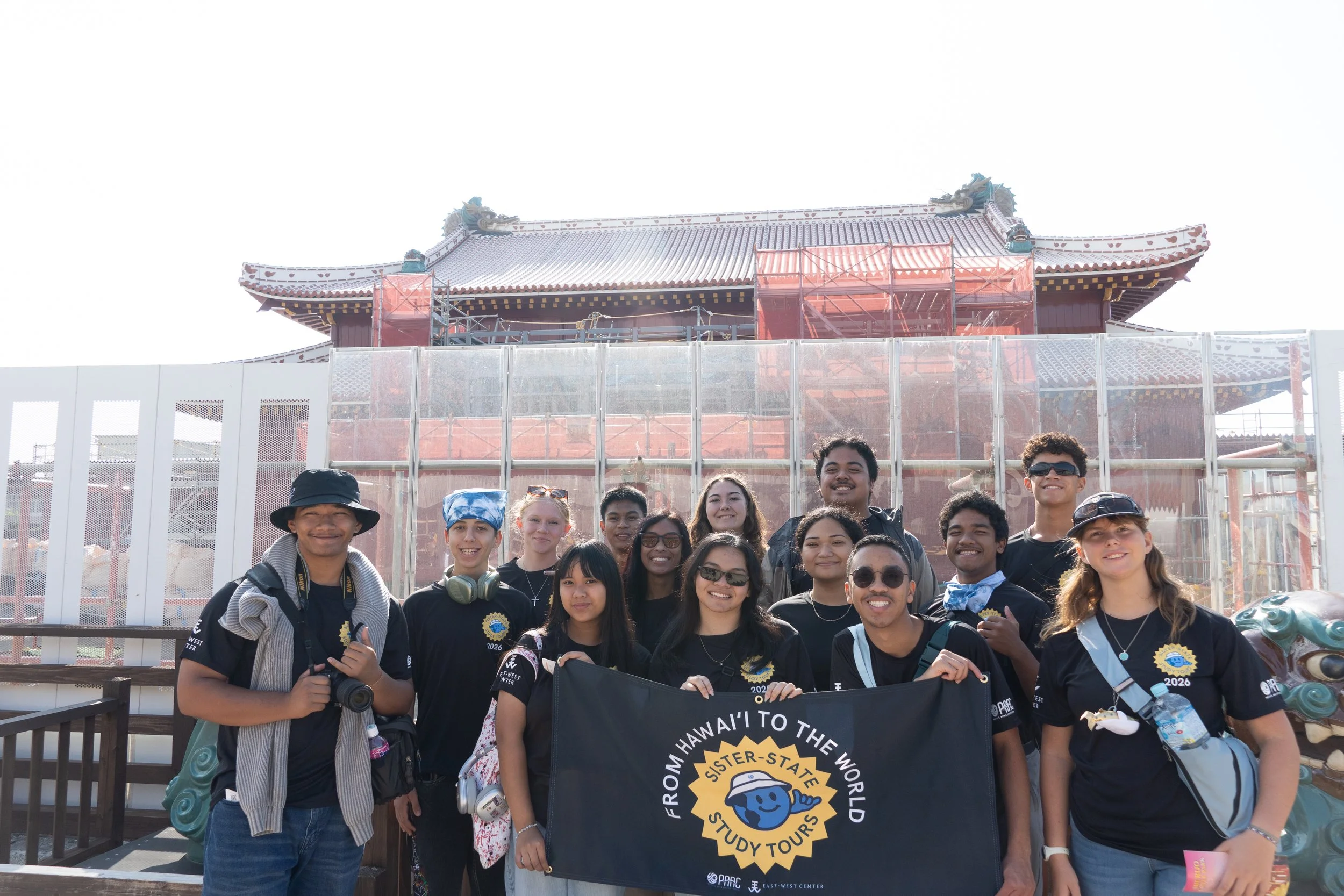
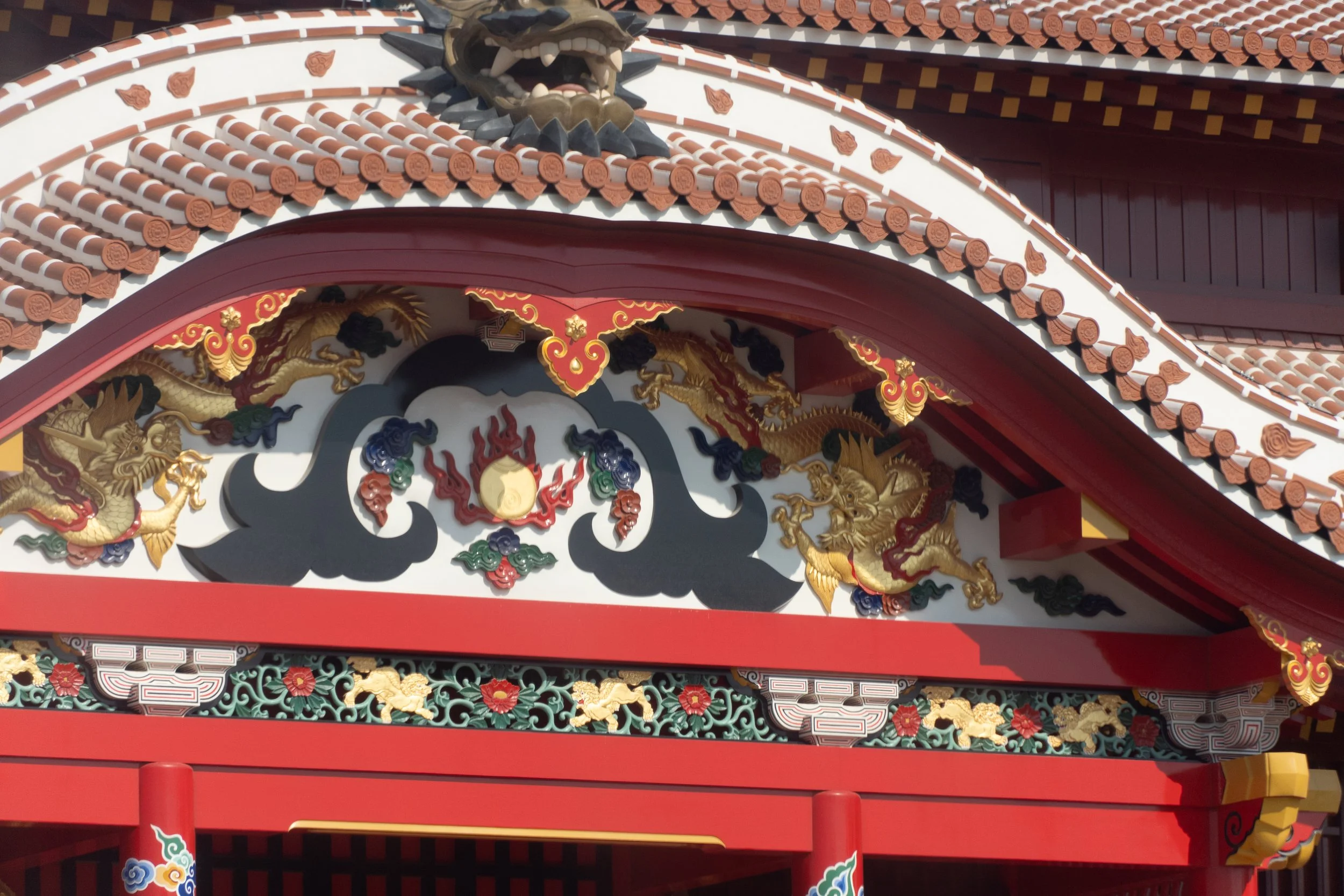
That afternoon, at Shuri Castle, students watched reconstruction scaffolding rise around what had once been the royal seat of the Ryukyuan Kingdom — the great castle that had burned in an electrical fire in 2019, and that Okinawa had immediately moved to rebuild, tile by tile, detail by painstaking detail. Tracey Beesley-Wadzinski of James Campbell High wrote about the dance performance they watched at Okinawa World that day — a traditional Eisa show that had lodged itself in her memory: the drumbeats, the story of the man and the lion, the instrument she couldn't quite name but whose sound she would not forget. She left thinking about how Okinawa had figured out something Hawaiʻi was still working on: how to make cultural transmission stick, how to make visitors feel, not just observe.
The School That Changed Everyone
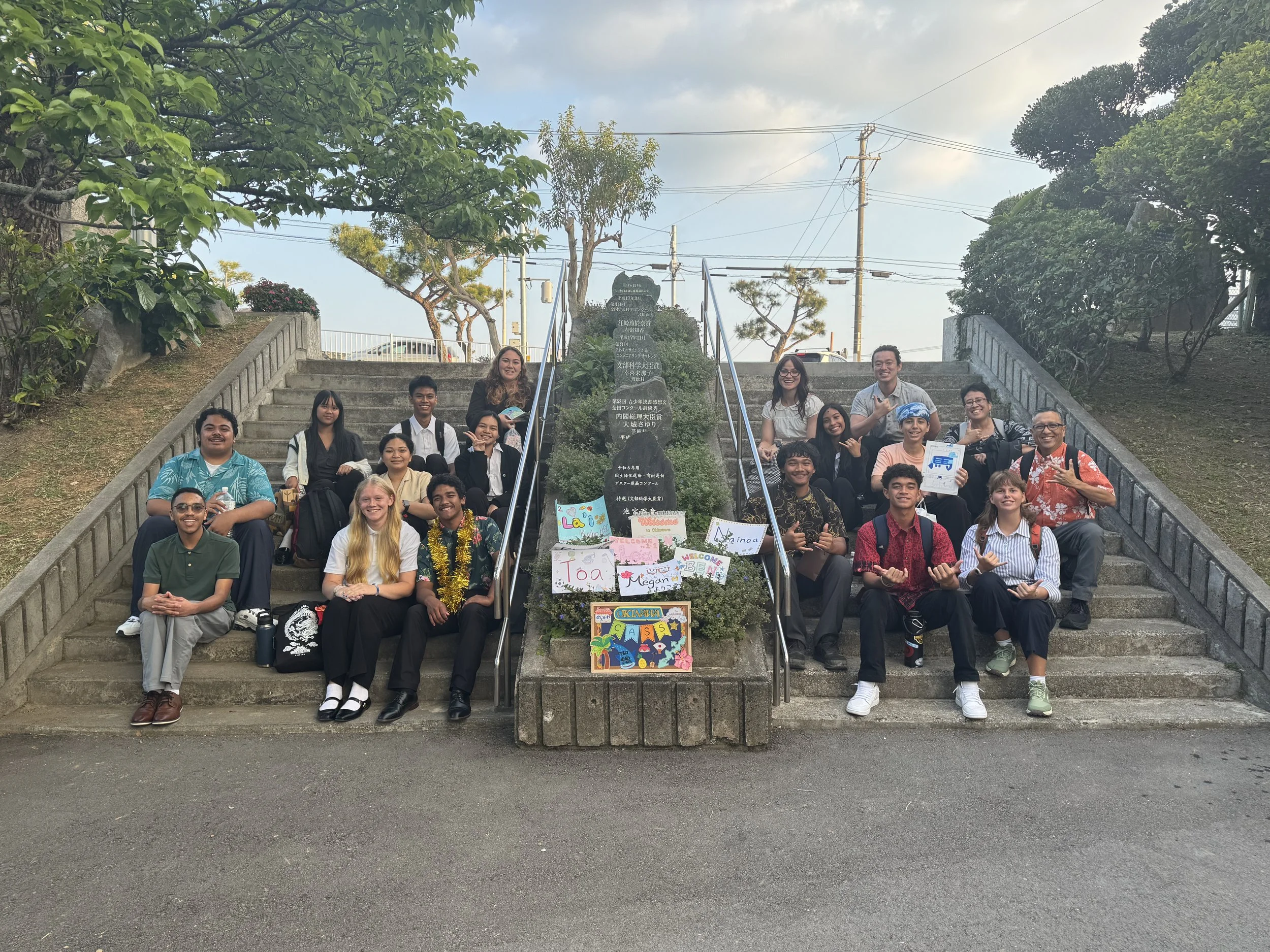
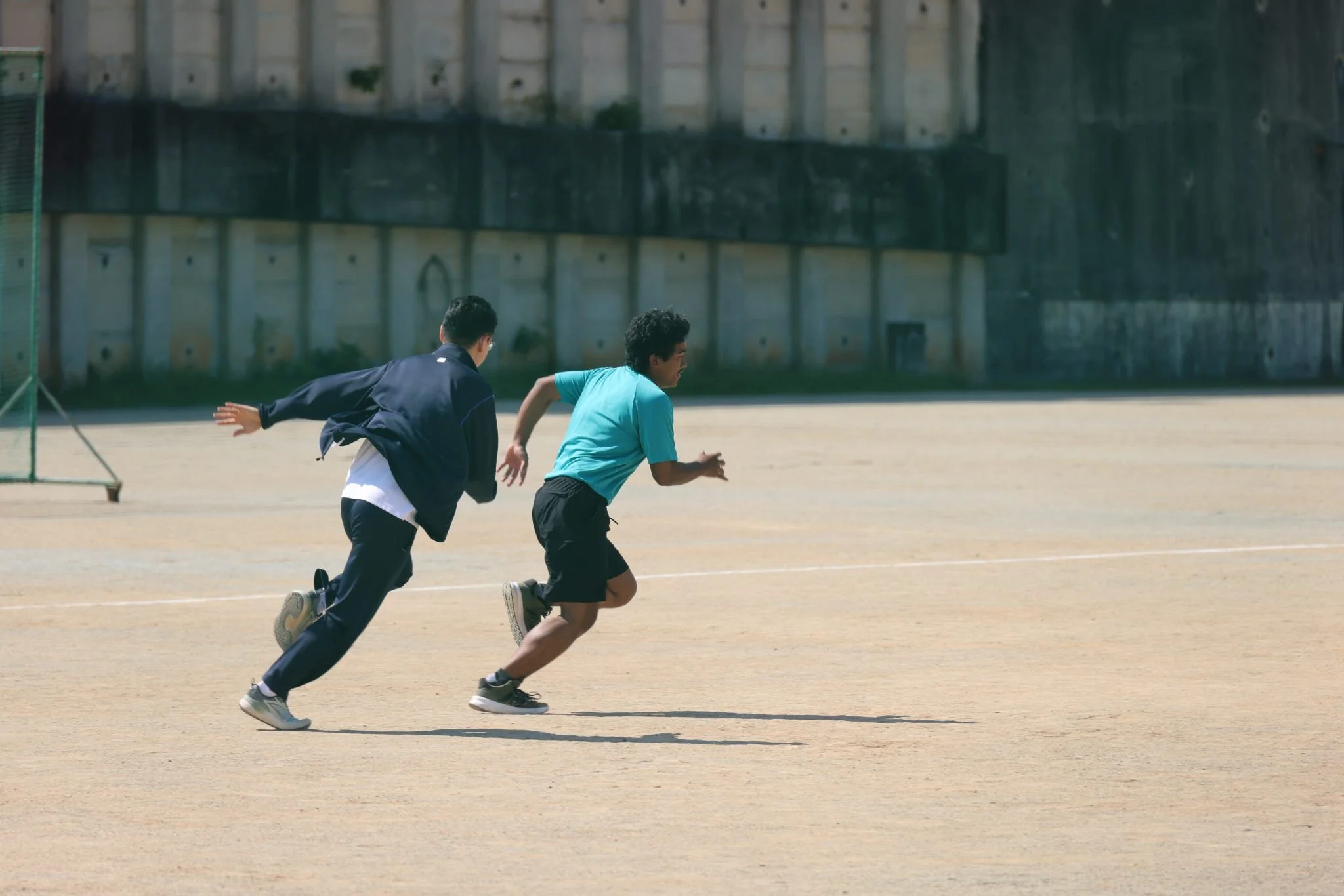
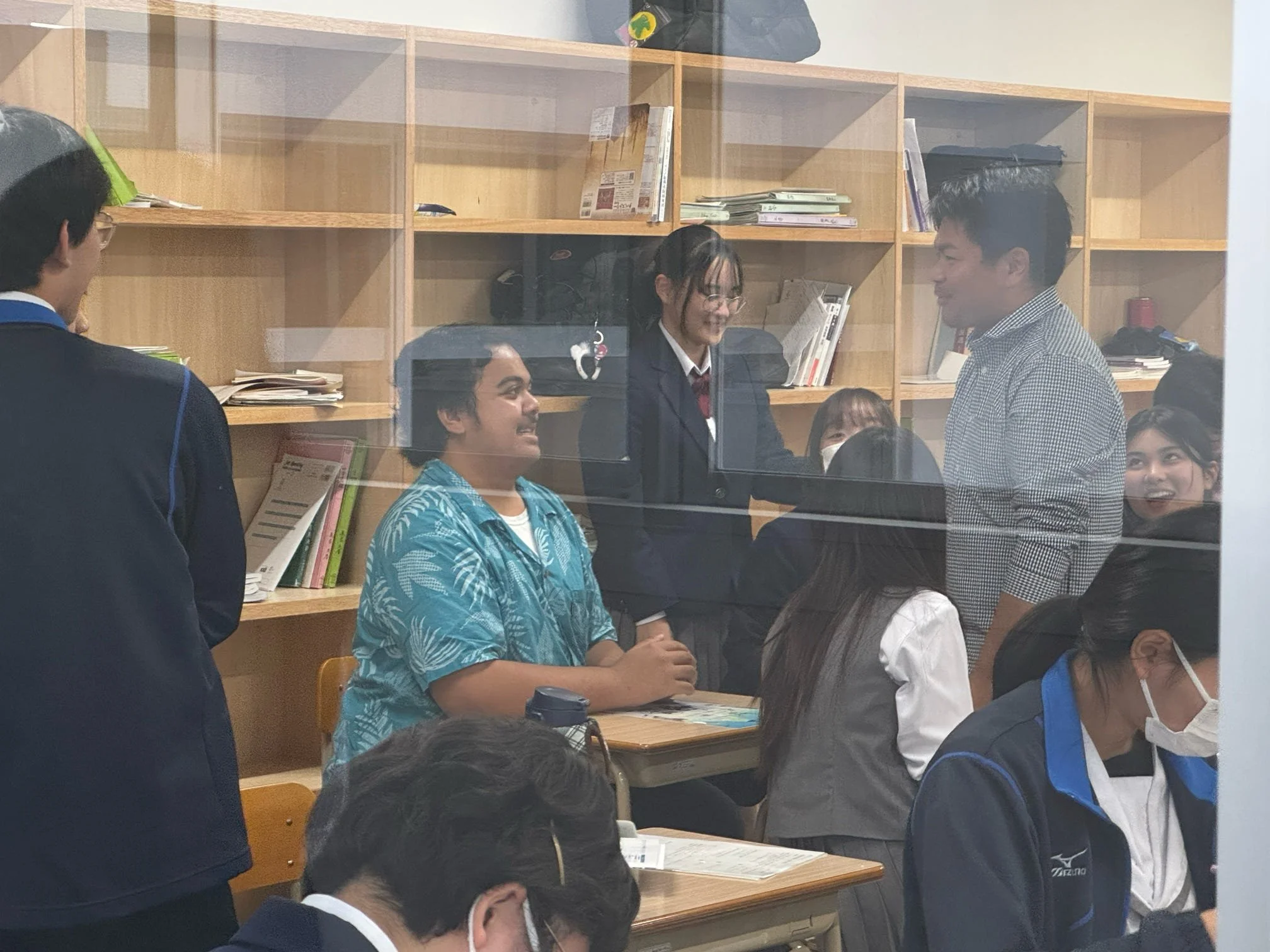
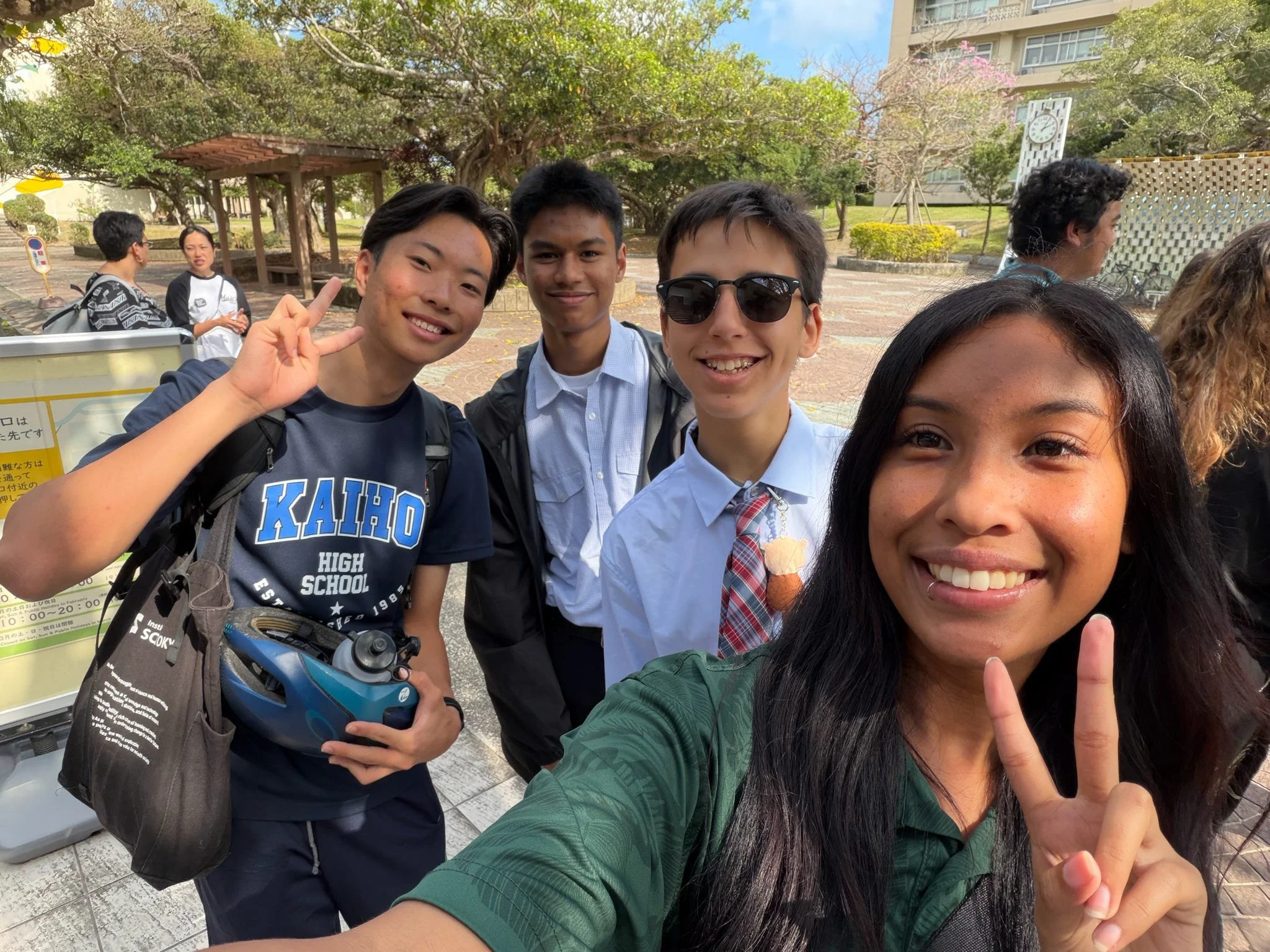
Ask any member of the Okinawa cohort what day surprised them most, and the answer is nearly always the same: the visit to Kaiho High School and Junior High School.
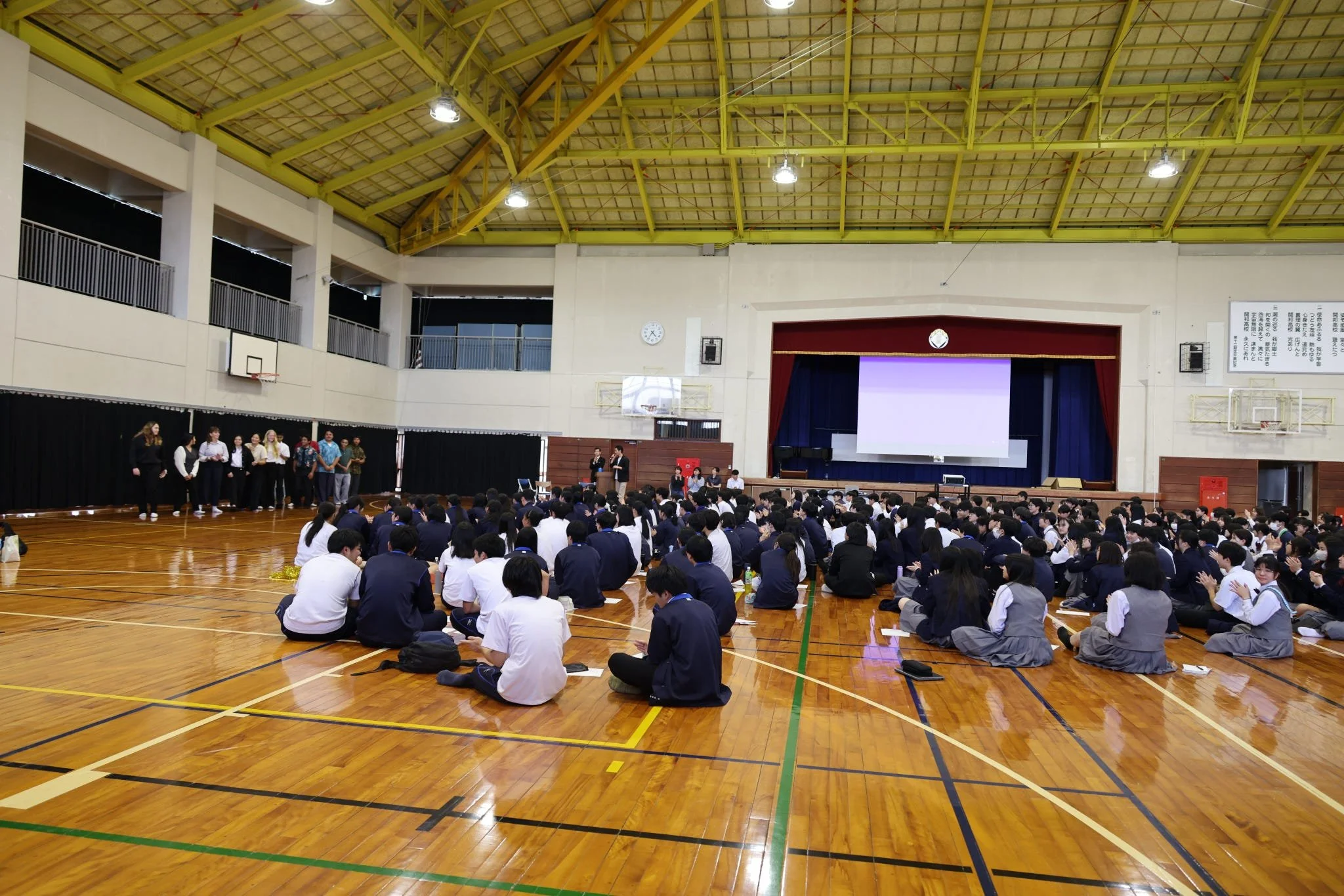
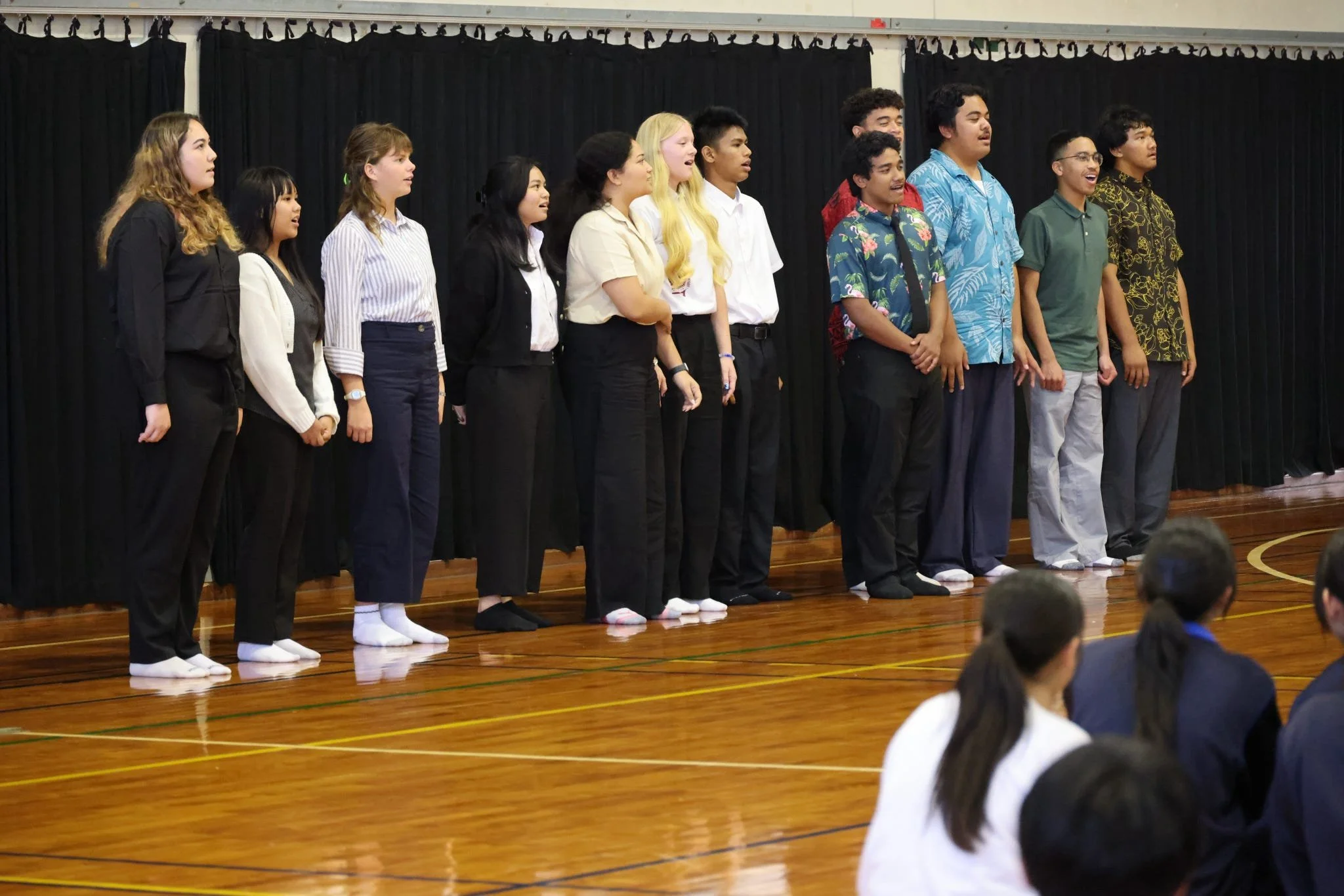
Students arrived nervous. They were spending a full day embedded in a functioning Japanese high school, attending classes, eating lunch in the classroom with their new classmates, and navigating everything through a language barrier and the occasional translation app. Several students wrote that they had barely slept the night before, anxious about whether they'd make friends, whether they'd belong.
What they found was a welcome that overwhelmed them.
"The moment my buddies had my sign and introduced themselves, I felt so welcomed," wrote Cassadi Cabral of Nānākuli High. "They helped me understand and feel involved despite the slight language barrier and different curriculum. Getting to meet all of these new people made me open up." She had walked in worried she wouldn't make friends. She walked out changed.
Leʻa Keohohou described finding the school almost unnervingly clean — "compared to Hawaiʻi with how dirty the desks tend to be, like carvings engraved into them, Sharpie all over — their school is so well maintained." She was equally struck by the way students cleaned their own classrooms after school, without being asked, without complaint.
Students noticed other things. The school day ran until five in the afternoon. Students ate lunch in their homerooms, serving each other. There were no janitors. Laʻi Unutoa of Kapolei High wrote about the student-led learning environment as the thing he most wanted to bring home: "The trust between the students and teachers is something that can be brought back to engage our students in Hawaiʻi." Aaliyah Gabriel, who had expected to be bored, ended up saying she never thought she'd miss going to someone else's school — but she did.
The Kaiho students had made welcome posters with everyone's names. They had practiced their English. They stayed close all day, translating, pointing, laughing, bridging. Megan Pierpont of Kaʻū High wrote that she still wanted to remember "all of the amazing welcoming and kind people I met at Kaiho High," and added: "I want to remember how nice people are, and can be."
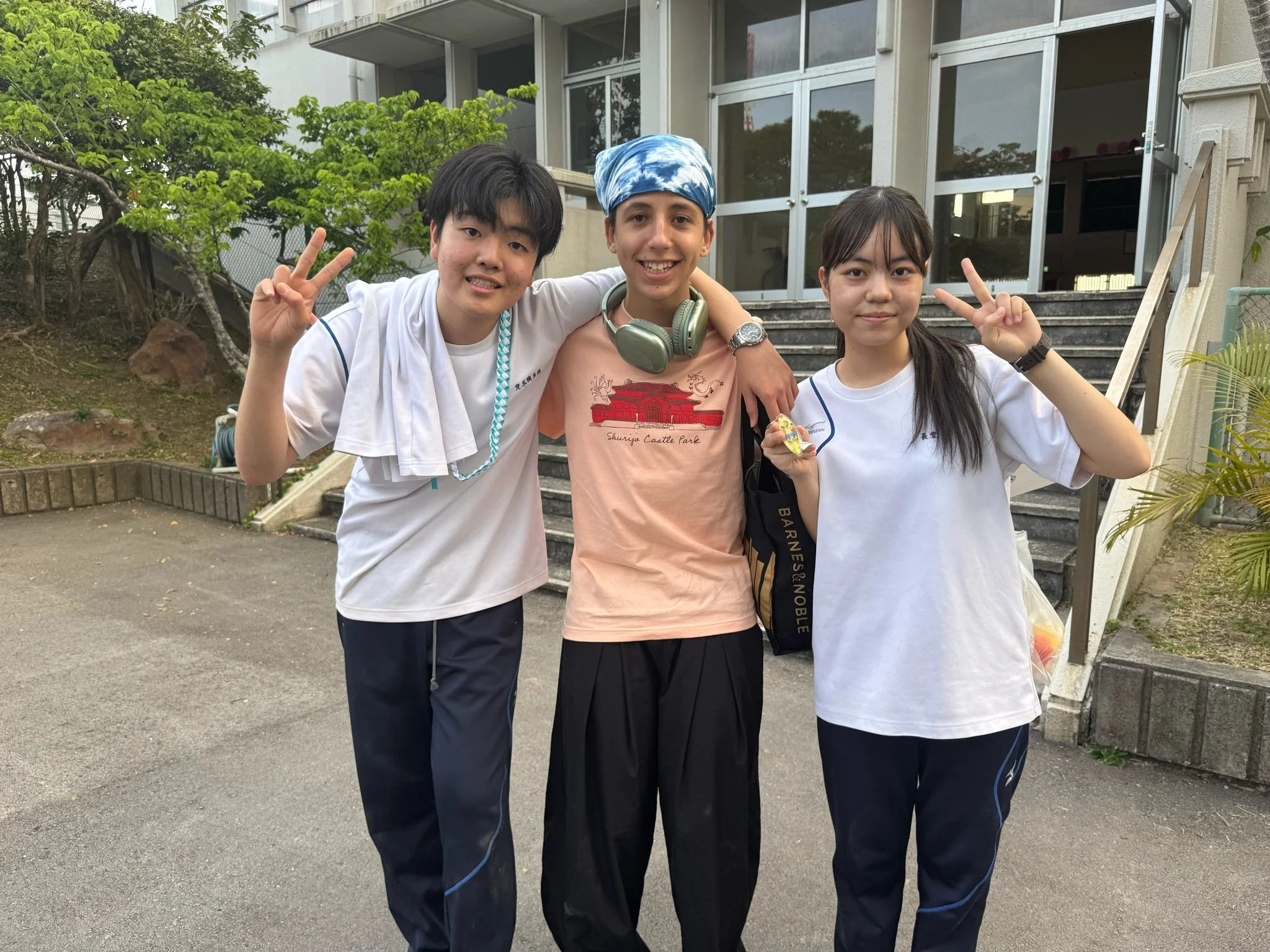
Some of those friendships didn't end when the delegation left. Aaliyah made a friend she described simply as "now my best friend." Nainoa Hooke of Kohala High met a student named Taco who shared his interests. Cameron Werkman of Radford High School, who had moved through the day methodically building connections, wrote about feeling genuinely welcomed for the first time abroad: "I felt very welcomed and treated with hospitality, and that is a feeling I never want to forget."
The Weight of the War
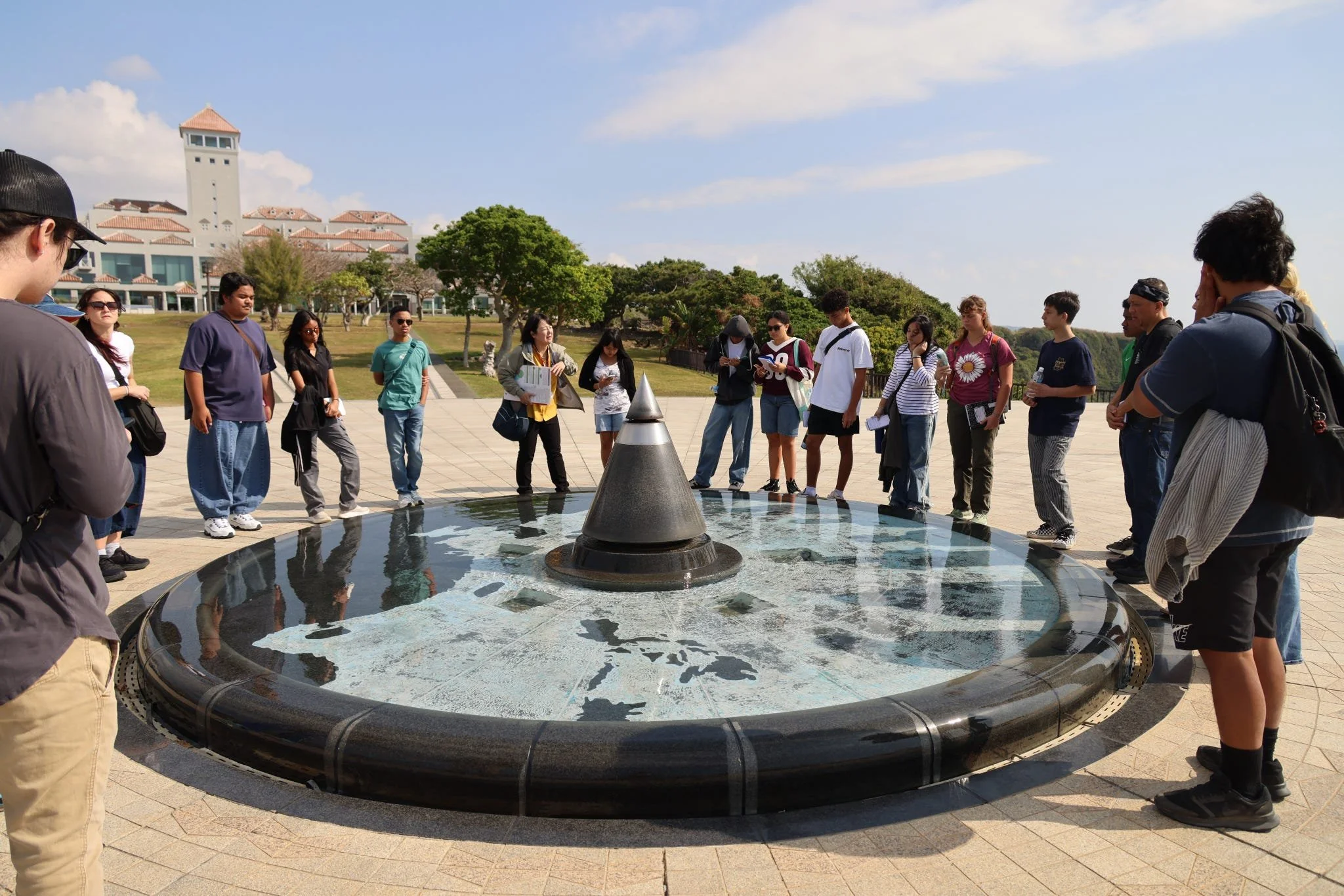
No part of the trip asked more of students than the day spent at the Okinawa Peace Memorial Park and the Himeyuri Peace Museum.
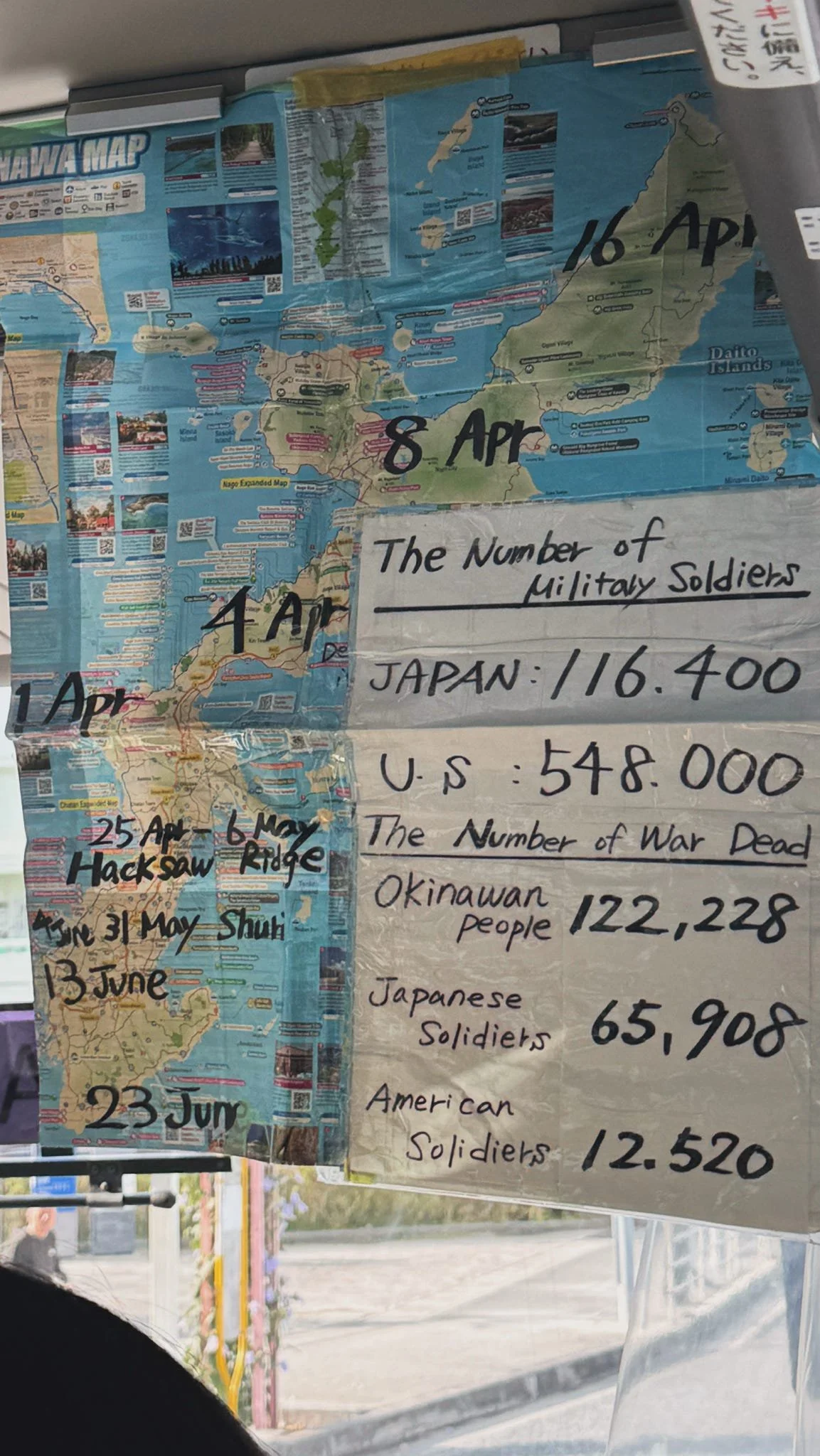
The Battle of Okinawa, fought in the spring of 1945, killed roughly a quarter of the island's civilian population — somewhere between 90,000 and 150,000 people. It is one of the most devastating land campaigns in the Pacific theater of World War II, and it is largely absent from the American history curriculum. Most of the students had never heard of it.
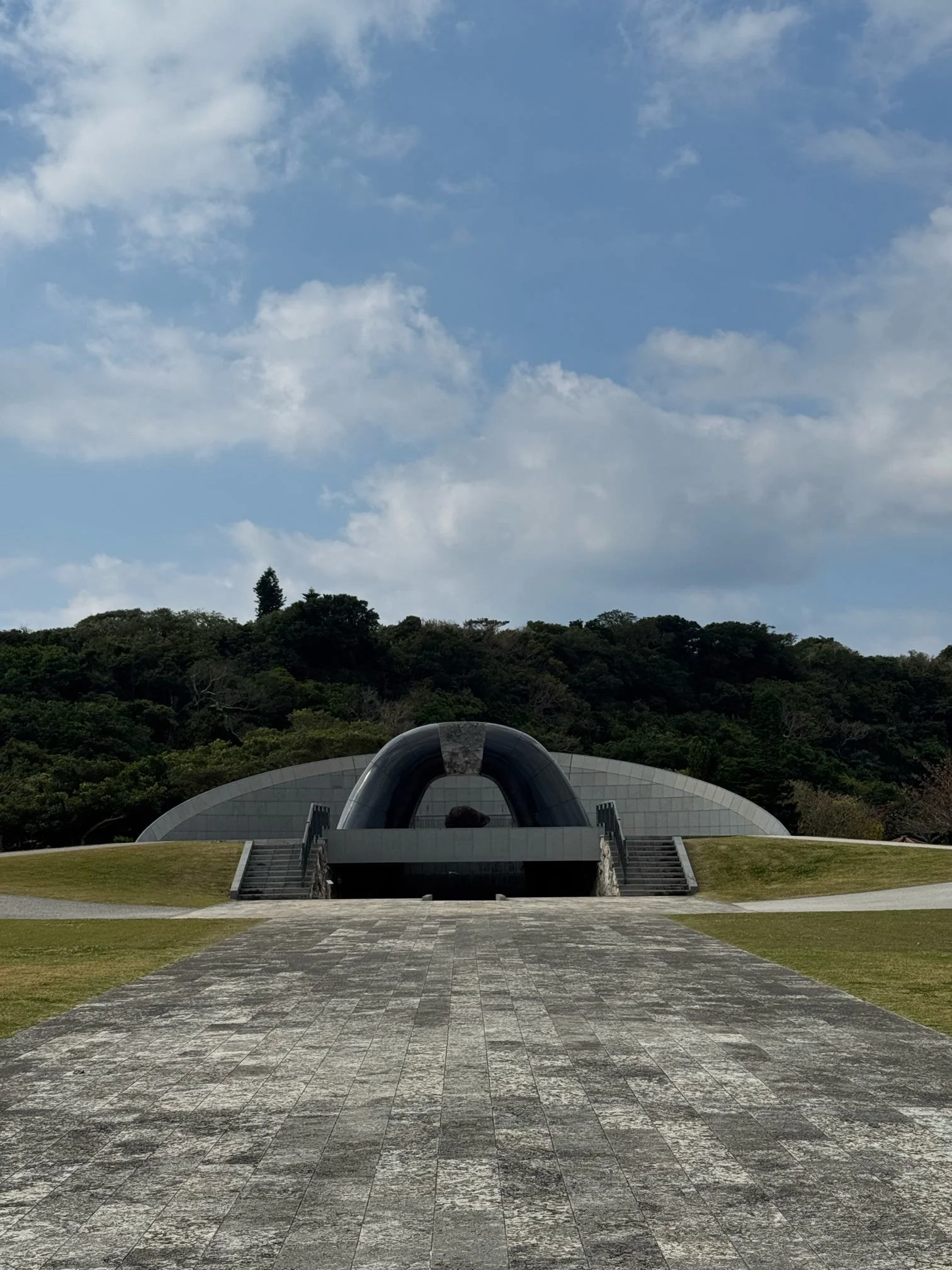
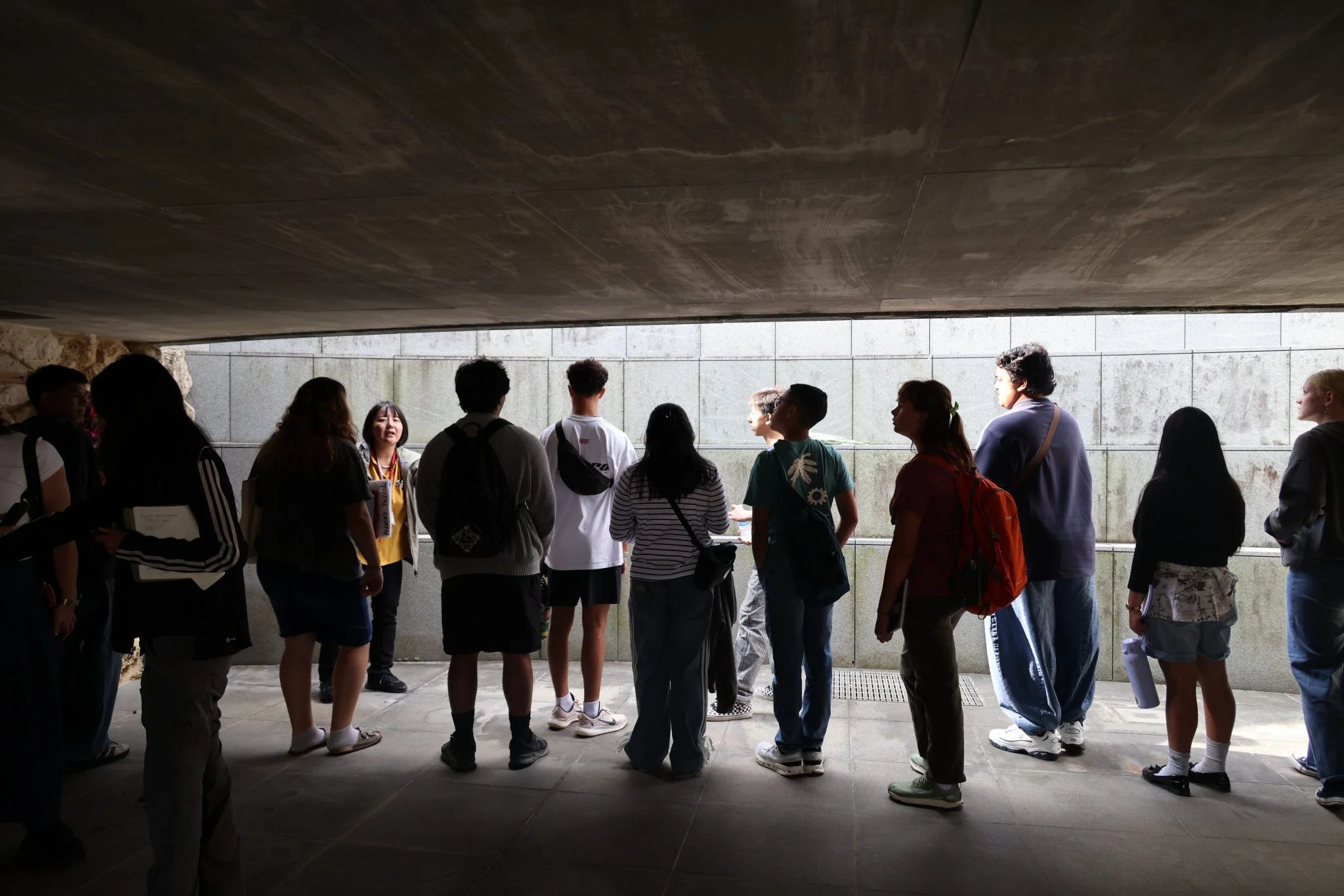
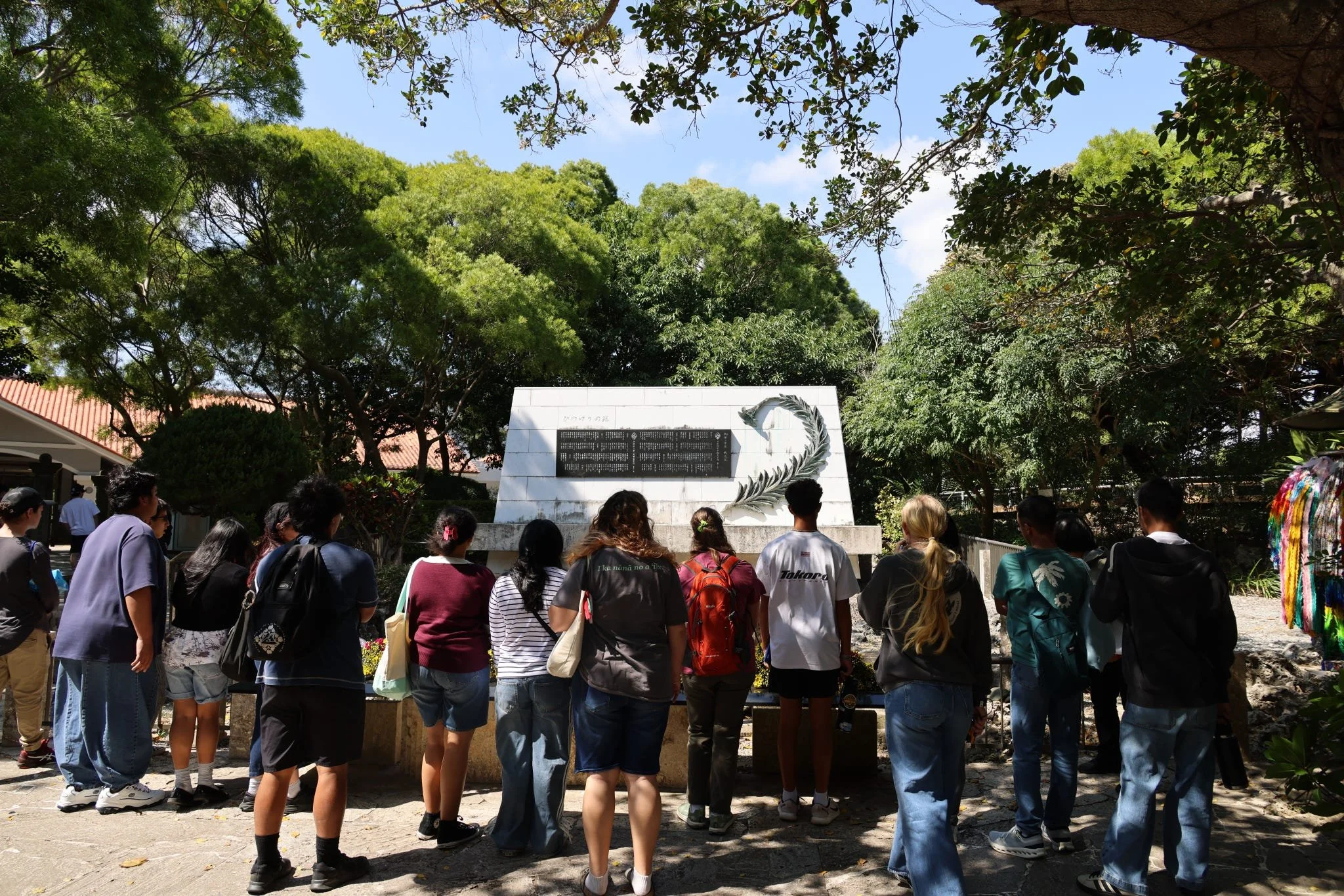
At the Peace Memorial Park, they walked past walls etched with the names of the dead — organized not by nationality or allegiance but simply by loss. Every student who submitted field notes from this day wrote about the scale of it, the weight of so many names. Cameron Werkman noted something that had stayed with him: the Pearl Harbor bombing, which sits at the center of American WWII memory, had fewer casualties than the Battle of Okinawa — yet it is the one that gets taught.
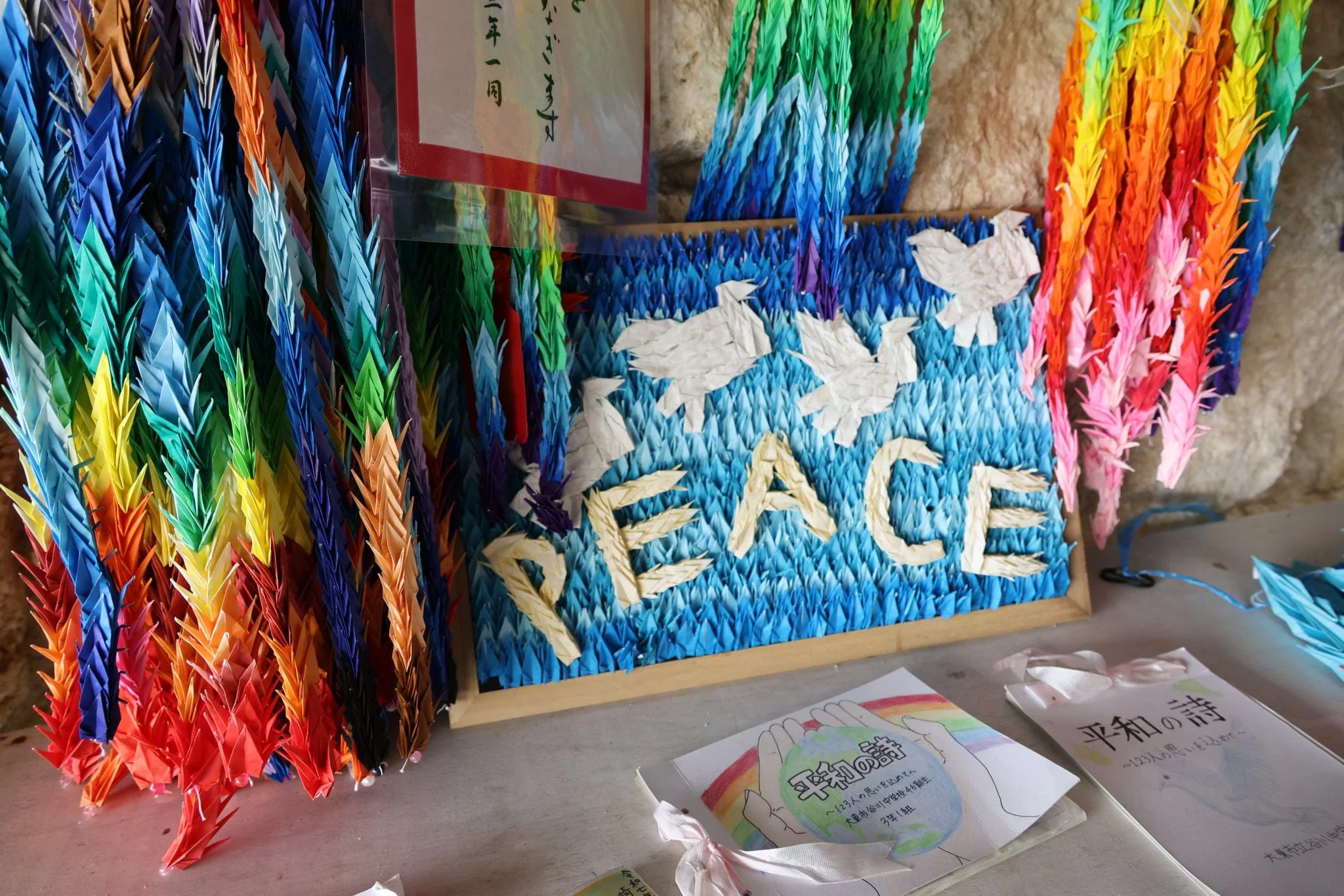
The Himeyuri Peace Museum told a smaller, more specific, and in some ways more unbearable story. Two all-girls high schools had been mobilized as wartime nurses — students the same age as the delegation — sent into underground field hospitals to treat soldiers under continuous artillery fire. Of the 222 students and 18 teachers who served, 123 students and 13 teachers died. The museum was built around survivor testimonies: handwritten accounts, photographs, and reconstructions of the caves where they worked.
Lyka Lomongo of Konawaena High School wrote: "This was more graphic and was very emotionally heavy, but also very informational. What stood out to me the most was the fact that they forced high school students to fight in the war and become nurses for the injured. This was just generally unfair — they were just kids."
Eldrich Pagaran, who had been born in the Philippines and moved to Hawaiʻi, connected the Himeyuri students to the plantation-era history he had learned about at orientation: many of those girls, had they survived, would have come to Hawaiʻi through the picture bride system. "The devastation of Himeyuri had a bigger impact on Hawaiʻi than one would expect," he wrote.
Max Loubser drew the parallel that hovered over the entire day: "Today connects to Hawaiʻi because both island nations suffered from annexation and then were used as sacrificial throw-aways to be bombarded with military, and then offered up for gruesome war." He added, simply: "We should follow Okinawa's lead" — meaning the memorials, the accountability, the refusal to look away from what happened.
What stayed with almost every student was not grief exactly, but something sharper: a sense that the silence surrounding this history was itself a kind of ongoing harm — and that knowing was the beginning of something.
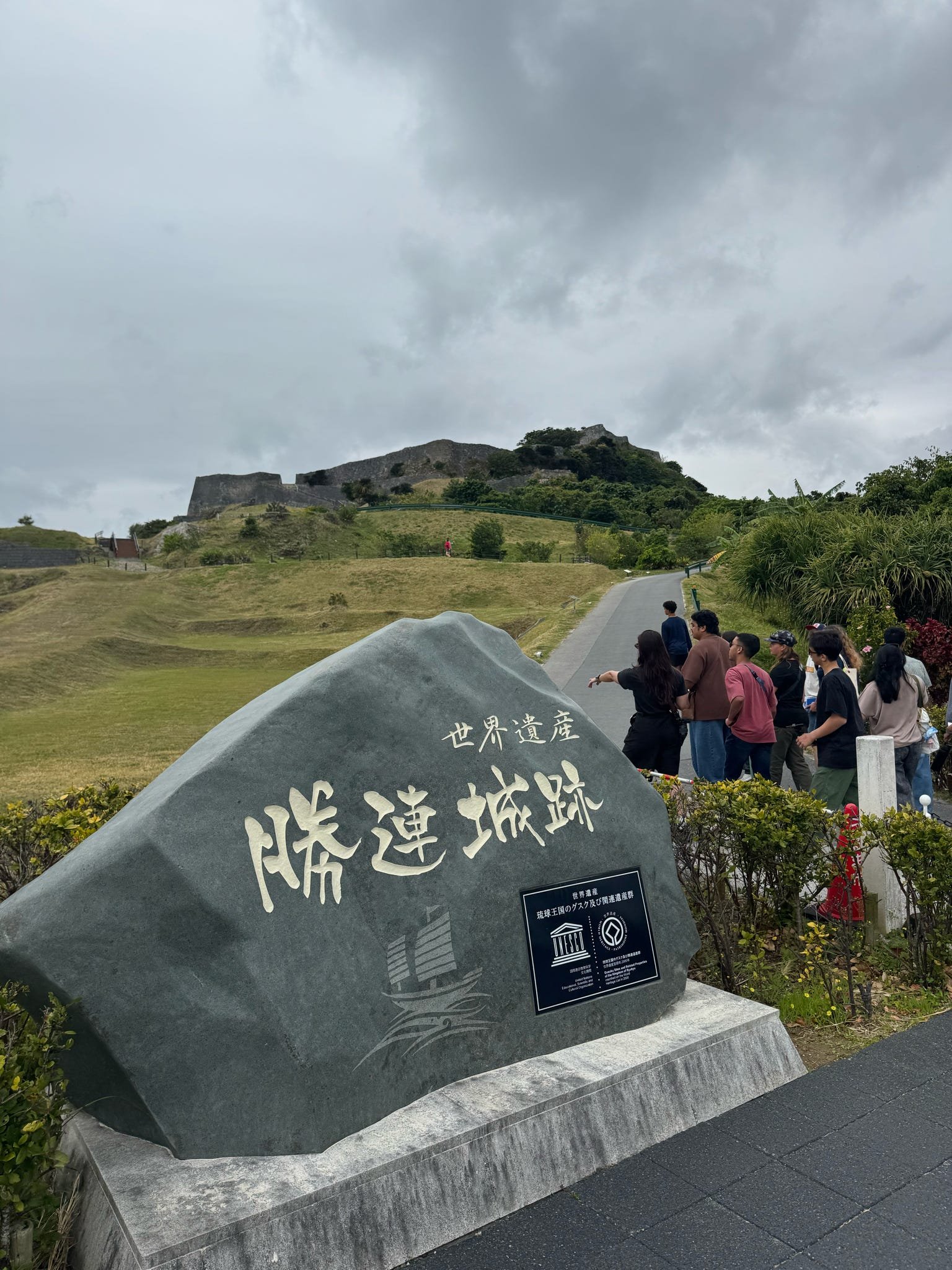
The Castle Ruins and the Coral Farm
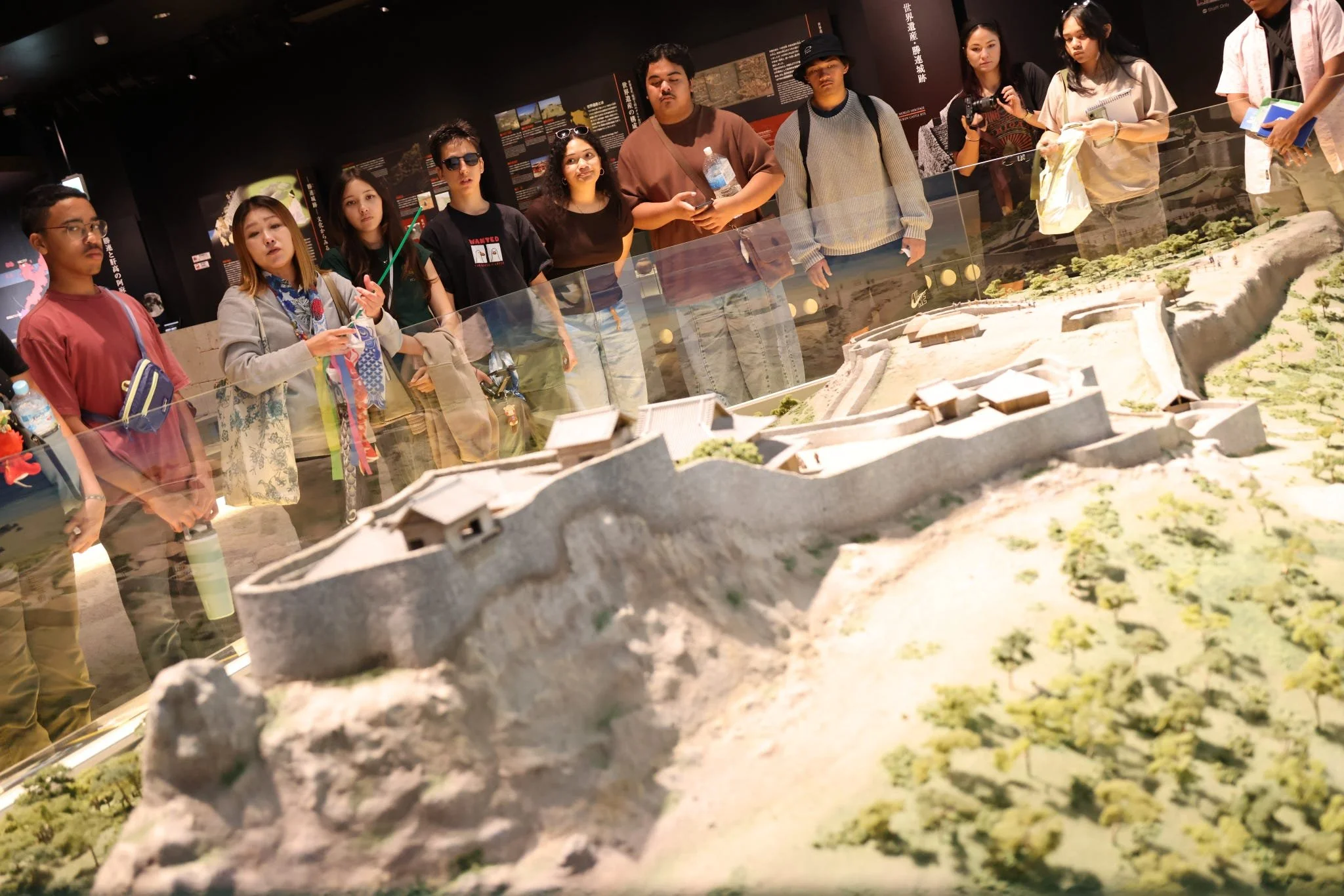
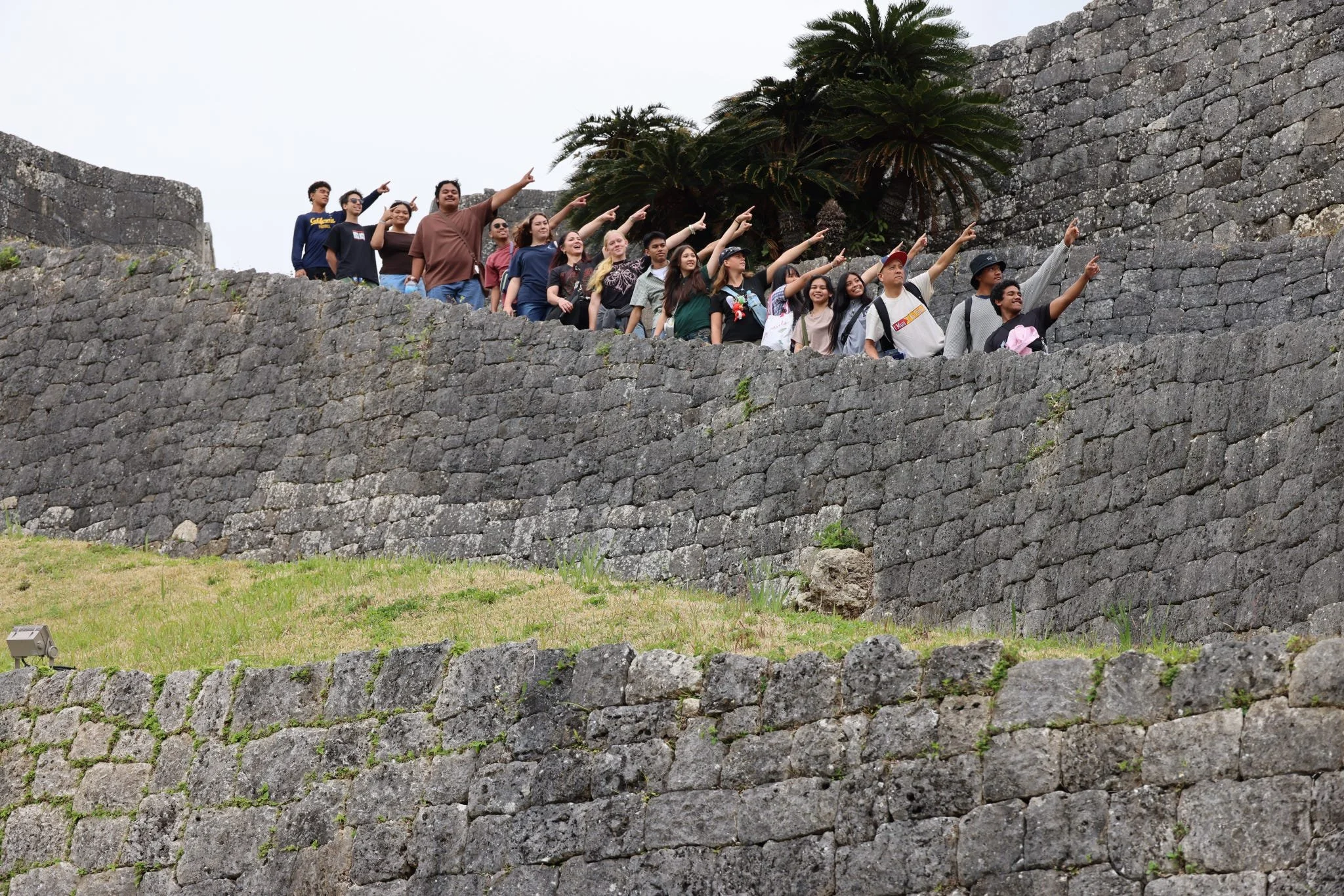
On the day the delegation visited Katsuren Castle ruins and the island's coral farm, students moved between two seemingly unrelated ideas — political history and environmental science — and found them connected by the same thread: what it takes to sustain something that matters.
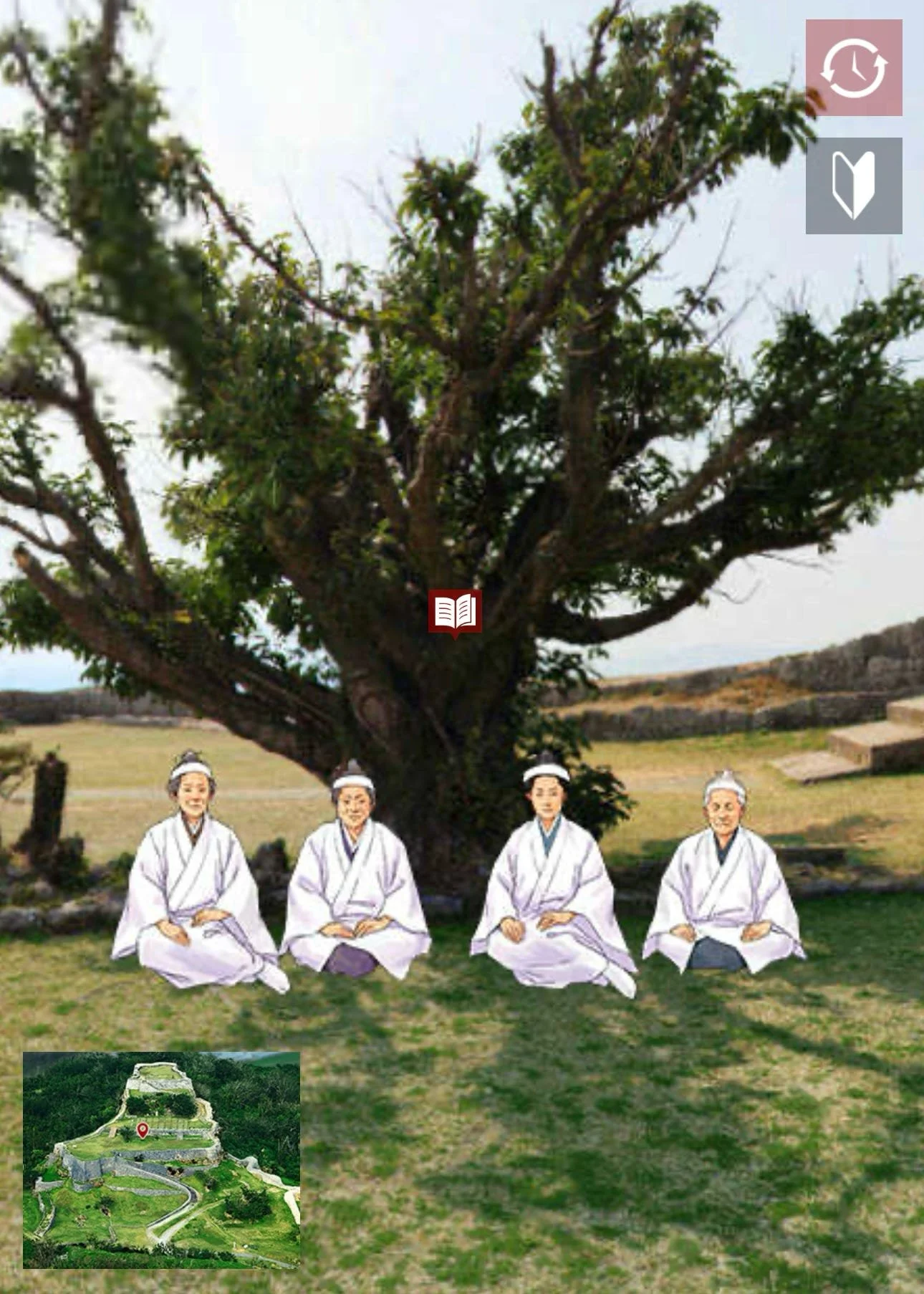
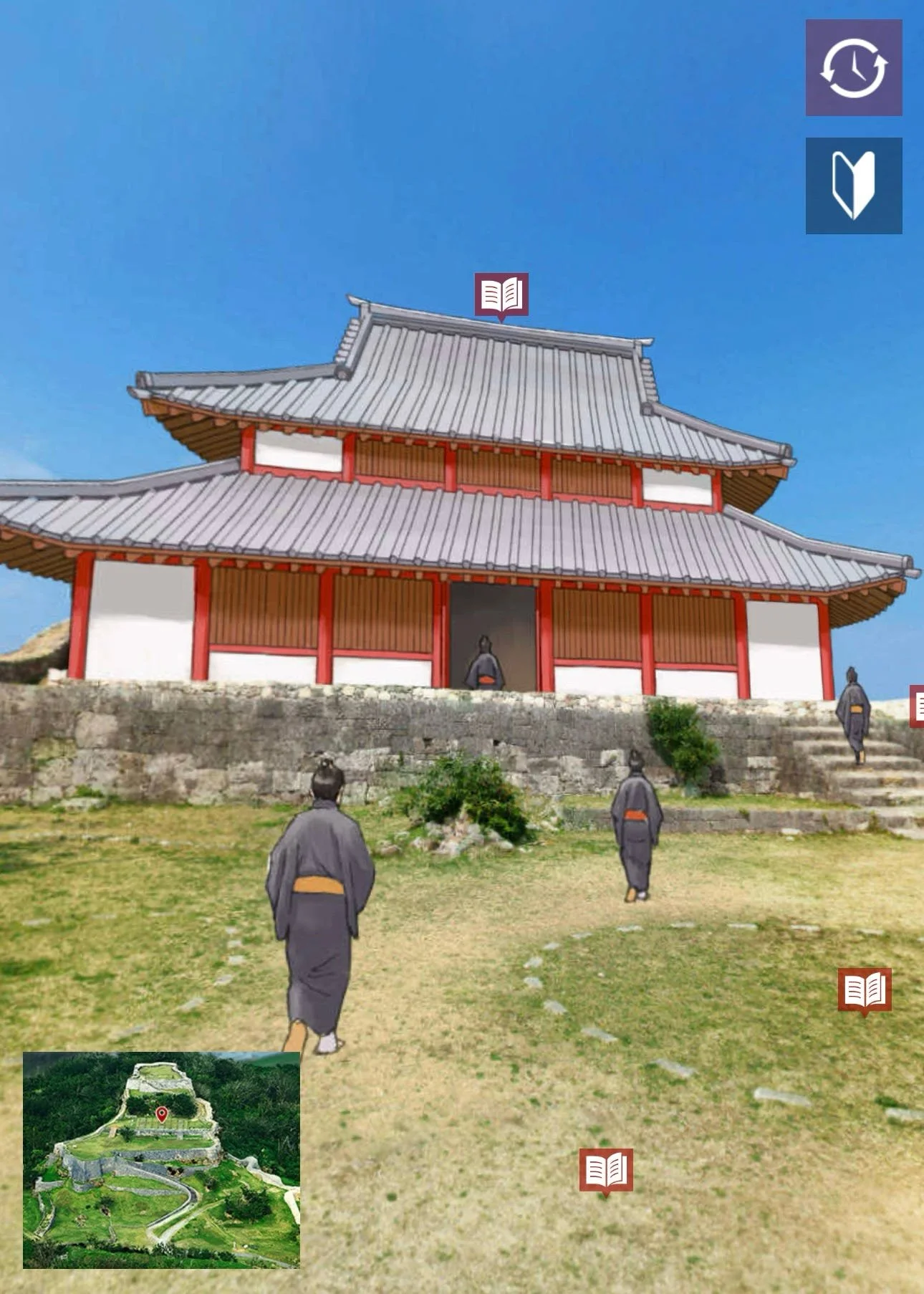
At Katsuren, they watched an animated short film about the Ryukyuan warlord Amawari and the kingdom's final, fragile decades before Japanese annexation. Anju Bekkum, who had been thinking about this parallel since orientation, noticed something in how the story had been presented: the anime format was charming, accessible, carefully designed to hold attention. It also smoothed the rougher edges of the history. She left curious rather than satisfied — wanting more of the story than the ten-minute version could hold.
Cameron Werkman, whose field notes throughout the trip were among the most analytically rigorous, spent his walk through the ruins thinking about Amawari as an ambiguous figure: "Was he fighting against tyranny to protect his people, or was he an ambitious warlord who wanted only power for himself?" He left the question open. That openness, the willingness to hold history as complicated, was itself a sign of how much the trip had deepened his thinking.
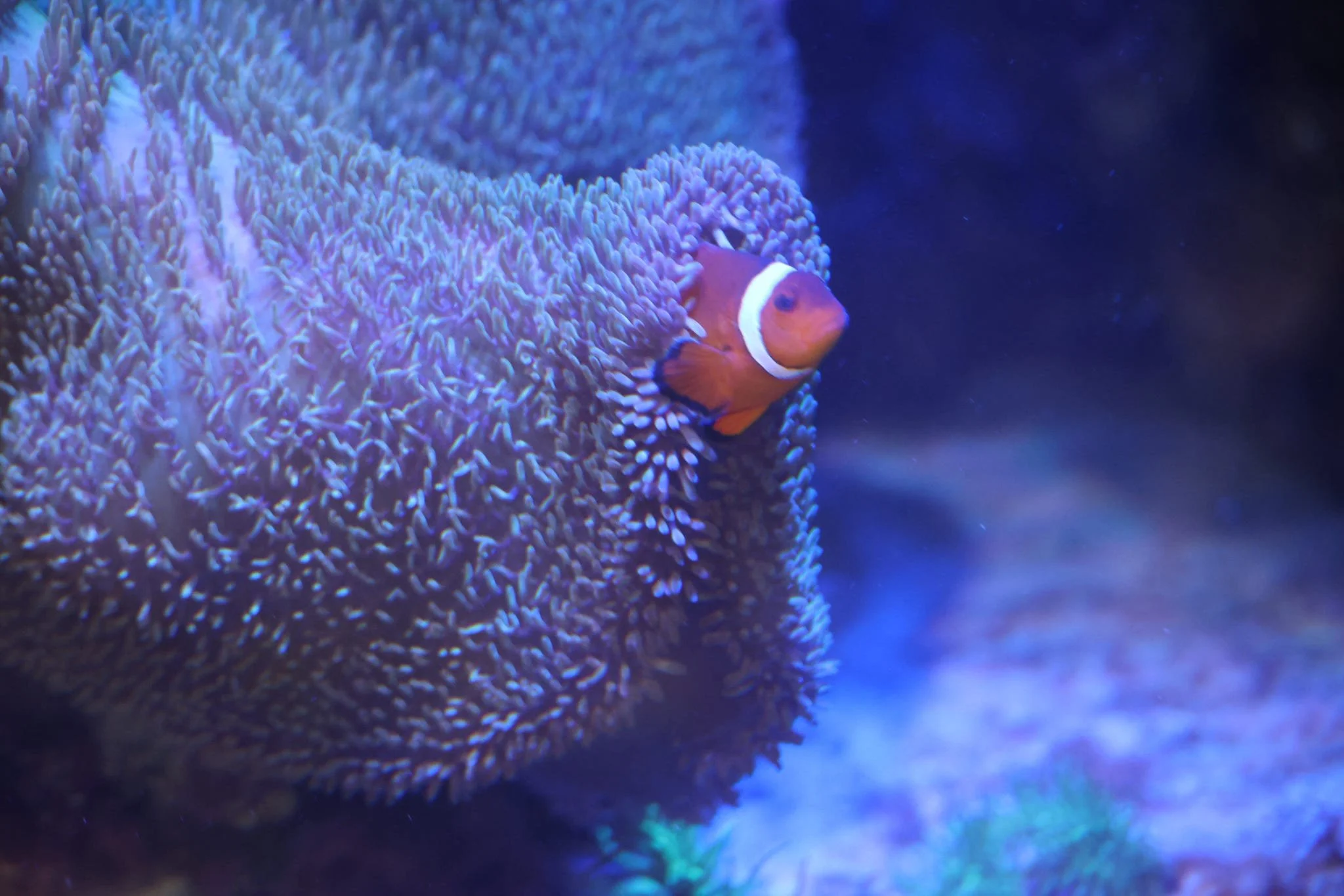
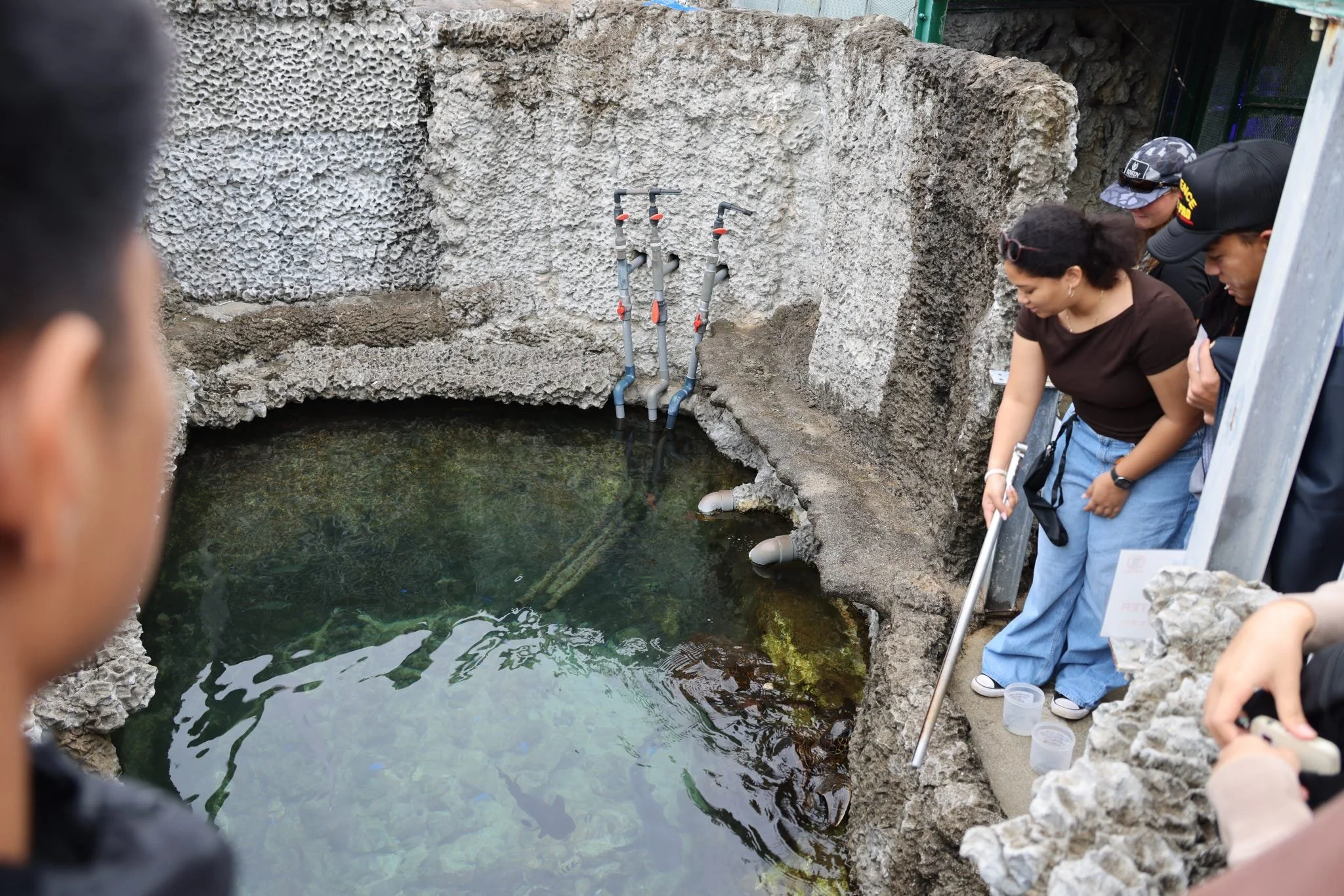
At the coral farm that afternoon, the group learned that in 2009, nearly ninety percent of the reef in the surrounding waters had been dead. The farm existed to grow new coral in controlled tanks — tiny fragments of living reef, carefully tended, introduced back into the ocean over years. Students stared into the tanks and saw something colorful and improbable: evidence that things could come back.
Cassadi Cabral wrote: "I would love for Hawaiʻi to also have more facilities like the coral farm to help preserve and give better conditions to our coral right now." Tracey Beesley-Wadzinski, thinking about Hawaiʻi's own dying reefs, noted that coral regrowth "could be very speedy and quick, but at a much larger scale if other places pitch in." Eldrich, who had been thinking about marine science, added: "This might be a possibility since I'm considering doing something similar to this for my science project next year — but doing this I hope to increase the interest in the corals in Hawaiʻi." He titled his observation, delightfully: "beneFISHial."
Empty Hands, Brown Sugar, and the Art of Bingata
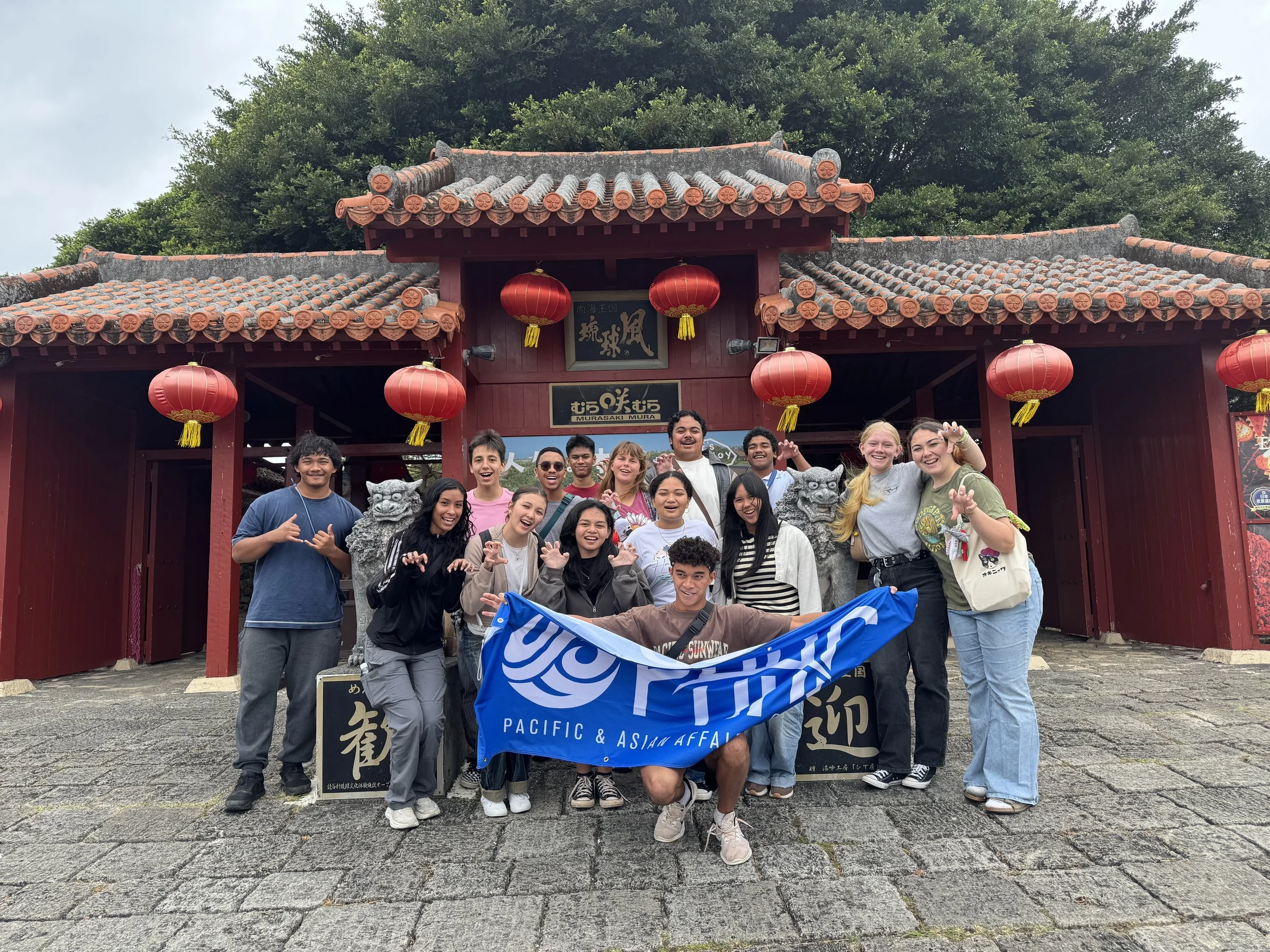
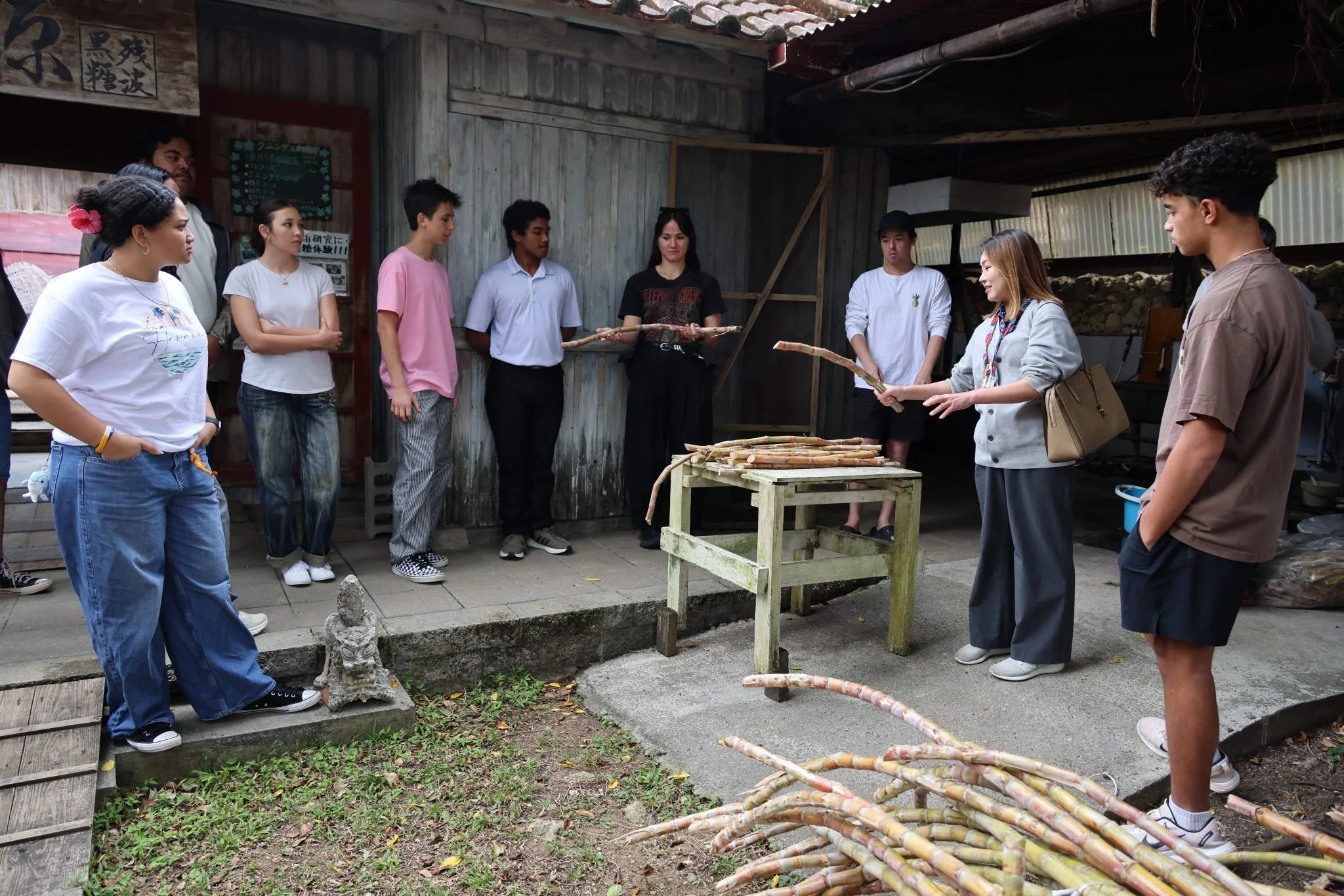
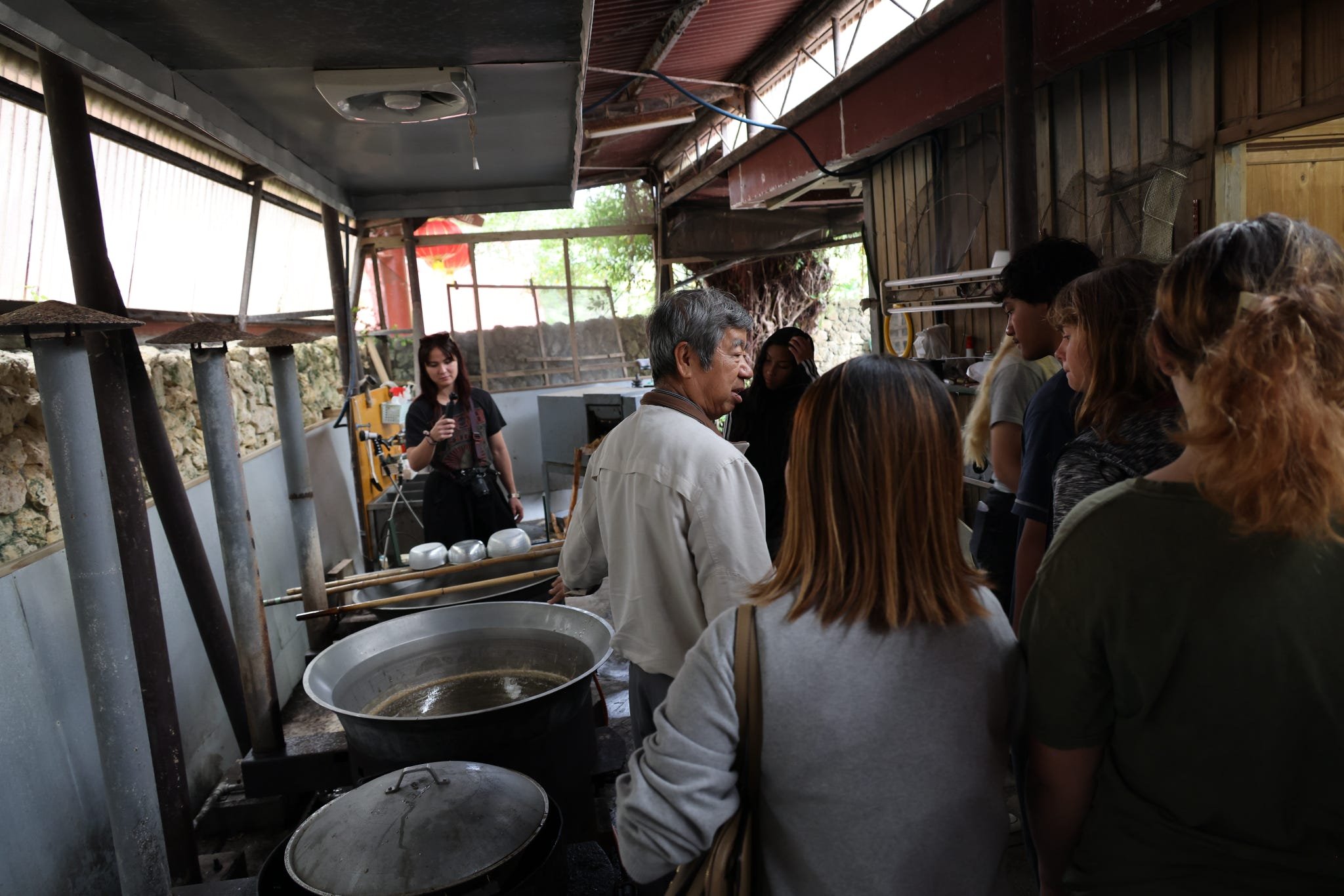
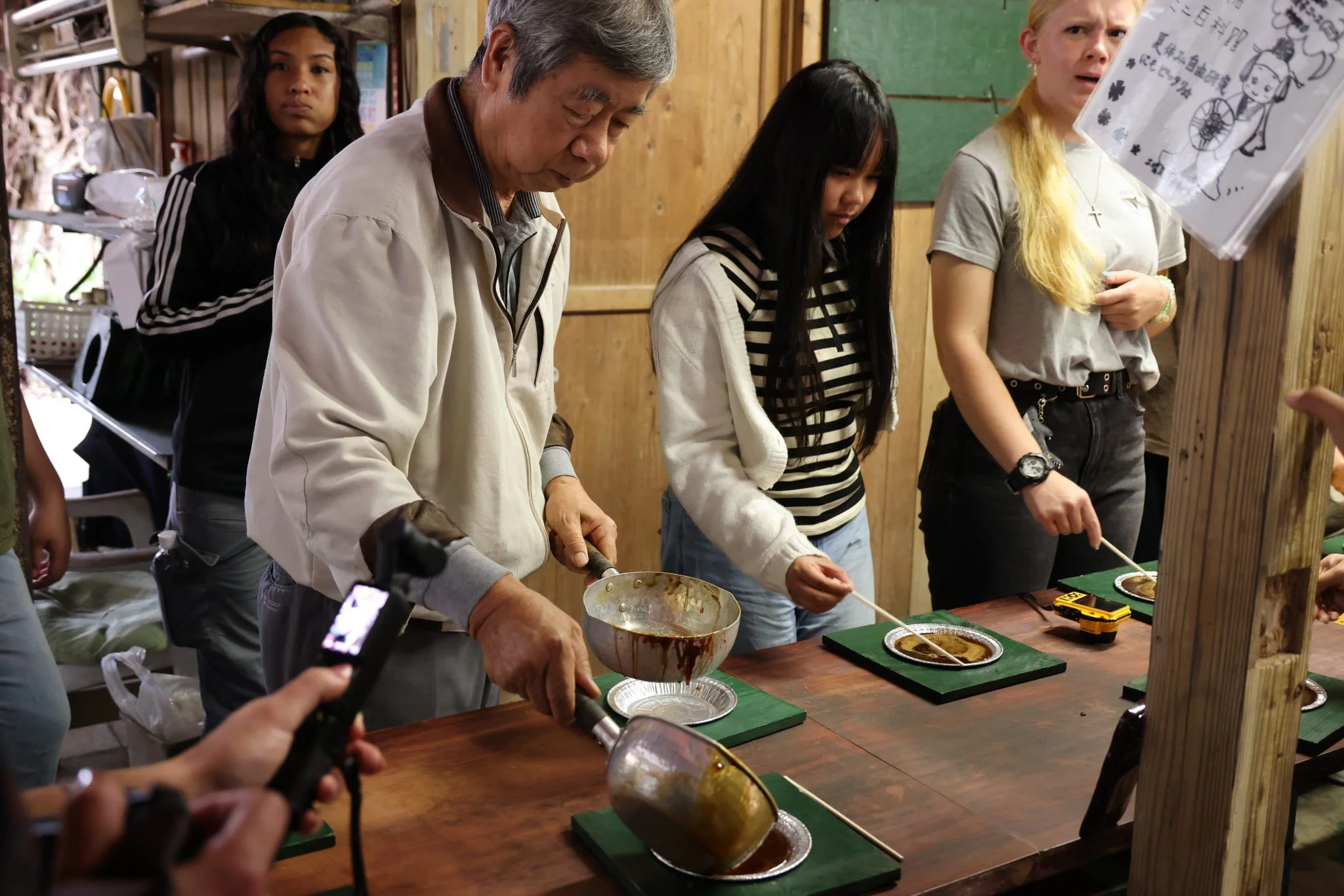
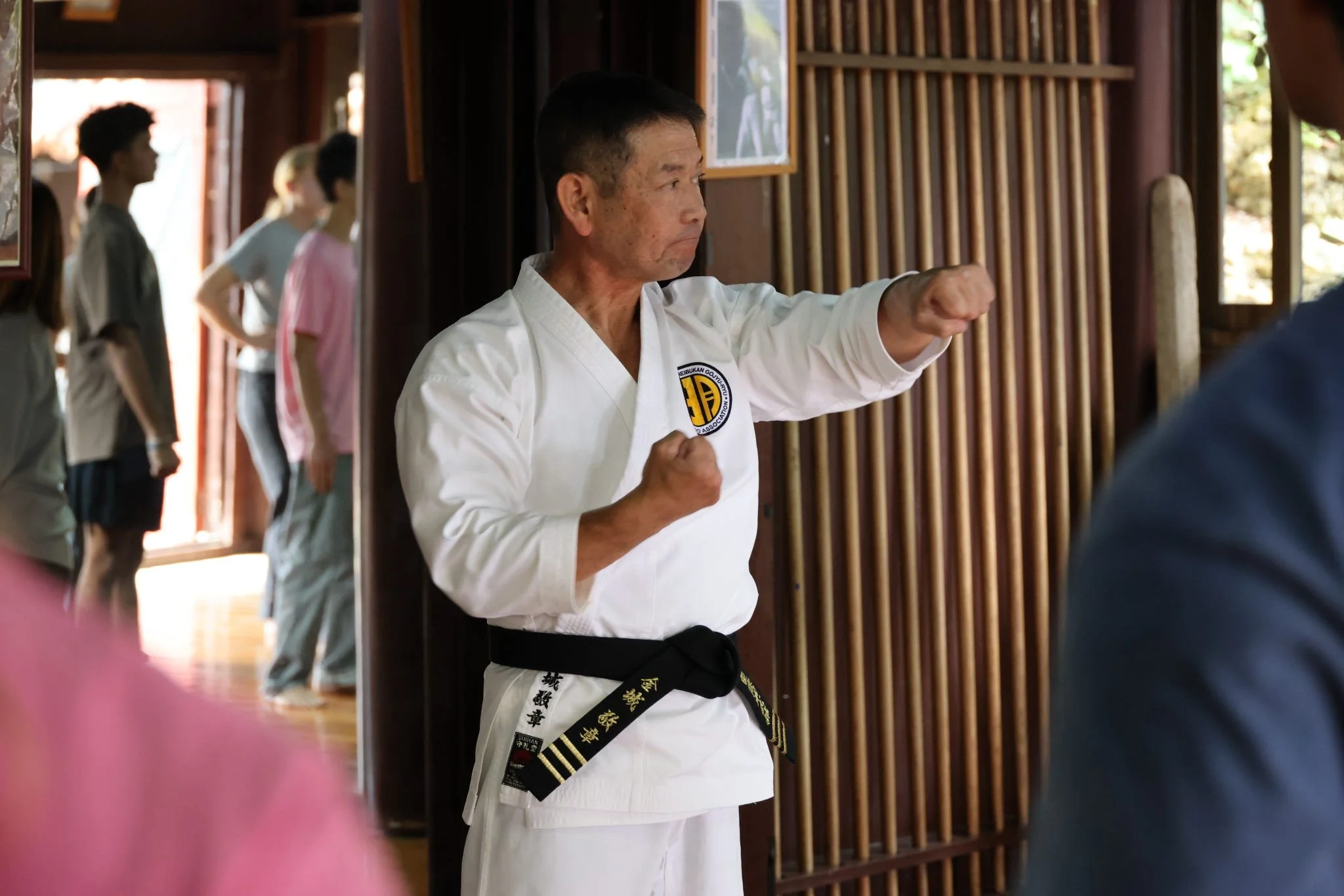
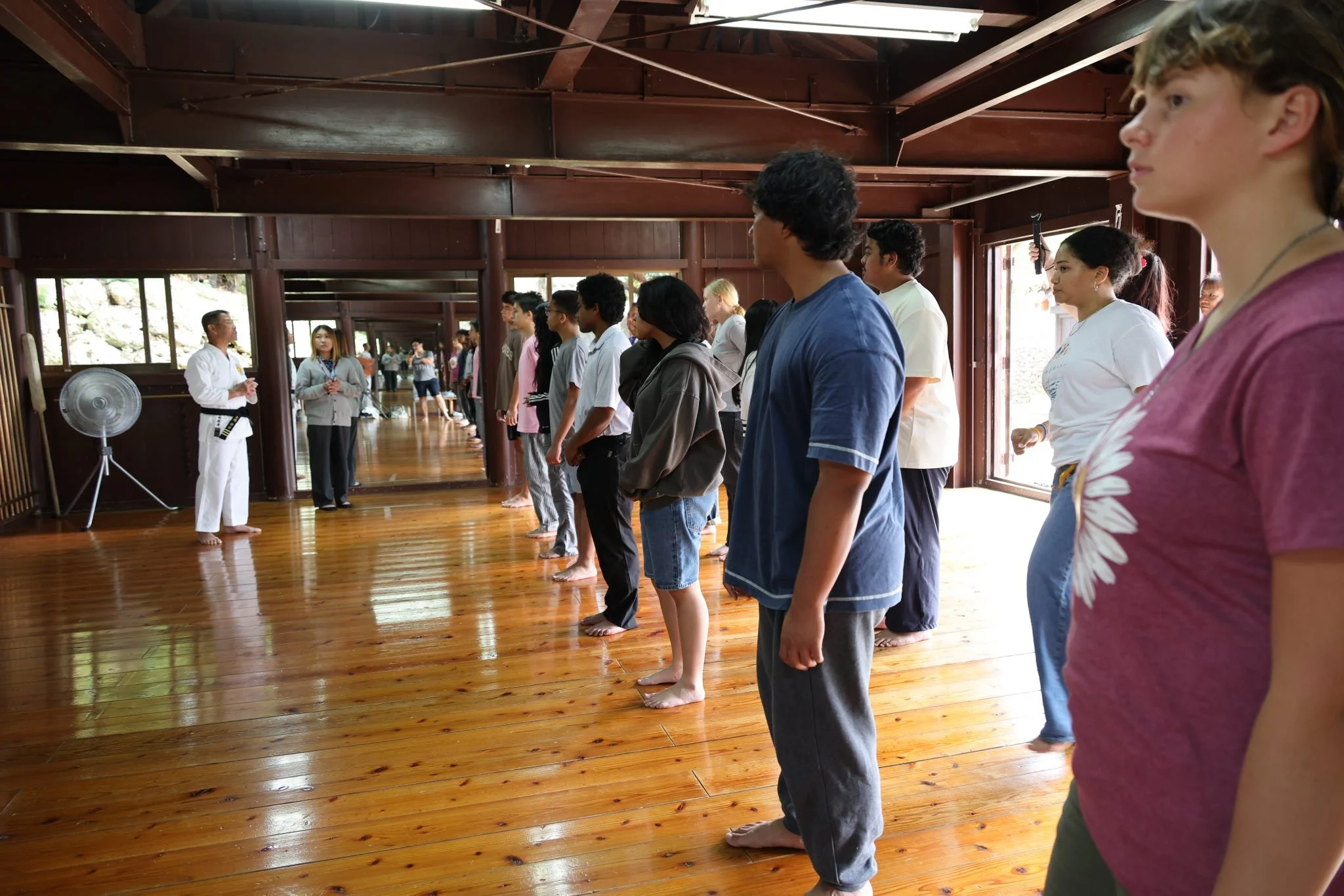
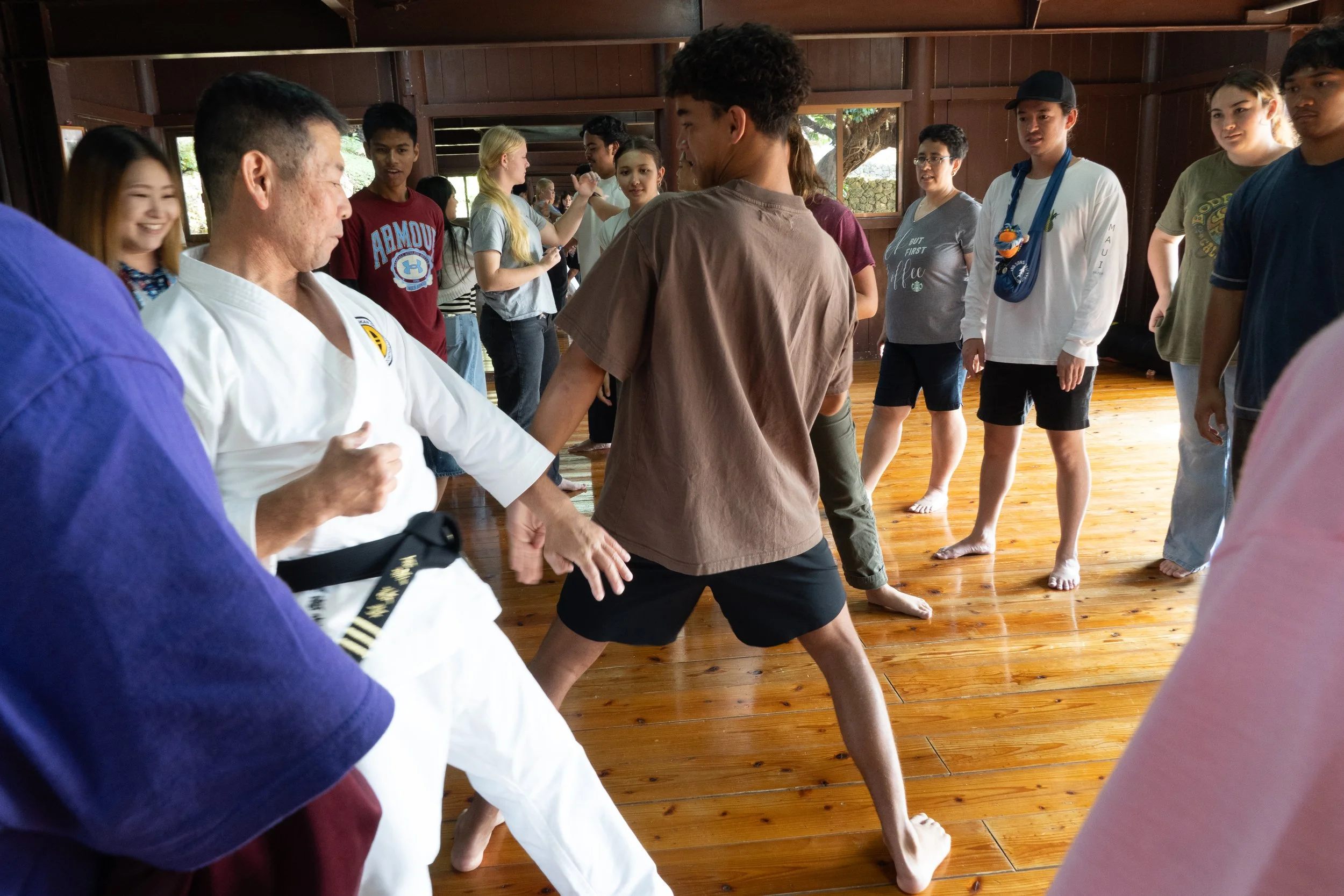
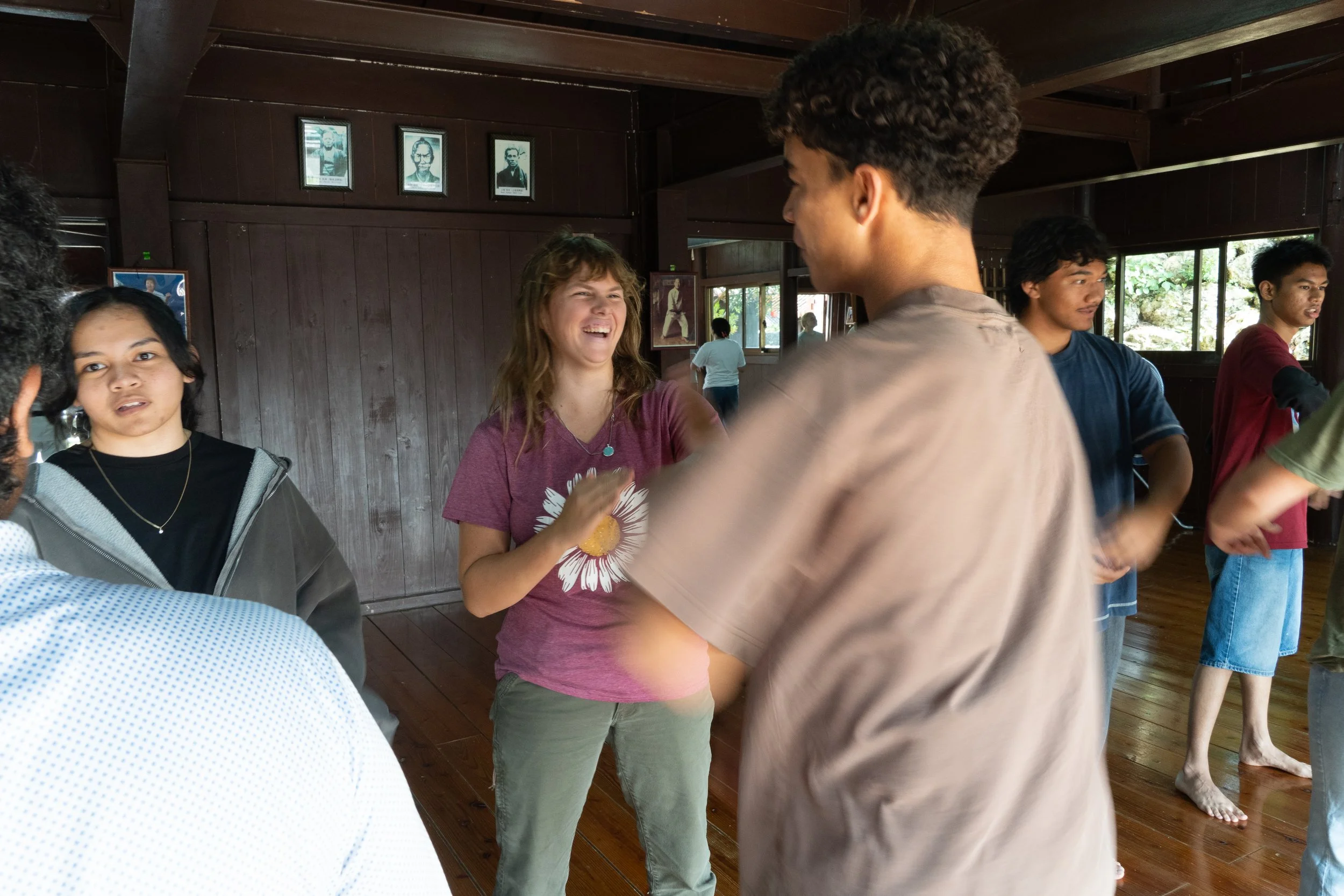
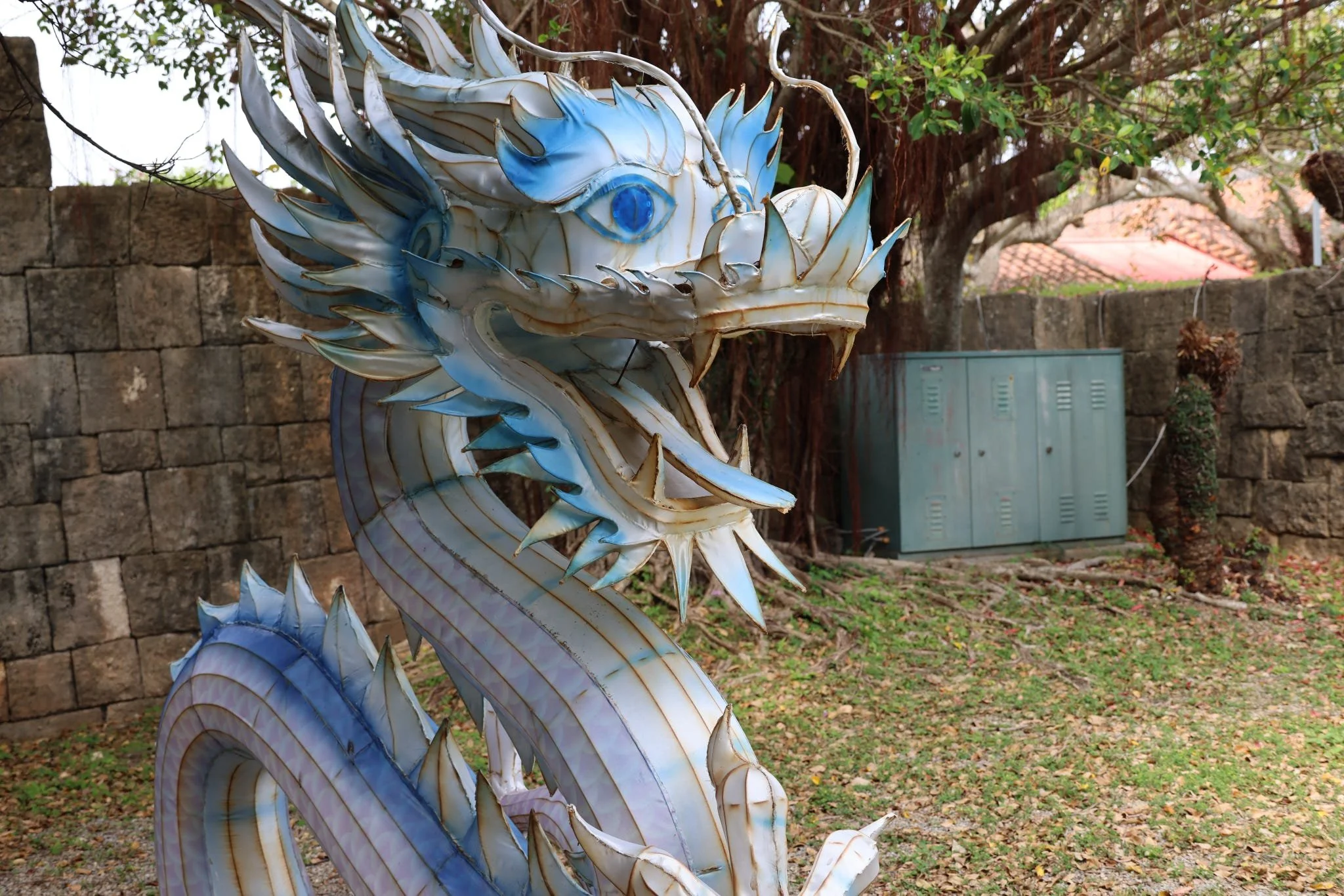
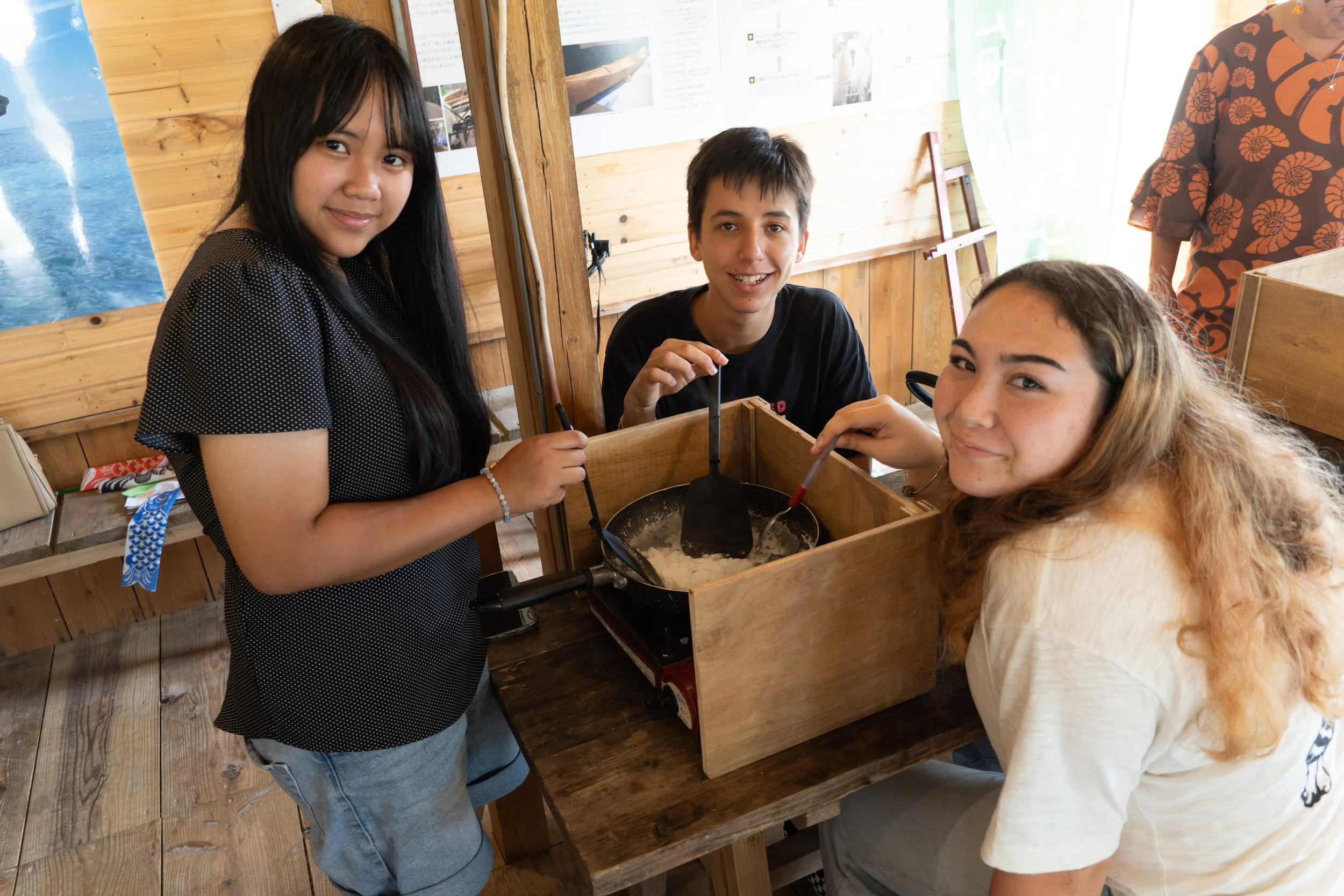
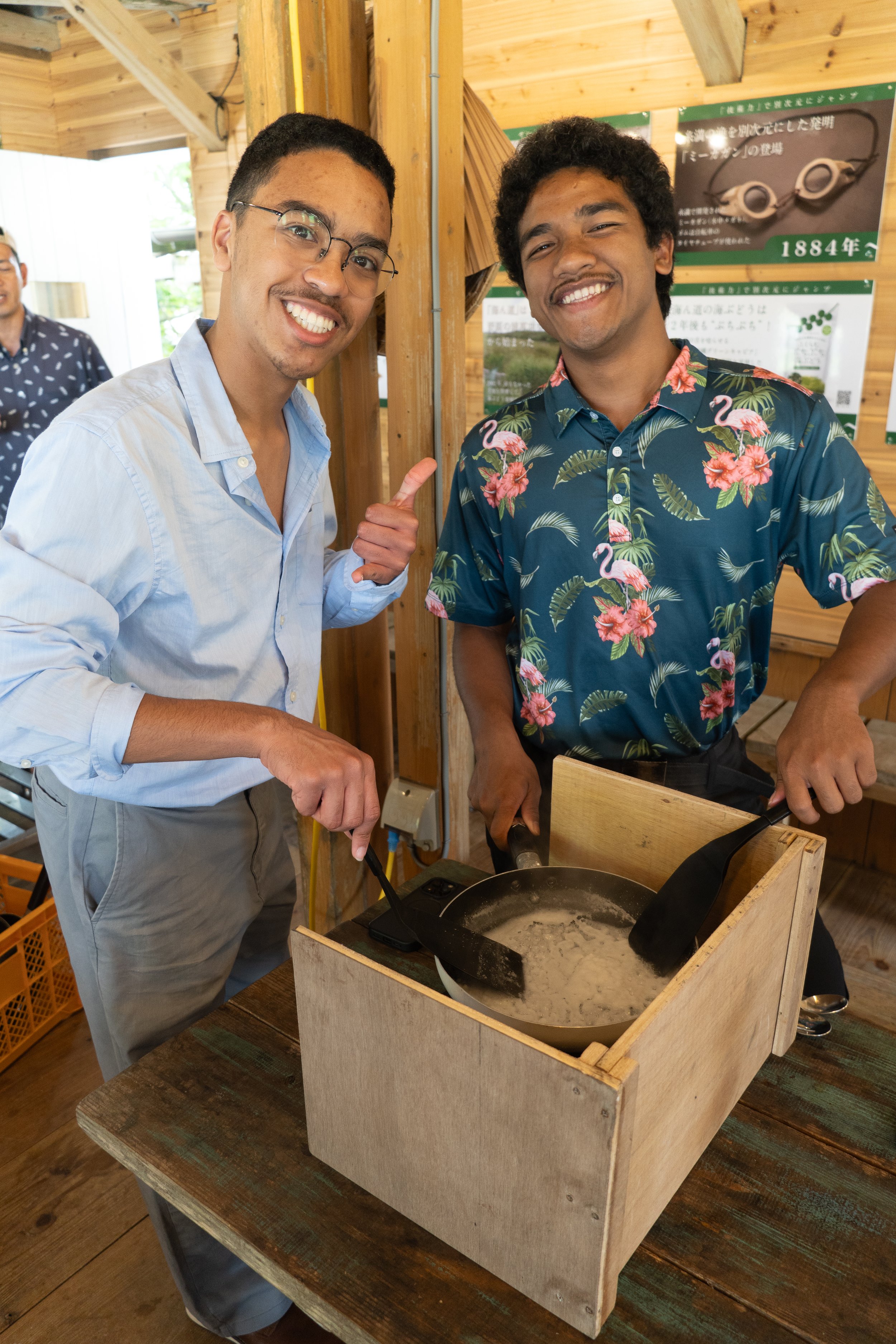
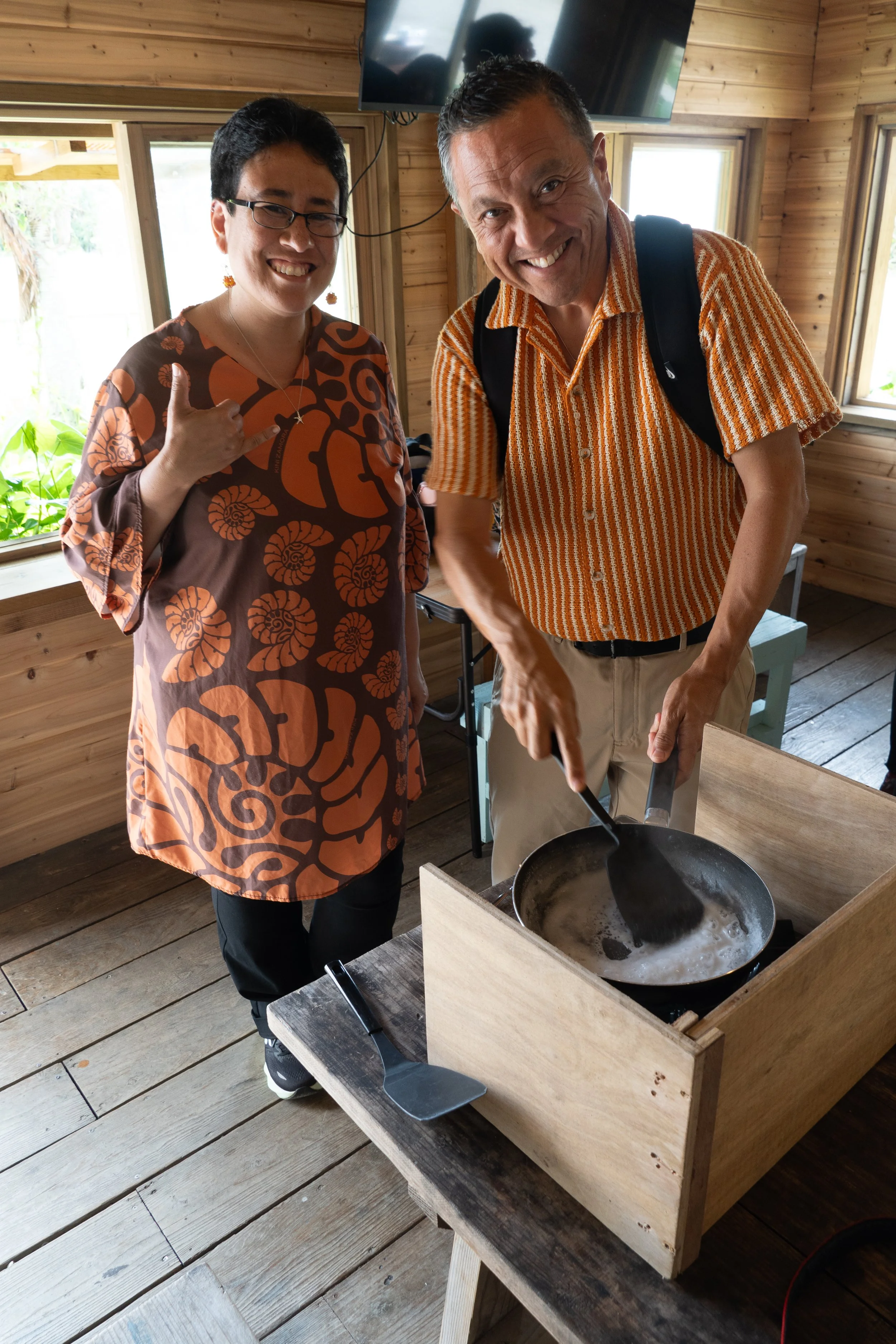
At Murasaki Mura, students made brown sugar from fresh-pressed sugarcane, learned karate, and wandered through a lantern festival that lit up the evening in red and gold. It was one of the trip's most joyful days — and also one of its most instructive.
The brown sugar took nearly three hours from start to finish. A single stalk of sugarcane, students learned, yields about one sugar cube's worth of product. The instructor stirred constantly, adjusting heat, watching consistency. Megan Pierpont asked, afterward, why sugarcane had ever been brought to Okinawa given how poorly the soil retains water — a question nobody had a complete answer to. The mystery felt right for the day.
Karate landed differently than students expected. Their instructor was a black belt who made each movement look inevitable, effortless, the result of decades of repetition. Students tried to copy him. Most looked, as Anju put it, "kind of silly." That was fine. The lesson beneath the lesson was what mattered: karate was not primarily an art of attack. Every fundamental movement was defensive — designed to stop a fight, not win one.
"Karate is the martial art of peace," wrote Cassadi Cabral, who spent the afternoon thinking about how different Nānākuli's school hallways might look if students internalized that idea.
Toa Aupiu of Kahuku High connected the form to hula: "Just like how we had a karate teacher, we in Hawaiʻi have hula teachers that teach us our traditions. It is important that we keep teaching the younger generation to make sure that the Hawaiian culture stays alive." The parallel was apt. Both were arts you could do wrong. Both required a teacher who had learned from a teacher who had learned from a teacher. Both were how a culture moved through bodies, forward through time.
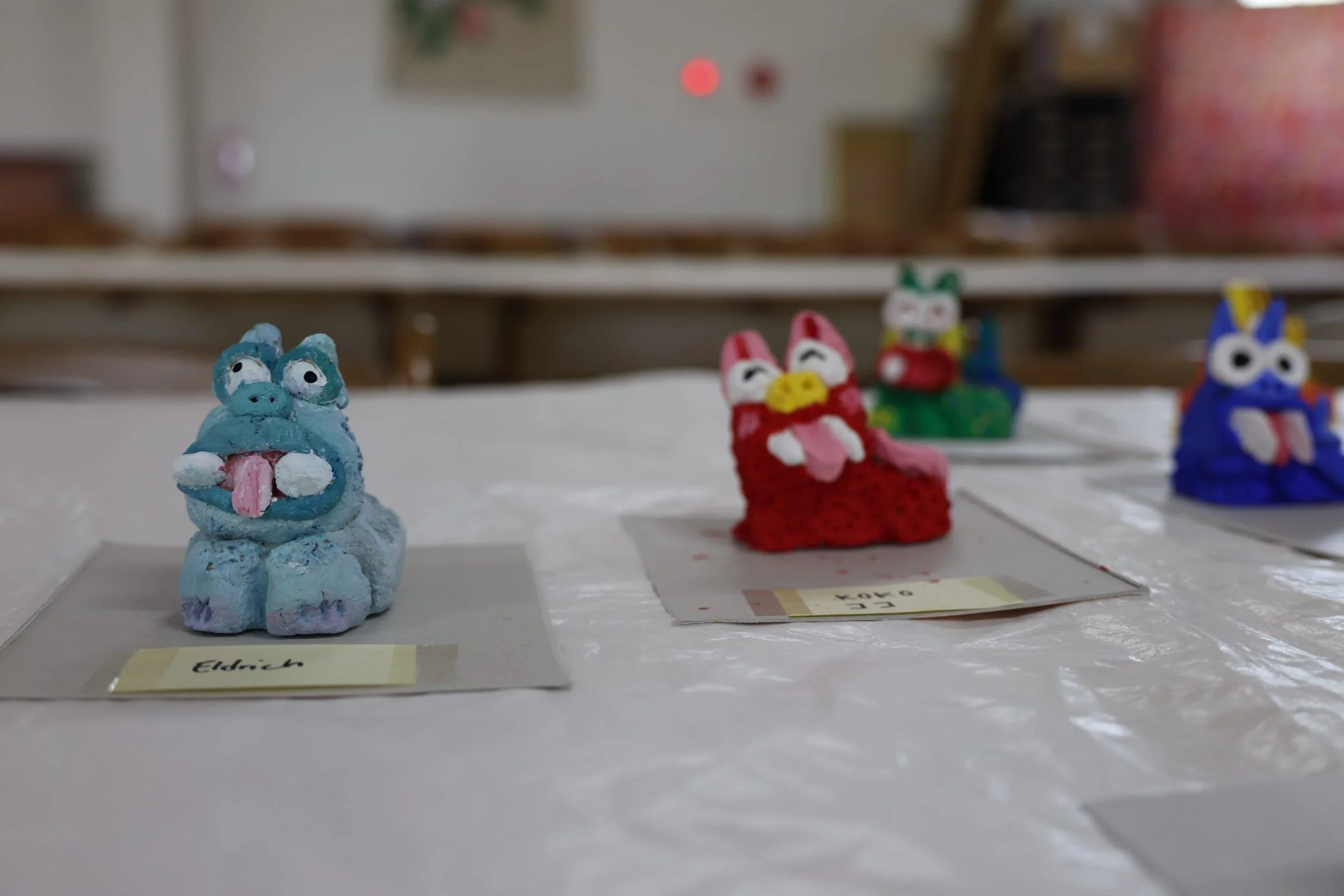
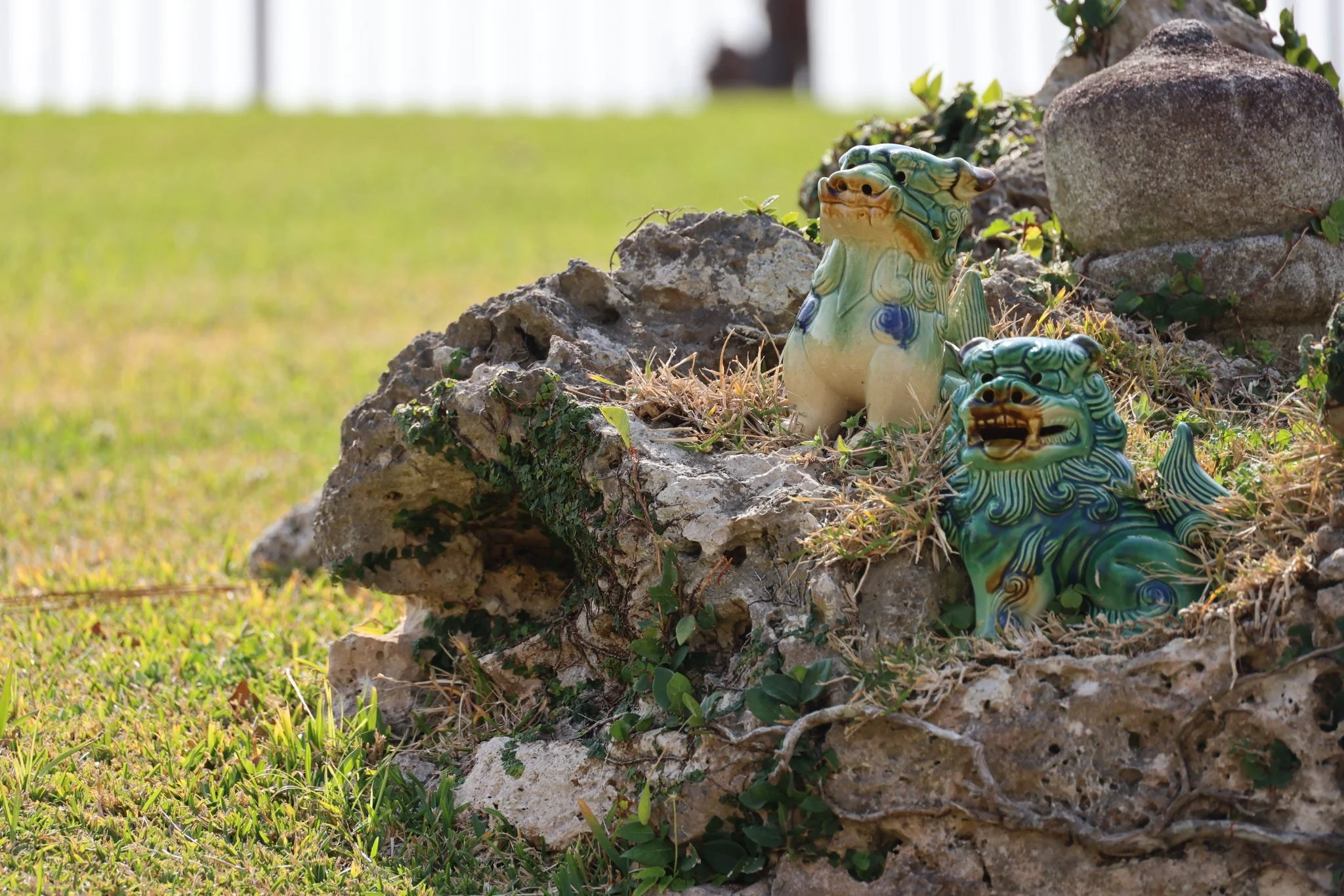
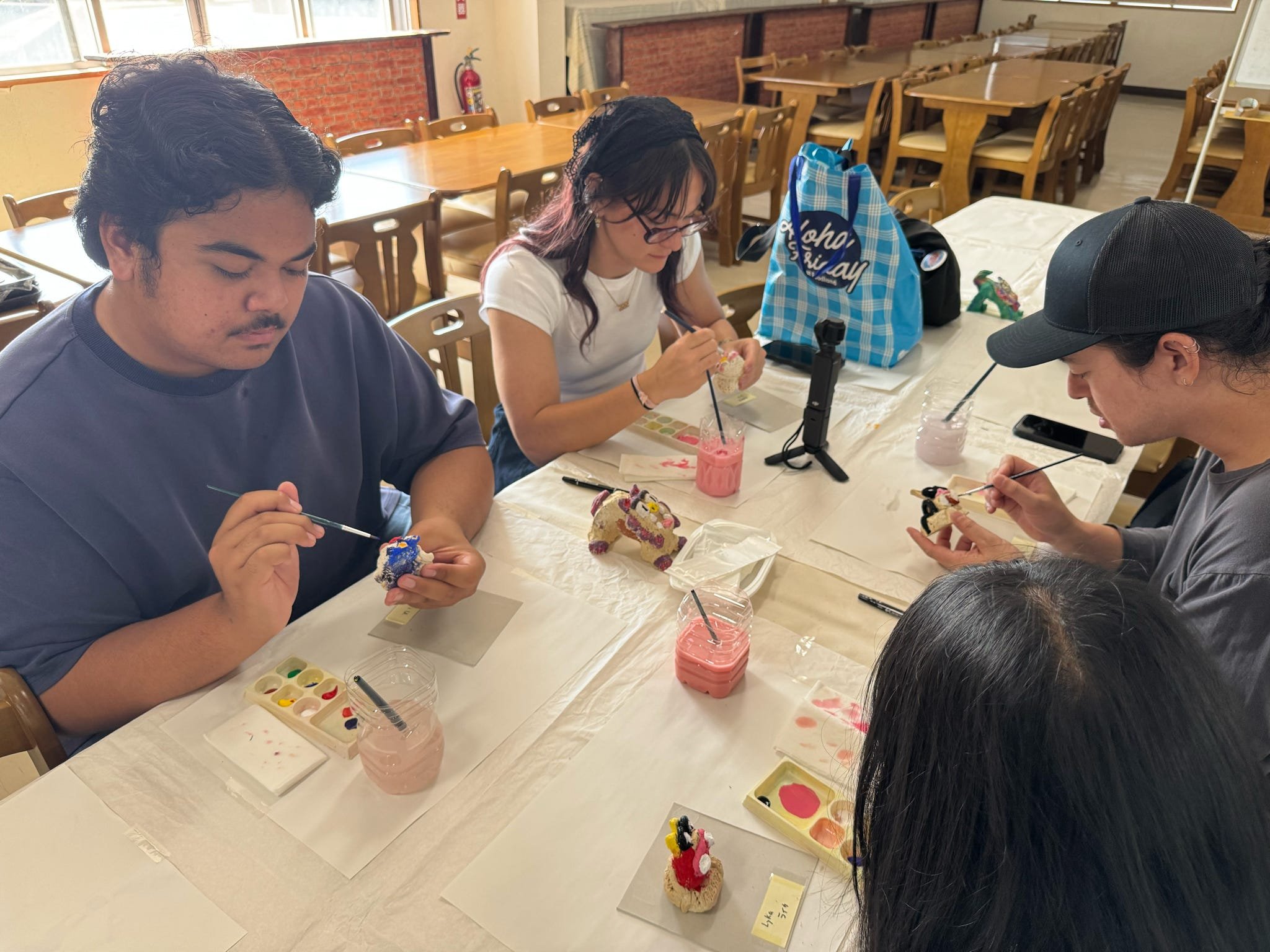
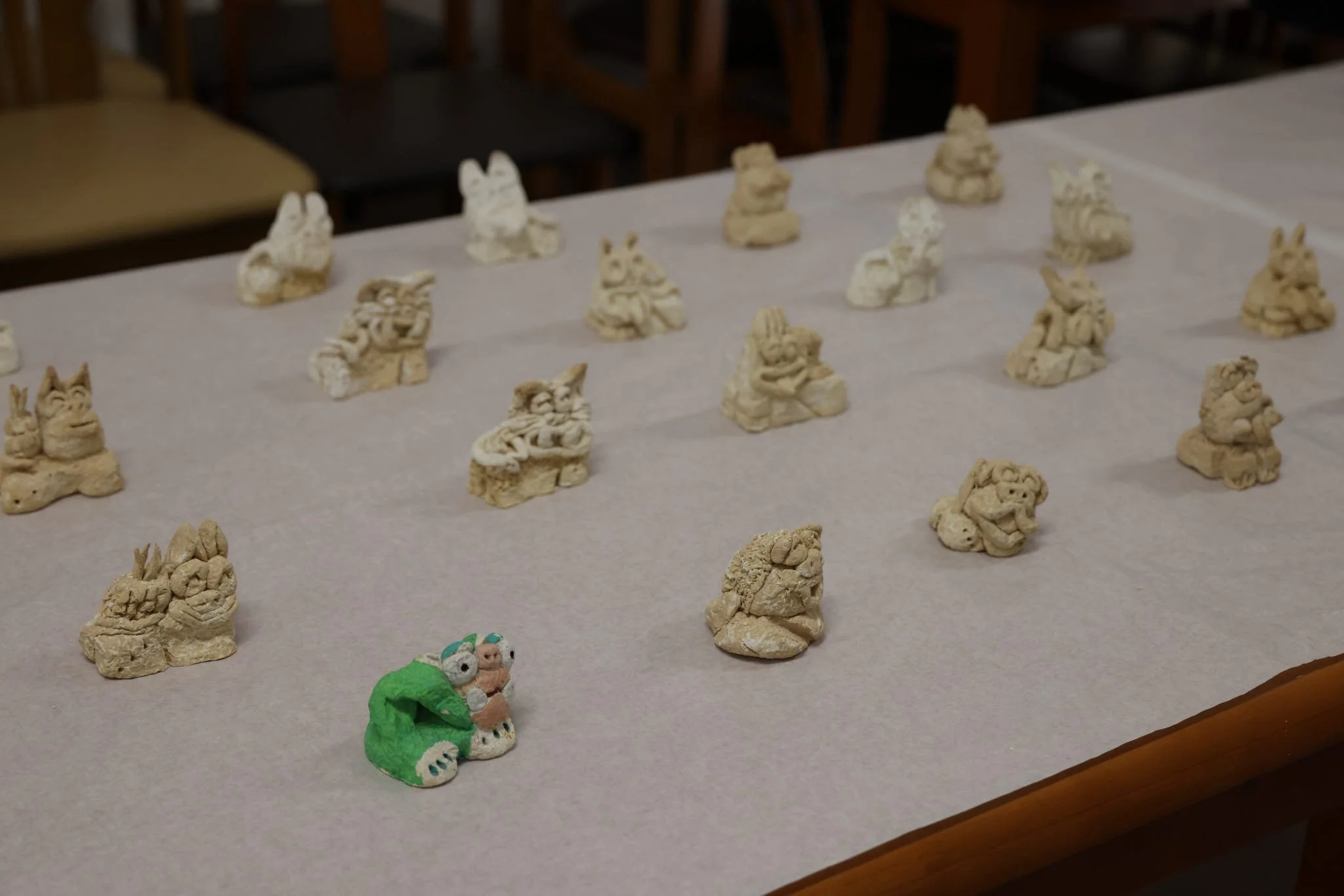
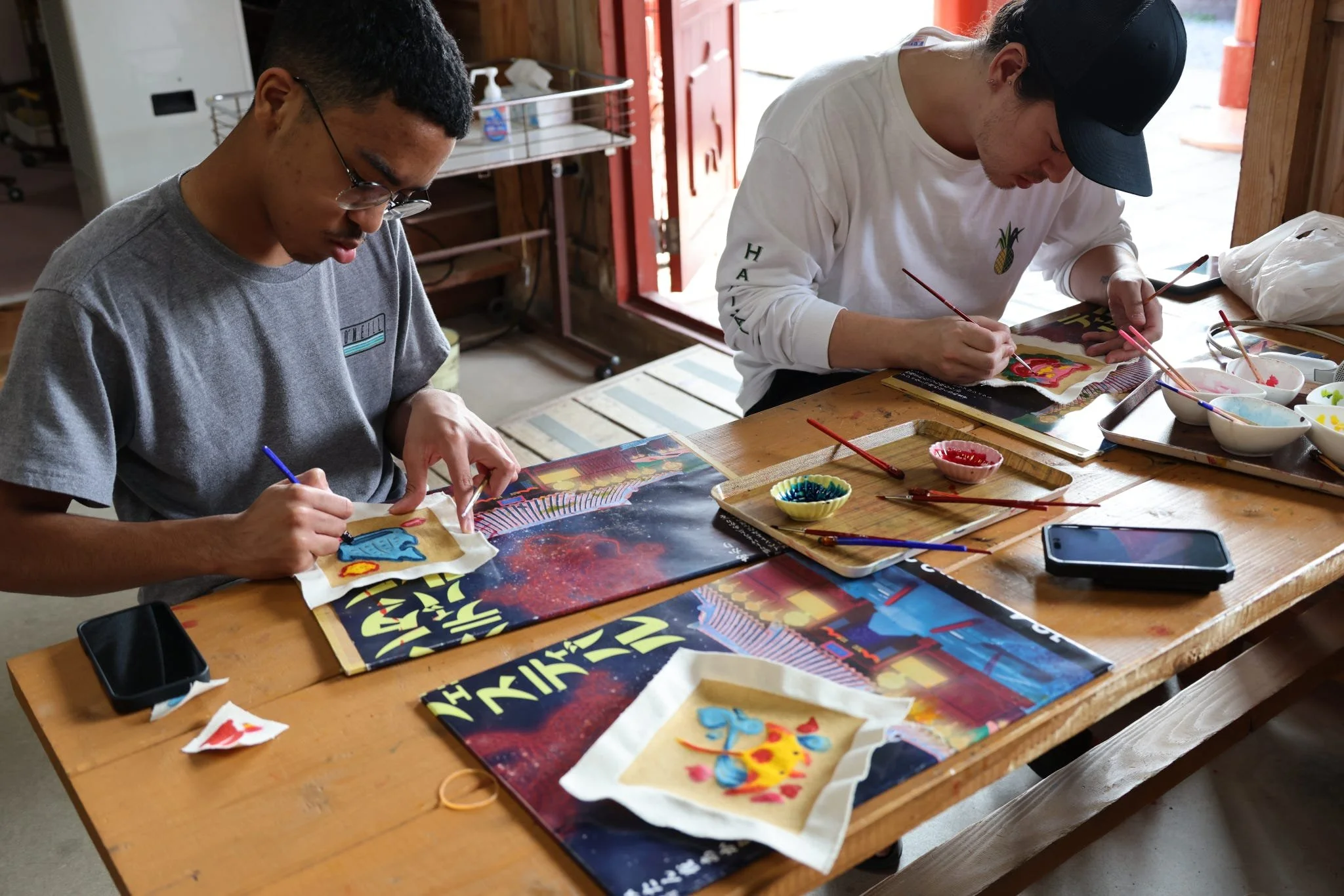
Anju, who had spent her afternoon at a Bingata printing station, pressing a Shisa design in traditional Okinawan resist-dye technique, wrote about the care the instructors had taken with technique: "There were a couple specific things they insisted we do correctly. These techniques are what make it Okinawan. It's important to maintain that." She named her finished print Miso. It went straight onto her backpack.
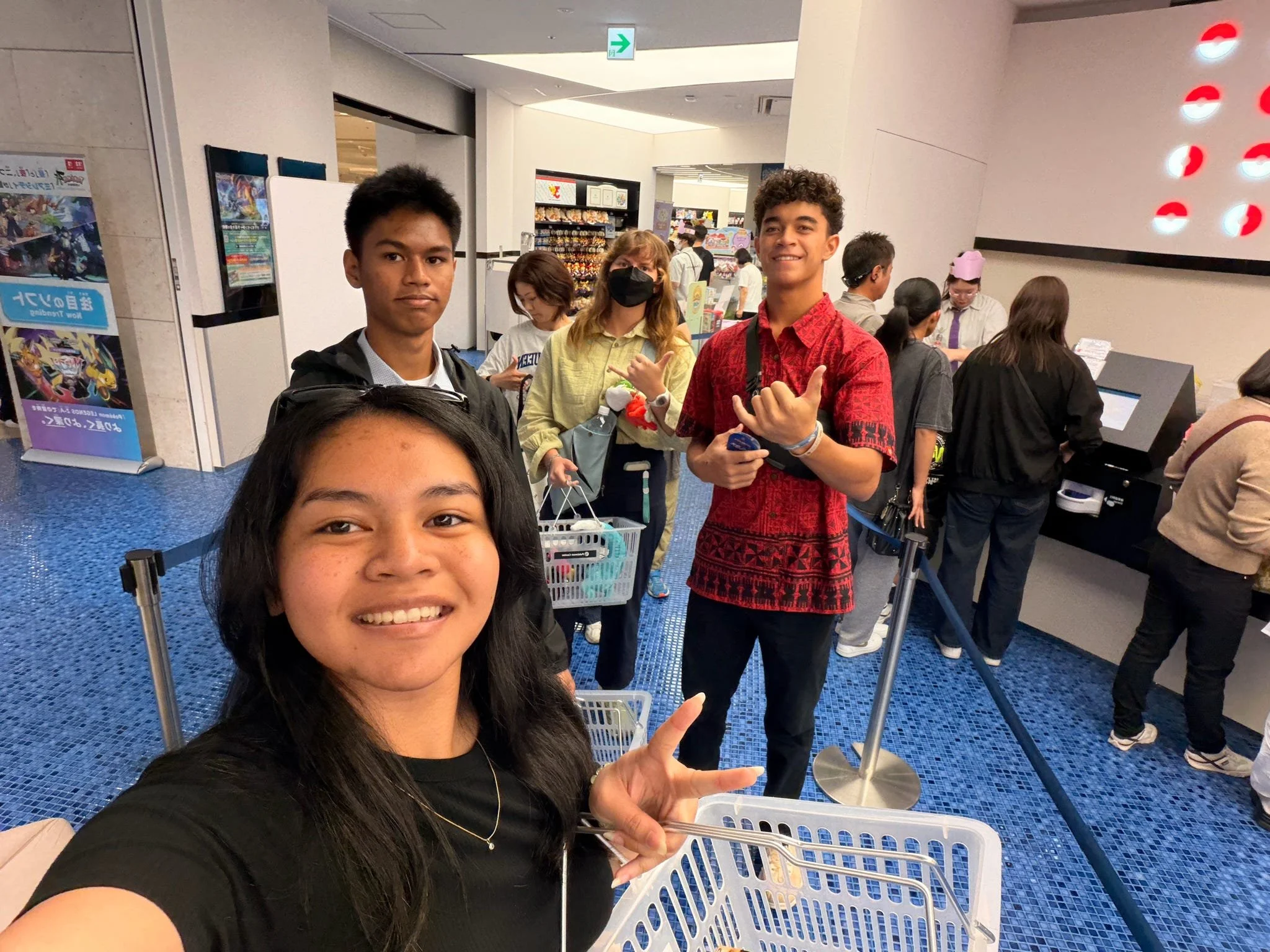
Ichiriba Chōdē
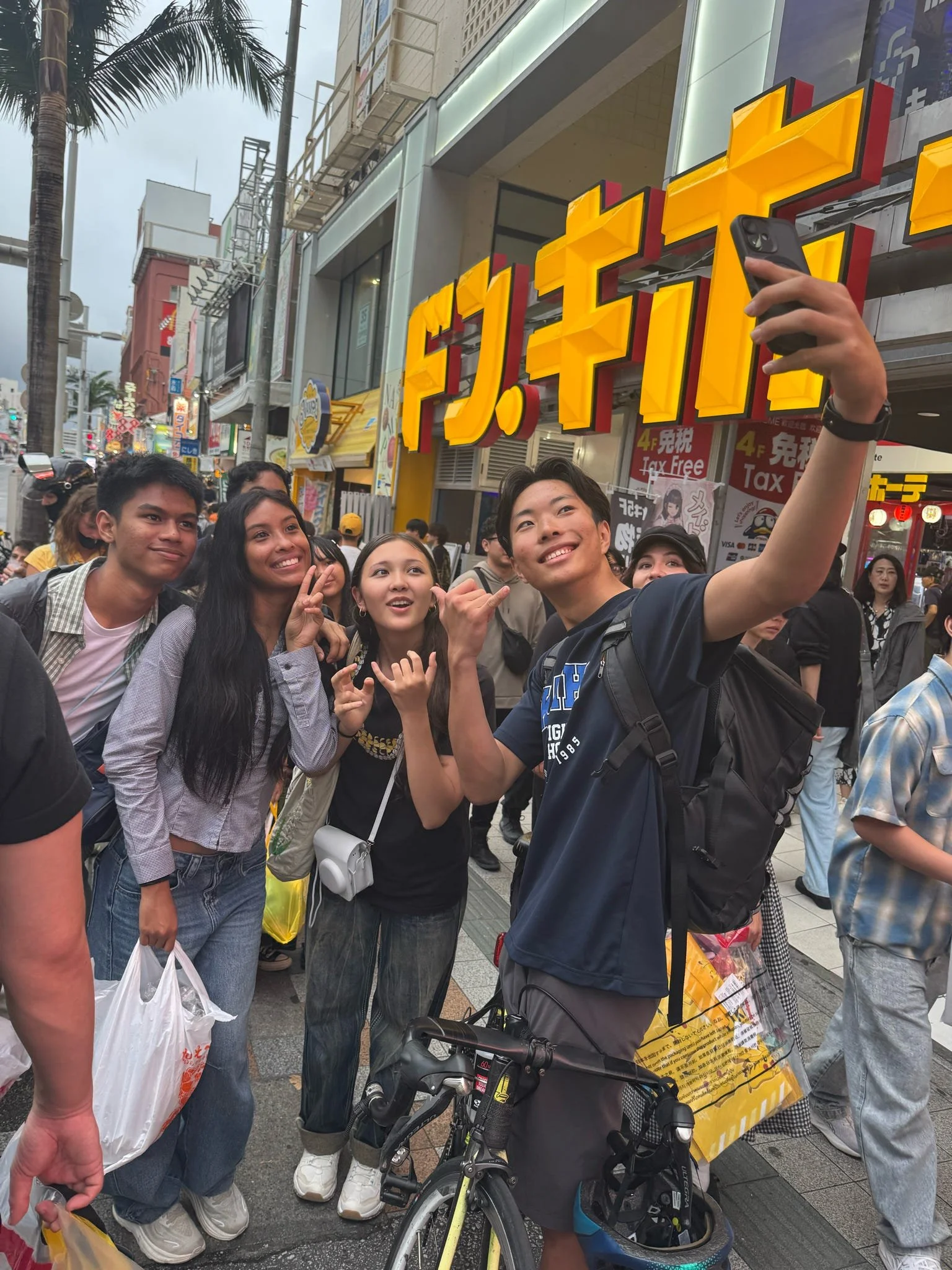
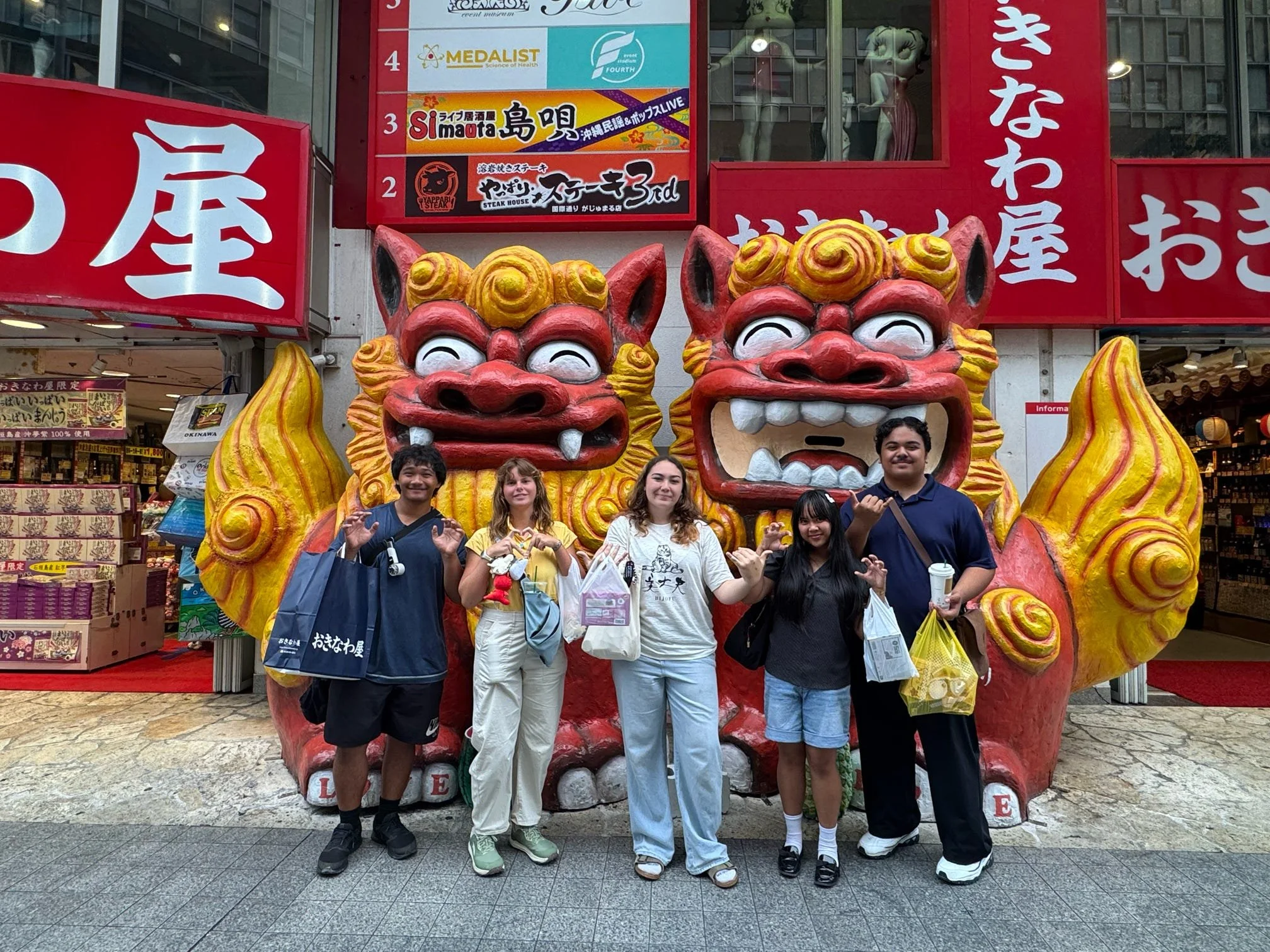
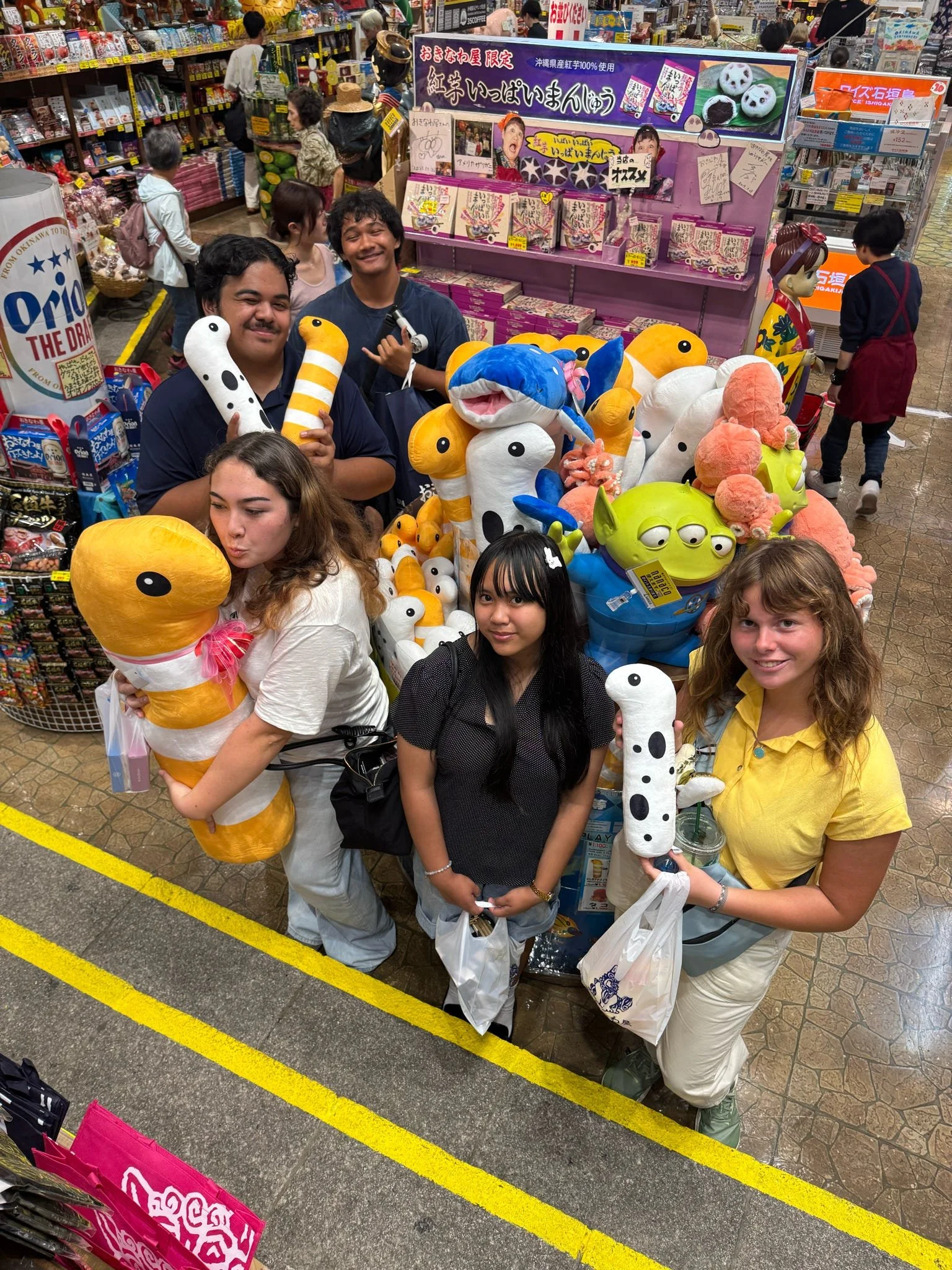
On the second-to-last full day, the delegation went shopping. On paper, this sounds like a break. In practice, it became one of the most talked-about parts of the trip.
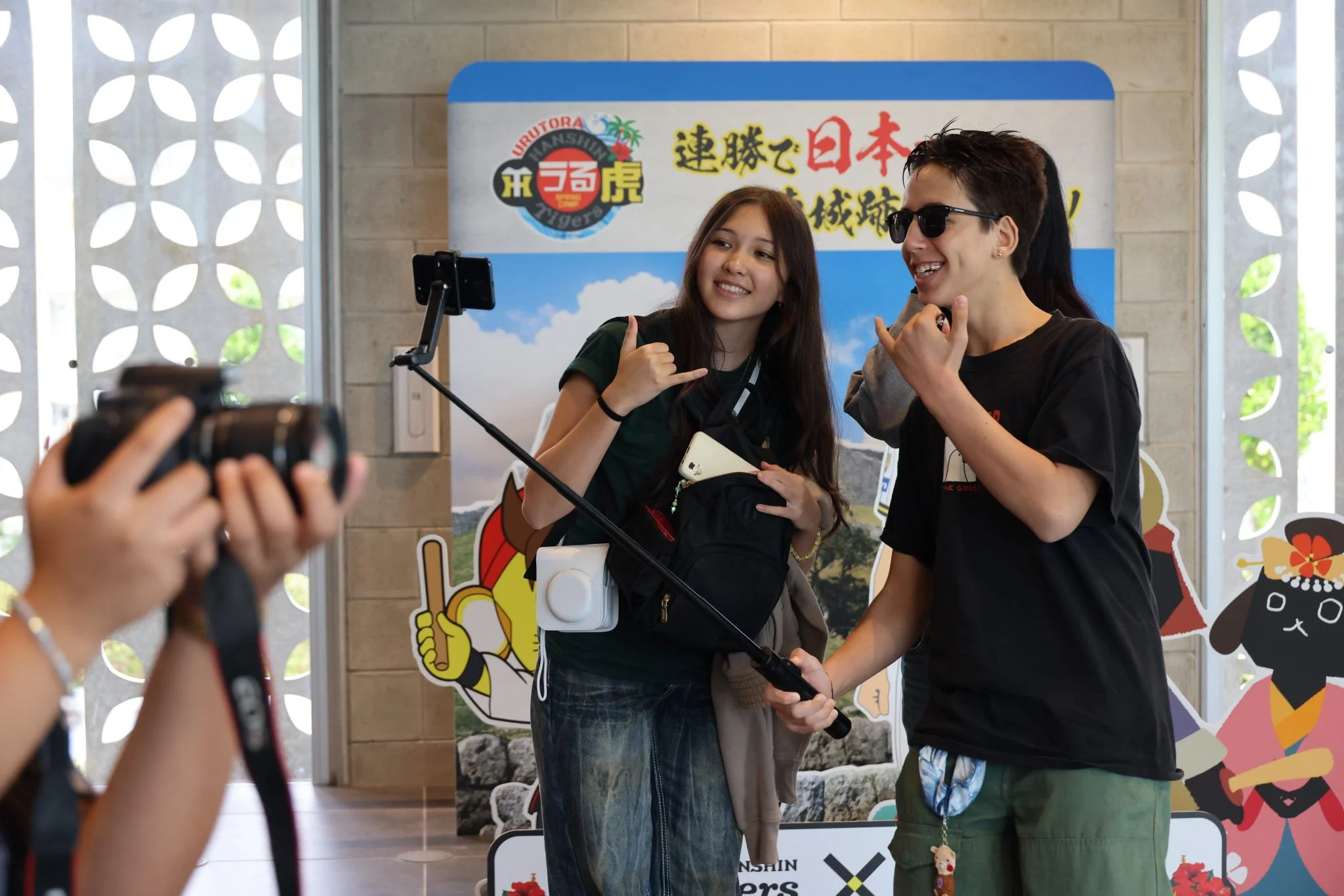
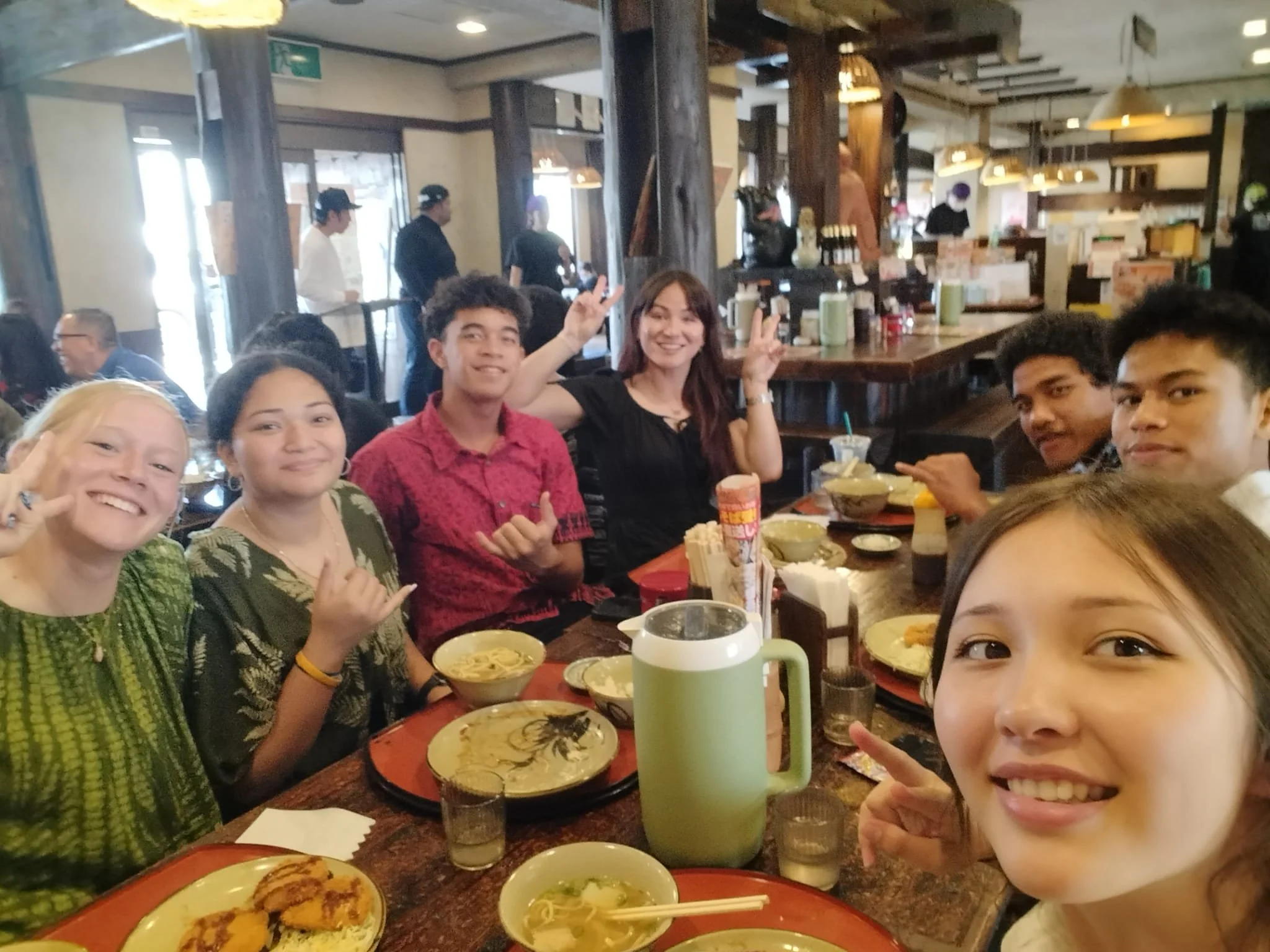
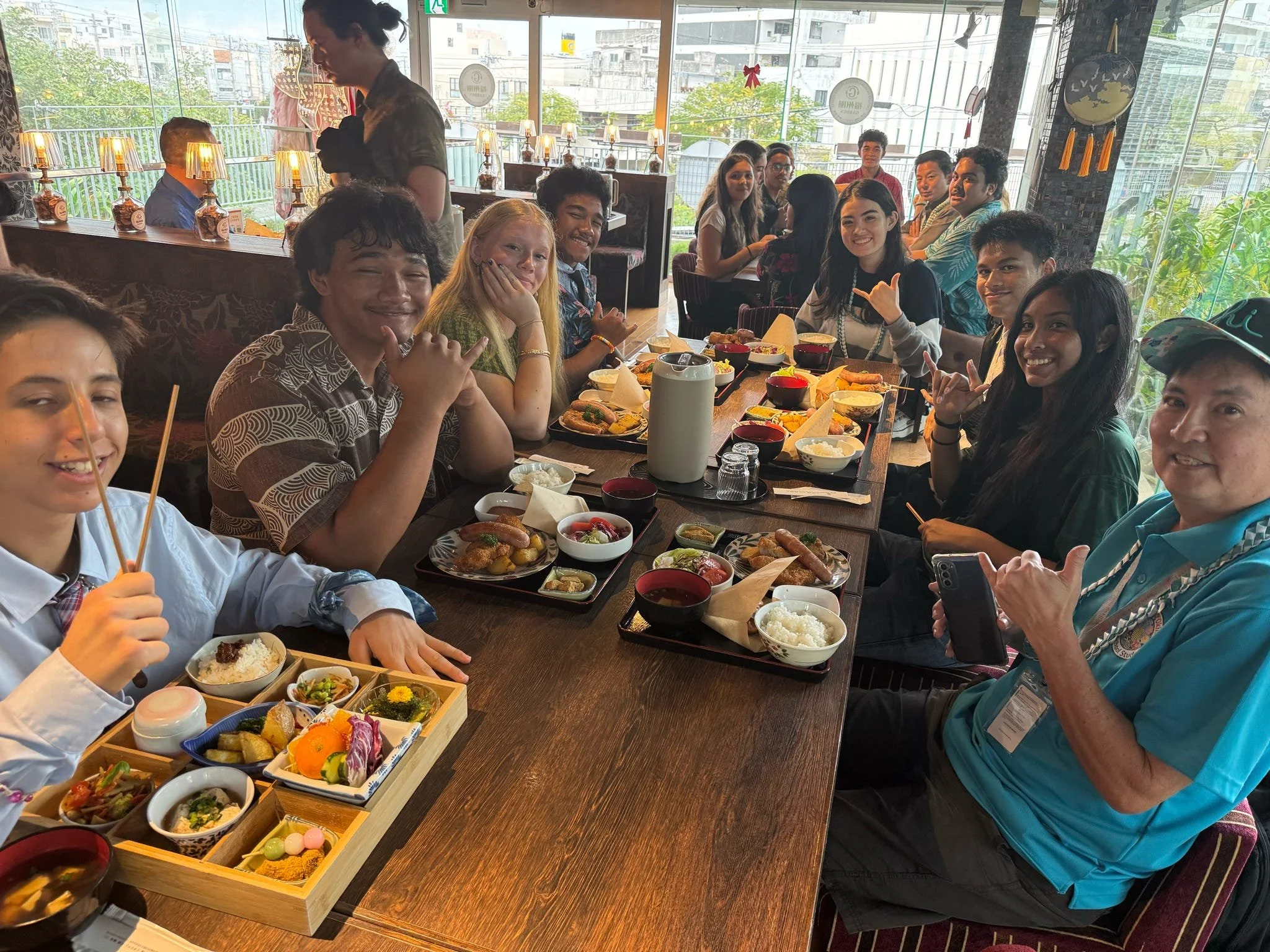
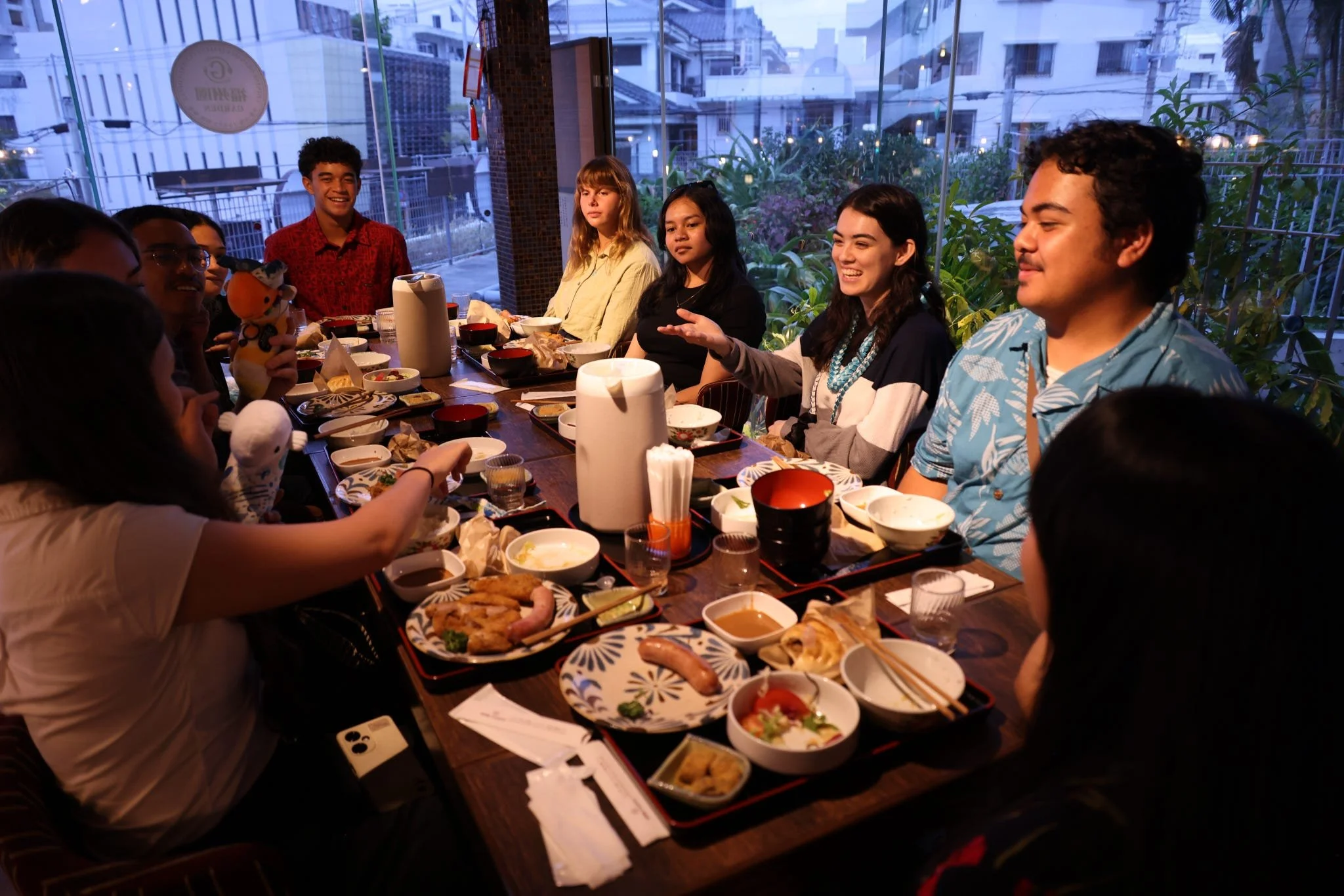
At San-A Naha Main Place, Anju, Eldrich, and Lyka Lomongo of Konawaena High went to a restaurant on their own — no chaperone, no group — and ordered their food entirely in broken Japanese. It worked. They ate together, talking, laughing, entirely themselves. "I think I'll remember eating in that restaurant forever," Anju wrote. "It was so simple and cute, but it made me feel so warm and happy. I felt like I found my people."
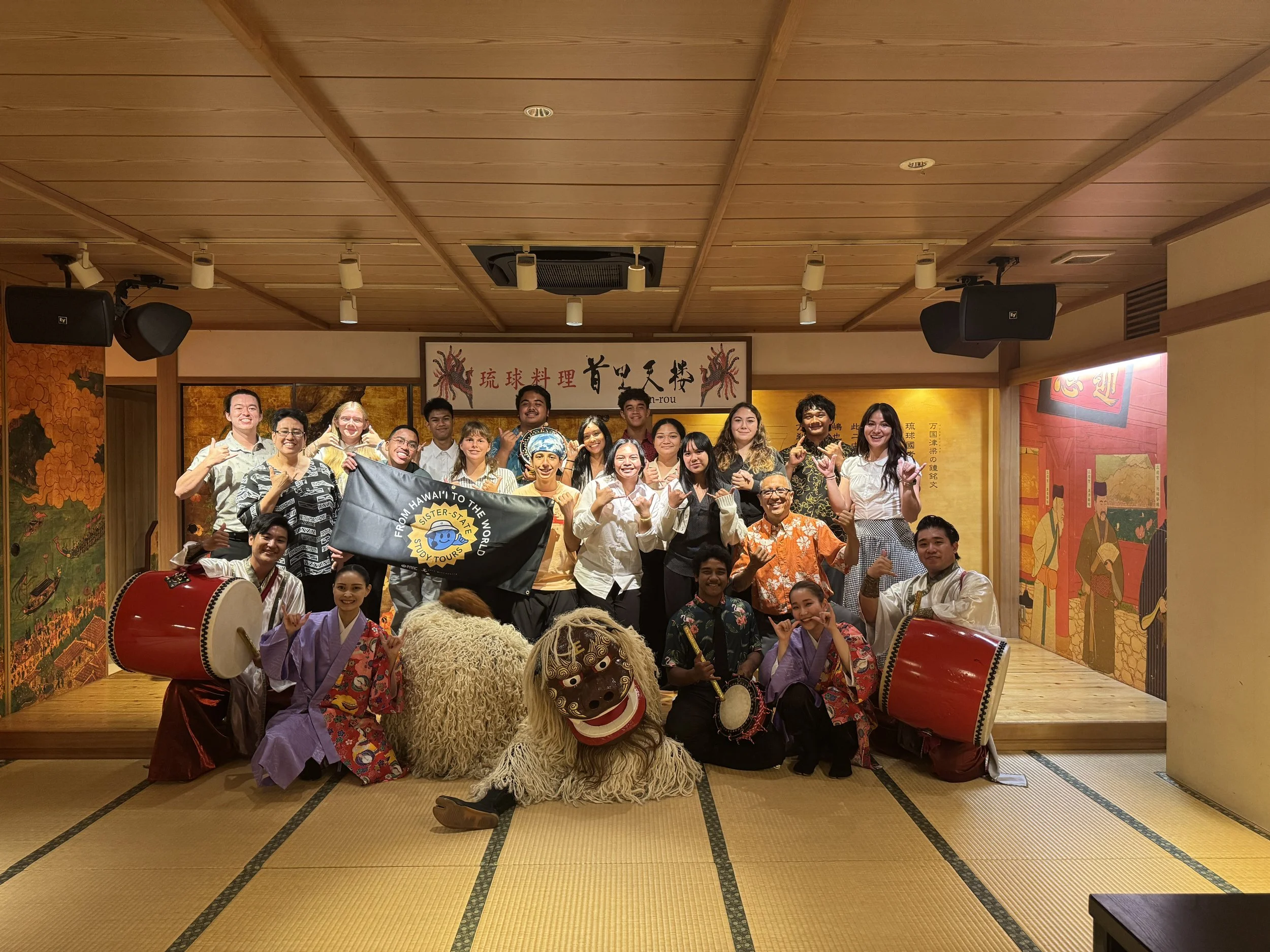
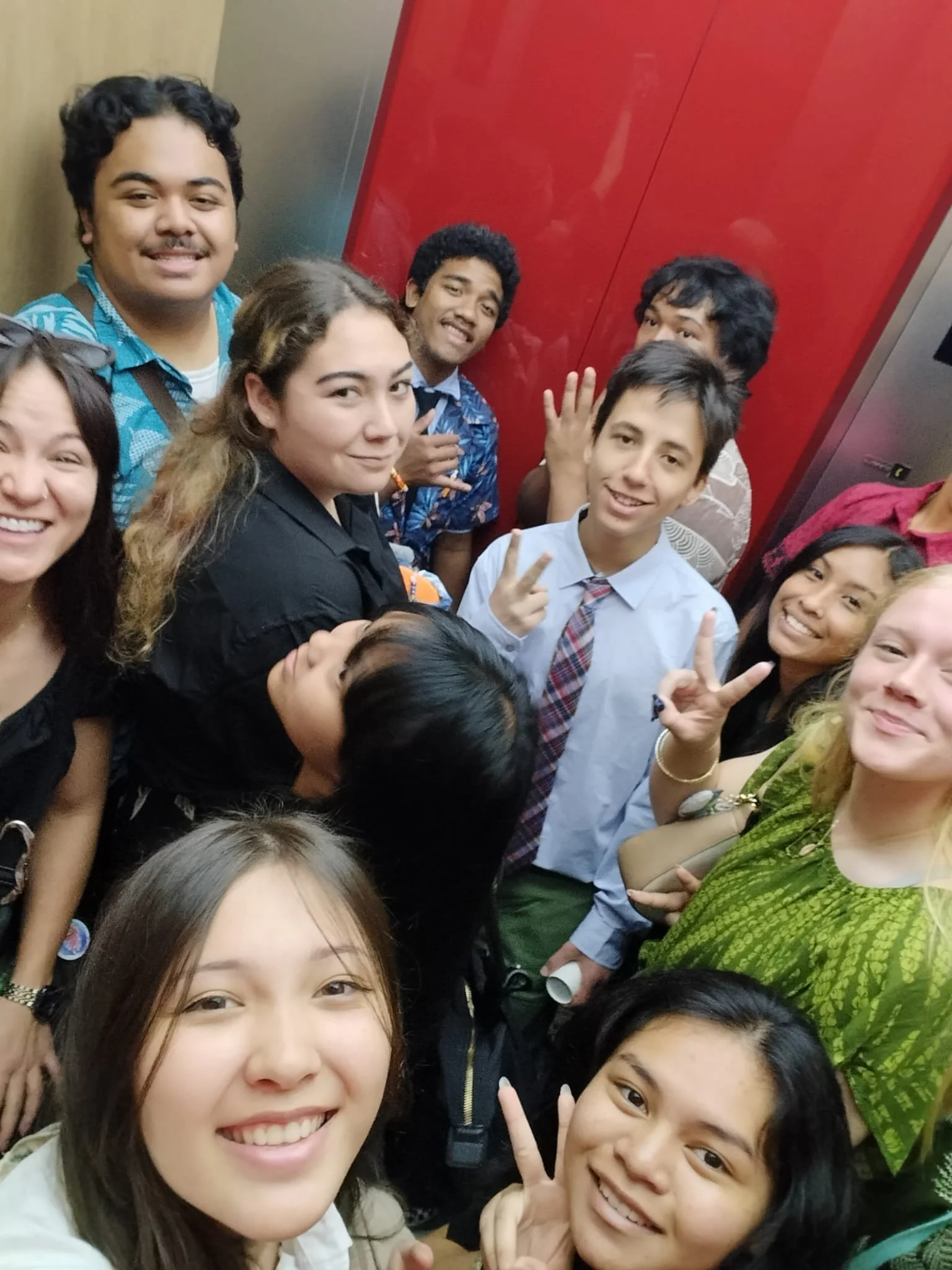
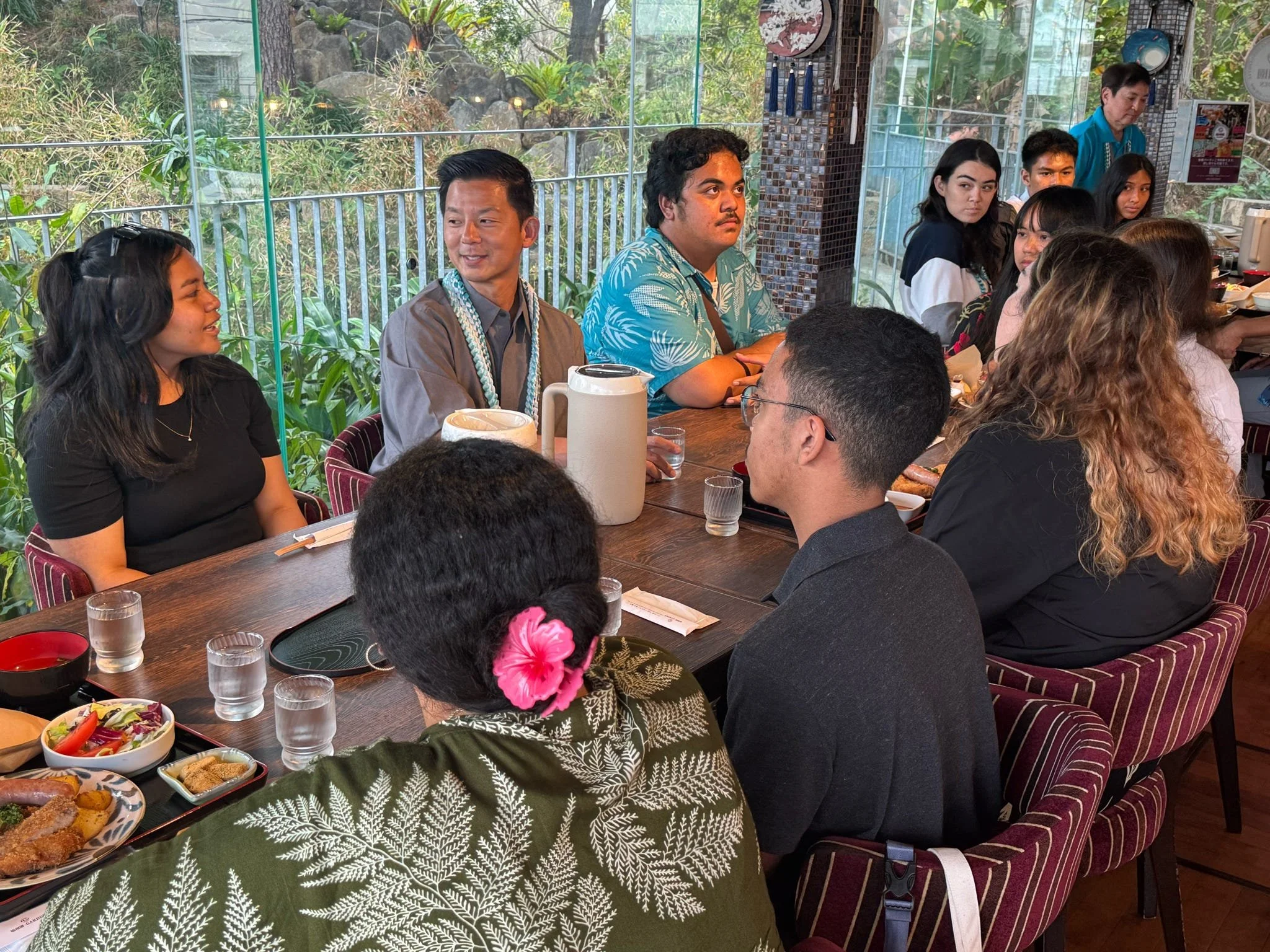
The people. That phrase — and the feeling behind it — showed up in nearly every student's final reflections. What the trip had given them, many wrote, was each other: a group of fifteen public school students who had arrived as strangers in Honolulu in February and were leaving Naha in March as something else entirely.
Okinawa has a phrase for this: Ichiriba chōdē. Once we meet, we are family.
Leʻa Keohohou, who had roomed with different groupings throughout the trip and found herself increasingly close to all of them, wrote about how they "came here as strangers and are leaving as lifelong found family. We don't have to be blood to be close." She added something that felt like the quiet heart of the whole experience: the depth of the bond they'd formed, she thought, would help future student ambassadors. These fifteen were building something that could be passed forward.
Tracey Beesley-Wadzinski wrote about learning, over ten days, "to be more conscious of my actions — to double-check my thoughts before I commit, to always make sure I represent myself as the person I should be." That wasn't abstract. She had learned it by doing it, in a country where nearly every choice was visible and counted.
The Governor and the Song
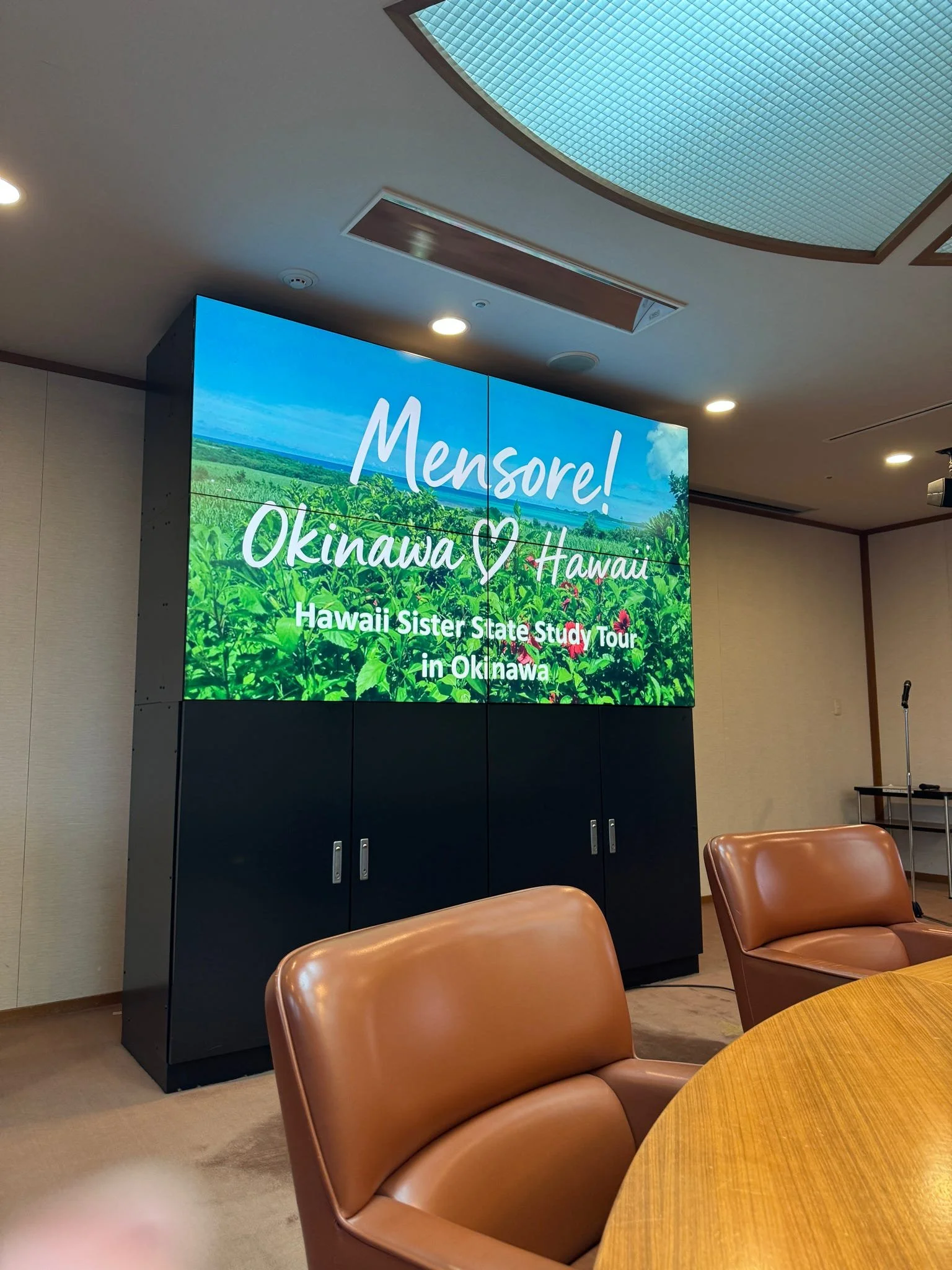
The meeting with Governor Denny Tamaki was, for most students, the moment when being a student ambassador became most legible to them — when they could feel the weight of what they were actually doing.
Governor Tamaki arrived and immediately made the room smaller and warmer. He is half-American, half-Okinawan; he has met Governor Josh Green; he had heard of PAAC. He asked each student to share what they had learned, what had surprised them, what they were carrying home. And then he listened.
Laʻi Unutoa of Kapolei High spoke first. "I was able to talk about our travels that we had done in the past few days and elaborate to a question he asked," he wrote. "I answered saying that I learned to appreciate Okinawa's rich culture and history, despite the good, bad, and the ugly that comes with it. It shouldn't have to be digestible for people to feel good — it should make them question and continue to learn." He had not planned to speak first. He did it anyway.
Aaliyah Gabriel talked about Kaiho High School and its advanced curriculum, and then told the governor about her dream of studying chemistry in Japan and eventually becoming a pharmacist. He told her about a hospital in Okinawa where people her age were already learning. "The fact that he even said that and gave me tips and advice just makes me want to go further with my dreams," she wrote.
The delegation sang "Hawaiʻi Ponoʻī." The governor's team sang back a song of their own. Nobody had planned for this. It happened the way good things at the end of good trips sometimes happen: naturally, because the room was ready for it.
"What challenged my thinking today was the building," Cassadi Cabral wrote, describing the formal government chamber. "Getting to meet with him and strengthen our connections was a huge privilege." She had thought about power and how it is held; she had seen it held gently.
What They're Carrying Home
What students carried back to their schools was not a single lesson. It was a set of ongoing questions.
Cameron Werkman, who had researched Japanese before the trip and used it wherever he could, came home planning to improve his language skills and already thinking about international relations as a career path. He had learned something specific at the Peace Memorial that he wanted to hold onto: "If we wish to build diplomatic relations with a foreign country, we must be understanding, informed, and empathetic to the parts of their history that may be considered dark."
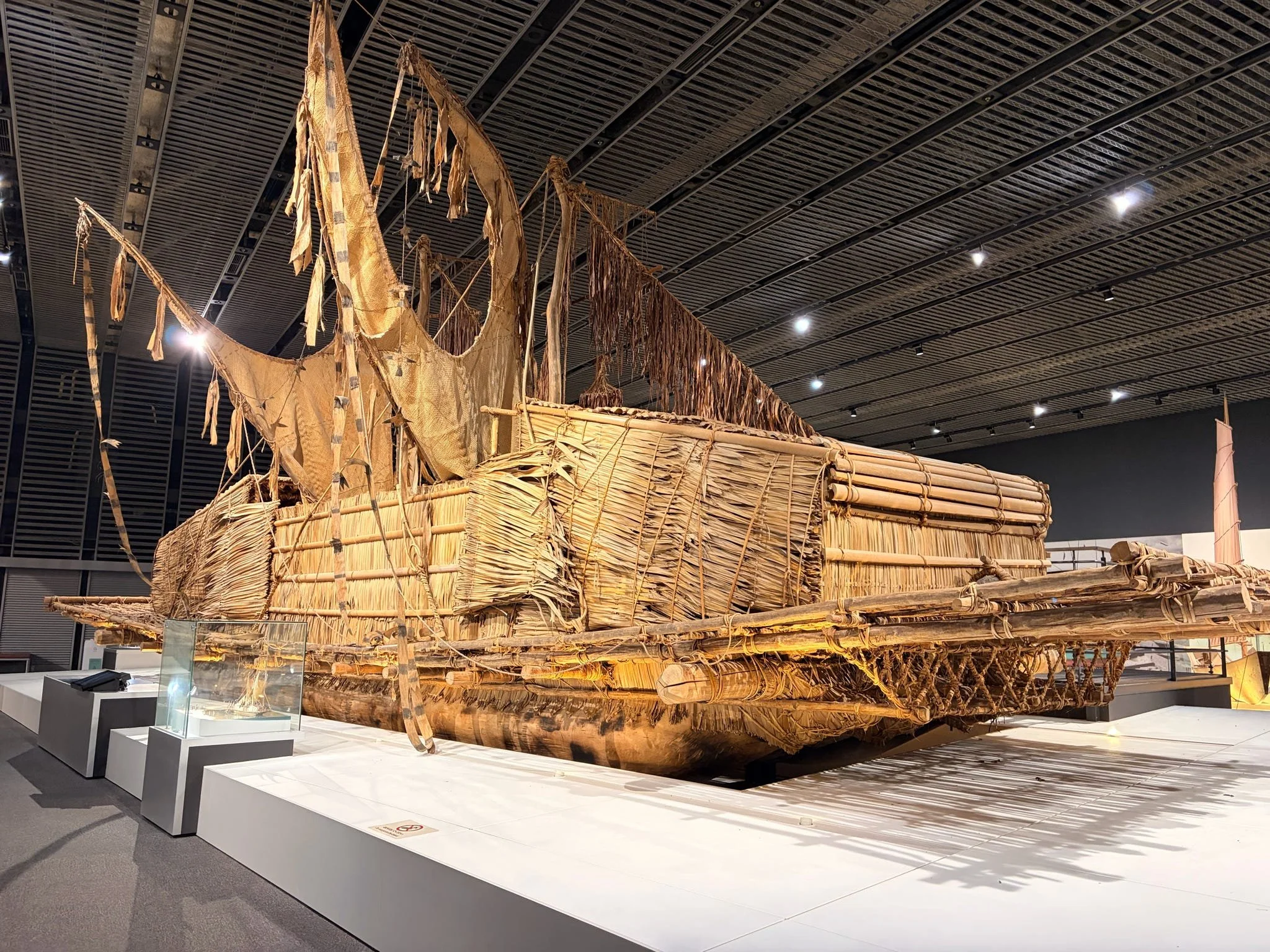
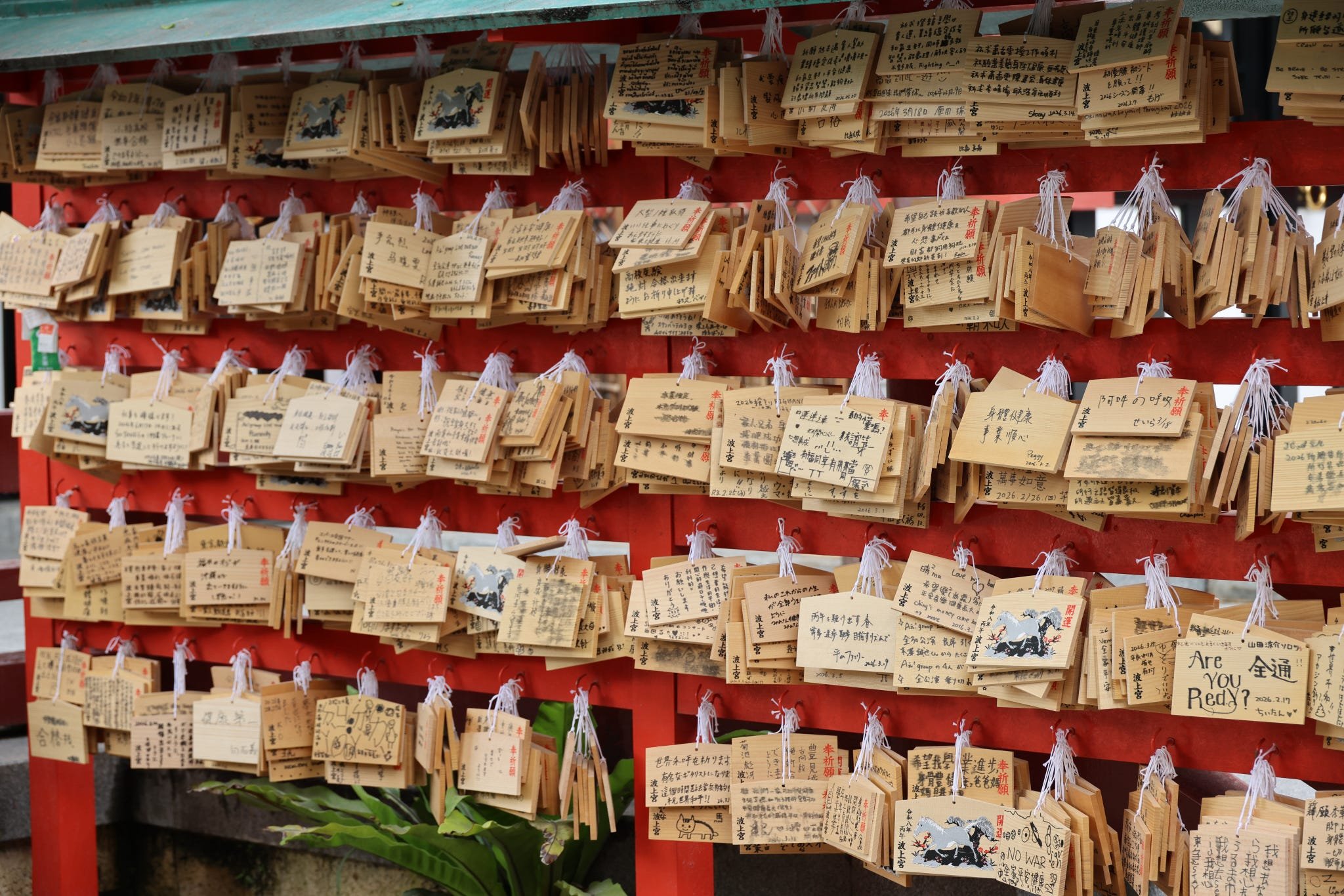
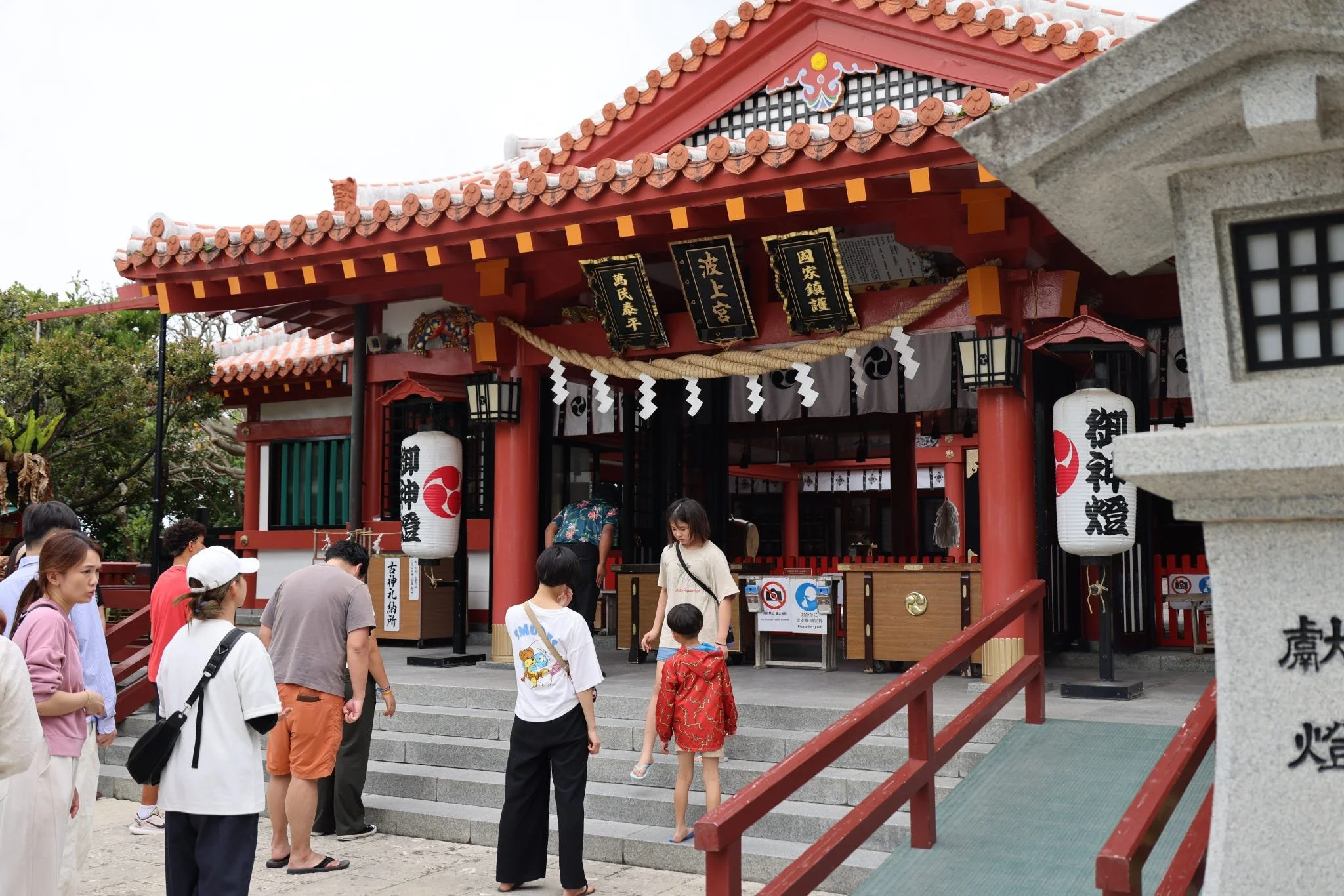
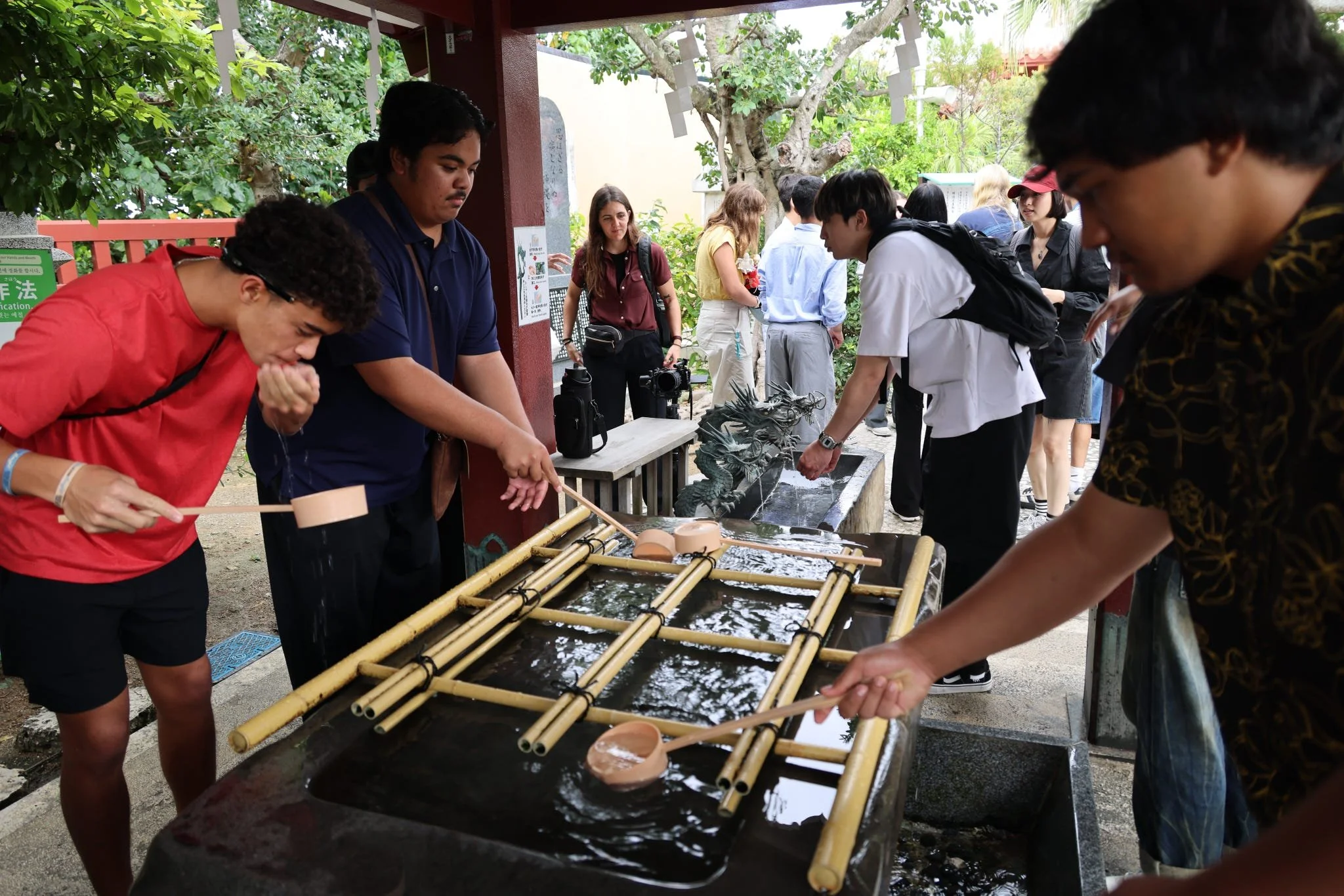
Nainoa Hooke of Kohala High learned that Okinawan high school sports run year-round — students who join wrestling stay with wrestling through summer break — and thought Hawaiʻi should try it. He learned the shrine protocol: two bows, two claps, one wish, one bow. He learned that only five people in Okinawa still know how to build traditional Ryukyuan boats, and he thought about what that means for any tradition: how fragile the chain of transmission is, and how quickly it can break.
Lyka Lomongo wrote about the kindness she had received everywhere she went, and about becoming more open-minded: "Before this trip, I never really liked learning in school. But during this trip, I began taking notes and reading more about Okinawa." She noted, with the precision of someone who had been paying attention, that Japanese students she met had seemed shy but were not — that the assumption of shyness had been wrong, that extroversion just looked different there.
Megan Pierpont, who had not known about the Battle of Okinawa before she arrived, came home with a conviction: Hawaiʻi needed more memorials. More specific memorials. More places where people could go and be in the presence of what had happened, and take it seriously.
And Anju Bekkum — who had traveled alone from Hāna, who had missed her flight and arrived days late, who had nevertheless made a lei in her room and given it to a governor — wrote about what she would remember ten years from now: not any specific site or lesson, but the moment at dinner on one of the last nights, when everyone was talking, and she finally felt the trip coming to a close, and she understood that these fifteen people had become her people.
"I cried," she wrote. "It was a big heart-to-heart moment. It was a good note to leave Okinawa with."
The 2026 PAAC Sister-State Study Tour to Okinawa, Japan was made possible through the partnership of PAAC and the East-West Center, with support from the State of Hawaiʻi Department of Education and PAAC's generous community of donors and funders. The Okinawa delegation joins concurrent cohorts in Ilocos Norte and Ilocos Sur and Jeju Island as part of the largest student ambassador program in PAAC's history.
To follow the work of PAAC's student ambassadors — and to support future delegations — visit paachawaii.org.
